
Enhancing customer experience through multichannel support: A comprehensive guide

This article is a submission by SuccessLink Outsourcing. SuccessLink Outsourcing is a leading provider of customized outsourcing solutions, dedicated to refining business operations across diverse industries.
How does multichannel support improve customer experience?
Multichannel support improves customer experience by letting people reach you on their preferred channel, which speeds up replies and lifts satisfaction.
- It meets customers where they already are, so help feels easy to get.
- It drives faster responses, which raises trust and loyalty.
- It gathers data across channels, so you can personalize each reply.
In today’s fast digital world, firms must go the extra mile to win and keep customers. One of the best ways to do this is to deliver great customer experiences. So multichannel support plays a key role here.
In this guide, we explore what multichannel support is, why it matters, and how to use it well. Whether you run a small shop or a large firm, these tips help you meet customers where they are.
What is multichannel support?
Multichannel support means providing customer service through many channels. For example, these include email, phone, live chat, social media, and self-service tools like FAQs and chatbots.
As a result, customers can reach you on the platform they like best. So it adds convenience and lifts satisfaction. In contrast, a single-channel setup limits people to just one option. Because of this, a multichannel approach fits the way people switch between devices all day.
Why multichannel support matters
Today’s customers expect more than ever. For example, they want quick, personal, and smooth replies. So here is why multichannel support is critical for firms.
1. Improved accessibility
Customers value the chance to pick how they reach you. For instance, some prefer live chat, some like a phone call, and others use social media. As a result, multichannel support keeps you open whenever and wherever they need you.
2. Enhanced customer satisfaction
According to research, 90% of customers rate an “immediate” response as crucial when they have a question. So more channels help you reply faster and better. As a result, customer satisfaction tends to rise.

3. Broader audience reach
Different groups favor different platforms. For example, younger people may lean on social media. Meanwhile, older customers may prefer email or phone. So a multichannel approach helps you reach a wider audience.
4. Data collection for personalization
With the right tools, firms gather insights from each channel. As a result, you learn customer likes and pain points. Then you can use this data to deliver more personal and useful experiences.
Key benefits of multichannel support
Multichannel support is more than a way to meet expectations. In fact, it is a smart plan that drives growth and loyalty. So here are some clear benefits.
- Increased customer retention: Happy customers are more likely to stick with your brand.
- Higher conversion rates: By meeting customers where they are, you guide them through the buyer’s journey.
- Stronger brand reputation: Great support across channels builds trust and credibility.
- Improved efficiency: With the right tools and automation, managing many channels gets easier.
Best practices for implementing multichannel support
To make your plan work, follow a few best practices. Above all, they put customer experience and efficiency first.
1. Identify the right channels
First, understand your audience. For example, run surveys, study behavior, and track market trends. As a result, you learn which platforms your customers use most. For a deeper view, check current customer experience statistics.
Popular channels include:
- Email: Ideal for detailed queries and follow-ups.
- Phone: Suitable for complex issues that need personal care.
- Live chat: Perfect for instant support on your website.
- Social media: Great for public chats and brand engagement.
- Self-service: Knowledge bases and chatbots let customers find answers on their own.
2. Maintain consistency across channels
Customers expect smooth service on every channel. So use one unified system. As a result, your information and support quality stay the same across platforms.
3. Invest in technology
Use tools like a CRM to centralize data and track customer interactions. In addition, AI chatbots and automation handle repeat tasks. So your team can focus on harder work. For live help, the right chat tools for customer support make a big difference.
4. Train your support team
Give your team the skills to handle queries on every platform. So run regular training sessions. As a result, they adapt to new tools and deliver great service.
5. Gather and act on feedback
Ask customers to share feedback after each chat. Then use this data to spot gaps. As a result, you refine your support over time.
Challenges of multichannel support and how to overcome them
Multichannel support brings big gains, but it has hurdles too. So here is how to handle the common ones.
1. Channel silos
Silos form when channels work on their own. As a result, the customer experience feels broken. To fix this, integrate your systems. Then make sure every team member sees the same data.
2. Resource allocation
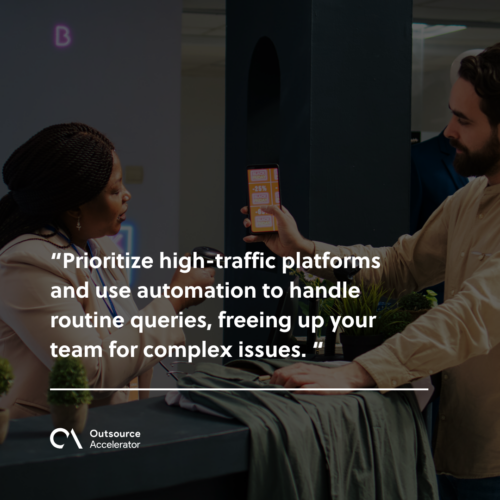
Running many channels can strain your resources. So focus first on high-traffic platforms. In addition, use automation for routine queries. As a result, your team is free for complex issues.
3. Maintaining quality
With more channels, steady quality gets harder. So set clear standard operating procedures. Then monitor performance often. As a result, service stays strong across the board.
4. Technology adoption
New new tools can overwhelm a team. So pick software that is easy to use. In addition, provide full training to ease the switch. Following chatbot best practices also helps your automation feel helpful, not clunky.
Real-world examples of multichannel support success
Take a look at these firms that use multichannel support well.
Example 1: Zappos
Online shoe retailer Zappos is known for great service. For example, it offers support by phone, email, live chat, and social media. As a result, customers get prompt and personal help.
Example 2: Spotify
Spotify’s support includes a large help center and active social media. In addition, it runs community forums where users find answers and share tips.
Example 3: Amazon
Amazon offers a smooth experience through its app, website, phone, and chat. Because of its focus on quick fixes, it has built strong loyalty.
In short, customer experience can make or break a business. So multichannel support is no longer a luxury. It is a necessity.
By meeting customers where they are, you build lasting ties. As a result, you stand out in a crowded market. If you want to lift your customer experience but do not know where to start, consider a trusted outsourcing partner. For many firms, outsourcing customer service brings the skills and tools to make it seamless.
Frequently asked questions about multichannel support
Here are quick answers to common questions about multichannel support.
What is the difference between multichannel and omnichannel support?
Multichannel support offers many separate channels. Omnichannel support links them into one view. So with omnichannel, a customer never has to repeat their story.
Which channels should a small business start with?
Start with the channels your customers use most. For many, that means email, phone, and live chat. Then add social media and self-service as you grow.
Can multichannel support be outsourced?
Yes, it can. In fact, many firms outsource it to access skilled agents and 24/7 cover. As a result, they handle more channels without a big in-house team.
How do I keep quality consistent across channels?
Use one unified system and clear procedures. In addition, train your team on every platform. So customers get the same quality no matter how they reach you.






 Independent






