
8 cultural awareness training tips for your offshore teams


What is cultural awareness training and why does it matter?
Cultural awareness training helps teams understand and respect cultural differences, so they communicate, collaborate, and build relationships better across borders.
- It reduces misunderstandings among people from diverse backgrounds.
- It boosts teamwork, trust, and productivity in offshore teams.
- It builds a more inclusive and harmonious workplace.
Cultural sensitivity is a key topic for a company’s staff and stakeholders. After all, respect for cultural differences drives clear communication and strong teamwork.
Today, many businesses work across borders. So they deal with people from many cultural backgrounds. However, diversity brings the challenge of multiculturalism. Without care, it can cause misunderstandings and slow productivity.
To bridge this gap, cultural awareness workshops are essential. In this article, we explain why cultural awareness training matters. Then we share eight practical tips to improve it within your offshore teams.
Importance of cultural awareness training
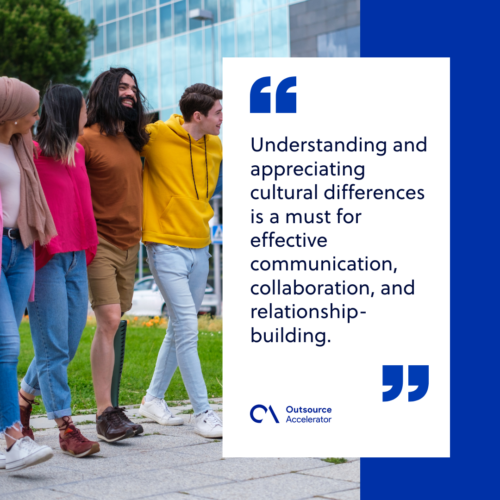
Cultural awareness helps you navigate the global marketplace. In short, respect for cultural differences drives communication, teamwork, and trust.
As firms grow abroad, cultural nuance matters more than ever. So strong offshore team management now depends on it.
Filta helps organizations build stronger ties with clients, customers, and stakeholders. As a result, this third-party services firm’s cultural awareness programs lift teamwork and output. In turn, they create a more inclusive and harmonious workplace.
8 cultural awareness training tips
Here are eight practical tips to run cultural awareness training well within your offshore teams.
1. Provide cross-cultural communication workshops
Cross-cultural communication workshops are a must for diverse offshore teams.
These sessions help staff build key skills. For example, they hone active listening and non-verbal cues, which matter across cultures. In addition, hands-on exercises let members adapt their style to each cultural setting. Simple communication concepts make these workshops more effective.
2. Foster an environment of mutual respect
Another key part of cultural awareness training is respect. So build a respectful space within your firm.
Stress the value of mutual respect among all team members, whatever their background. This sets the base for strong teamwork. In addition, encourage open dialogue so people can share their views freely. As a result, a safe, welcoming space builds inclusivity and trust.
3. Encourage cultural sensitivity through team building
Cultural sensitivity grows through team-building activities. So these events promote respect for diverse backgrounds.
For example, celebrating cultural holidays lets members share their traditions. As a result, the team gains a deeper grasp of each other’s roots.
4. Offer language training for a better understanding
Language gaps can slow teamwork and cause confusion. In turn, this hurts output and morale.
So offer language training programs to your team. These give members the skills to close gaps and understand each other better. Pairing this with offshore team training makes the impact stronger.
5. Share insights into diverse cultural norms
Teach members about customs, traditions, and social rules in other countries. As a result, they handle cross-cultural contact with more ease.
When staff grasp these norms, they avoid unintended slips. So they steer clear of behavior that others may find rude. Learning about Filipino work culture is a helpful example for many offshore teams.
6. Emphasize the importance of open-mindedness
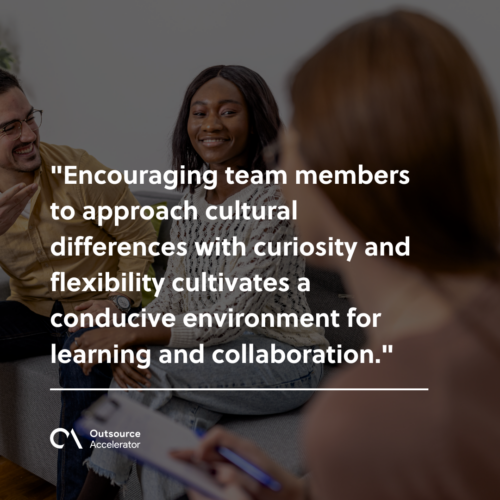
Open-mindedness is vital in cultural awareness training. So encourage staff to meet cultural differences with curiosity and flexibility. As a result, this builds a strong space for learning and teamwork.
Embracing diversity also builds a sense of belonging. In fact, good diversity management helps every member feel valued for who they are.
7. Facilitate regular intercultural discussions
Hold regular intercultural discussions in team meetings or workshops. So you promote mutual understanding and break down stereotypes.
These talks give members a space to share their culture openly. As a result, they exchange views and insights with ease.
8. Incorporate cultural awareness into project management
Finally, project managers should weigh cultural factors in their plans. So they keep these in mind when they set goals, plan tasks, and assign work.
This step accounts for different work styles and communication habits. As a result, offshore teams from diverse backgrounds collaborate more smoothly.
Filta’s cultural awareness training
Filta offers employer of record services, recruitment, advisory, and employee engagement. It also provides office and equipment solutions in the Philippines, Vietnam, and Colombia. In addition, it knows how much cultural awareness drives strong teamwork and business success.
This third-party provider offers a two-hour cultural awareness training program. These sessions work as standalone services. So you can use them even while you work with other BPOs or outsourcing firms.
Through workshops, seminars, and one-on-one coaching, Filta equips your team well. As a result, members handle cultural differences with confidence.
Frequently asked questions
What is cultural awareness training?
It is training that helps teams understand cultural differences. So members learn to communicate and work well across cultures. As a result, they build stronger, more inclusive teams.
Why is cultural awareness training important for offshore teams?
Offshore teams often span many countries and cultures. So training helps them avoid misunderstandings. In turn, it boosts trust, teamwork, and output.
How do you run cultural awareness training?
You can run workshops, seminars, and coaching sessions. Language training and team-building help too. In short, mix methods to fit your team’s needs.
What skills does cultural awareness training build?
It builds active listening, empathy, and clear communication. It also raises respect for diverse norms. As a result, teams collaborate with more ease.
Who should take cultural awareness training?
Any team that works across borders should take it. Managers and staff both benefit. So the whole company gains from a shared, inclusive mindset.
Key takeaways
- Cultural awareness training helps diverse teams work well together.
- It reduces misunderstandings and builds trust in offshore teams.
- Key tips include workshops, language training, and team building.
- Open-mindedness and respect sit at the heart of the training.
- Providers like Filta offer standalone programs you can add anytime.






 Independent





