
Pipeline marketing: A complete guide


What is pipeline marketing and how does it work?
Pipeline marketing is the process of turning leads into paying customers by guiding them through each stage of your sales funnel.
- It focuses on the full customer journey, not just lead generation.
- The goal is higher conversion rates and more revenue.
- It works best with a clear target market and a strong follow-up plan.
After you gather a good number of leads, the next job begins. Now you must narrow the pipeline and turn those leads into loyal customers. This process is called pipeline marketing.
This article explains how pipeline marketing works. It also shows how it can make a real difference in your business.
What is pipeline marketing?
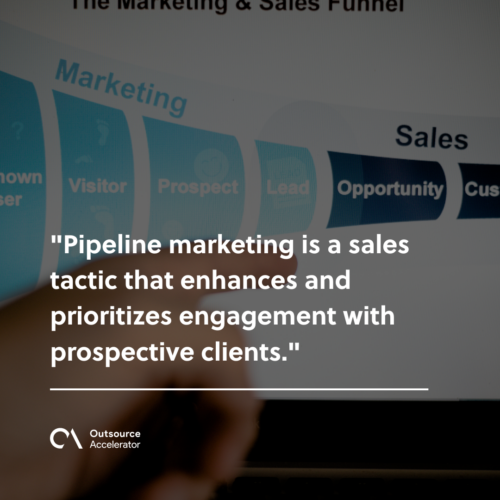
Pipeline marketing is a sales tactic that boosts and prioritizes engagement with future clients. In other words, it is the process of converting leads into paying customers.
The main goal is to increase conversion rates. As a result, your revenue grows over time.
Pipeline marketing vs. Lead generation
Lead generation is one step inside the larger pipeline marketing process. It focuses on creating new connections from scratch.
Leads are people who gave you their contact details. So they are only potential customers for now. The more leads you get, the higher your chances of gaining new buyers.
Meanwhile, pipeline marketing narrows those connections down. First, you sort the people who show interest from those who do not. Then the goal is to nurture your clients and turn them into loyal customers.
6 stages of pipeline marketing
Pipeline marketing breaks down into several stages. However, these can shift based on the company and other outside factors.
1. Prospecting
Prospecting is the work of finding as many leads as possible. Think of it like tossing a giant net into the ocean. You want to take in as many fish as you can.
The point of prospecting is to widen your customer base. So you get more people talking about your brand and showing interest in your product.
Of course, not everyone will be interested. Because of this, you cannot target just anyone. Instead, stick to a clear target market. You are more likely to secure leads there.
2. Lead generation
Lead generation means finding people or firms who may want your brand. Some may have already shown interest. These people are more likely to become customers.
Here, marketing and sales teams build plans to test the leads’ interest. For example, what tactics will push a lead to consider buying?
Salespeople can use almost any approach. This includes advertising, personalized content, lead magnets, or promotions and sponsorships. Many teams also lean on lead nurturing habits to keep prospects warm.
3. Appointment-setting
Once a lead shows more interest, it is time to book a meeting. You can then introduce the product in person or over a video call.
In this stage, the sales rep goes deep on your offering. So they show demos and explain how it solves the customer’s pain points. Strong appointment setting keeps this step on track.
4. Extending the offer
After meeting the customer, it is time for the final pitch. Why should they buy your product or service?
Here, you can explain the edge your brand has over others. You can also offer incentives, such as a discount or extra products, to sway them. Meanwhile, leads get the chance to negotiate and see what is in it for them.
5. Securing a purchase
If all goes well, the lead agrees to buy. Congratulations. Now you can deliver on the promises you made during the earlier stages.
6. Retention
A yes today does not mean a yes tomorrow. So this is where customer retention strategies come in.
Use this time to keep the bond with your patrons strong. For example, keep communication open and offer perks and special deals. As a result, their loyalty grows.
The better your bond with buyers, the more they buy. In addition, they may put in a good word for you to others.
Benefits of pipeline marketing
Pipeline marketing is a strong way to secure long-term customers. Here are some of its main benefits.
Full-funnel approach
Pipeline marketing covers the entire sales funnel. So it maps the full customer journey, not just lead generation.
A full-funnel view gives you a clearer picture of your ideal customer profile, which tells you more about your buyers. As a result, your team can tailor offers and campaigns with ease.
Increases sales
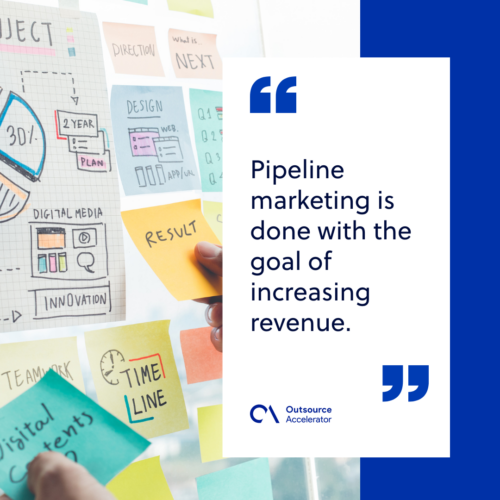
Pipeline marketing aims to grow revenue. You do this by narrowing leads down to the most qualified ones. In the end, you keep those most willing to pay for your product.
As a result, you can lift sales in a short time. In addition, brands spend less on getting leads and more on converting the ones they have.
Gains new customers
New players often find it hard and costly to win customers. Still, pipeline marketing helps a business build a following fast.
This method lets you seek out the most qualified leads. In turn, those leads become a loyal customer base.
How to build a marketing pipeline
Building a marketing pipeline is simple and rewarding with the right steps. Here is a quick guide to get you started.
1. Identify the target market
You must know exactly who you are selling to. This is the base of a strong marketing pipeline.
First, define your ideal customer base. Then segment them by common traits and needs.
2. Create a sales pitch or selling strategy
Once you know your audience, you can build campaigns to raise brand awareness.
Your leads will value a tailored customer journey. So craft a pitch that fits their needs and speaks to them.
Here, you must show why buyers should pick your product. In short, define your edge and what sets you apart.
3. Perform outreach
Now you have your target market and your pitch. Next comes outreach, where a little social skill helps.
Use what you learned about your market. Then find the firms or people who match your ideal buyer. Do not waste time on weak or irrelevant contacts.
You can reach out through many channels. For example, try personalized emails, social media, or networking events. You can also blend inbound and outbound sales tactics to attract buyers. Some teams even outsource parts of their sales work to move faster.
4. Schedule appointments
Once people show interest, move them down the funnel. So the next step is to schedule appointments.
This is your chance to explain or demo your product. In addition, you can walk the customer through the next steps.
Use this time to present a tailored solution too. For example, offer personalized deals that improve their time with your brand. As a result, you build trust and prove you are a credible seller.
5. Negotiate
Not every customer will push through with your offer. Some may drop out. Others may try to negotiate better terms.
As a seller, stay open to feedback and suggestions. So listen closely and stay flexible if they disagree with your proposal.
6. Follow up
After the first meeting, keep in touch with your customers. Stay open to more questions, and remind them they can reach you anytime.
If all goes well, the customer keeps buying from your brand. Over time, this builds loyalty and retention.
If a customer decides not to buy, stay professional. Thank them for their time, and let them know they are welcome back.
Pipeline marketing tips to remember
Pipeline marketing can be tricky because many factors come into play. So keep these quick tips in mind to help things run smoothly.
Remove unqualified leads
Do not waste time on unqualified or uninterested leads. If you keep pestering them, they will only turn away. Instead, stay professional and move on to other prospects.
Remain flexible
A lot can go wrong in pipeline marketing. For example, a big chunk of your qualified leads may have churned, or a tactic may fall flat.
So stay level-headed and study the situation with a clear mind. Be open to change, and adjust as needed.
Set SMART goals
SMART goals help guide your pipeline marketing journey. So make sure your goals are specific, measurable, attainable, relevant, and time-bound.
As a result, your efforts stay focused, easy to track, and tied to your business strategy.
How pipeline marketing connects to your wider sales system
Pipeline marketing does not work alone. It sits beside your other sales tools. For example, good sales pipeline management keeps every stage easy to track. Many teams also pair it with B2B marketing automation tools. As a result, your reps spend more time closing deals.
Frequently asked questions about pipeline marketing
What is the difference between a sales funnel and a marketing pipeline?
A sales funnel shows the buyer’s path from awareness to purchase. A marketing pipeline shows the steps your team takes to move leads down that funnel. In short, one is the buyer view, the other is the team view.
How long does pipeline marketing take to show results?
It depends on your market and sales cycle. Some deals close in days. Others take months. Still, a clear pipeline helps you spot progress at each stage.
Is pipeline marketing only for big companies?
No. Small firms and startups can use it too. In fact, a tight pipeline helps small teams focus their limited time on the best leads.
How do I know if my pipeline marketing is working?
Watch your conversion rates at each stage. Also track how many leads become paying customers. If those numbers rise, your pipeline is working.
Key takeaways
- Pipeline marketing turns leads into loyal, paying customers across the full funnel.
- The six stages run from prospecting to retention, and each one needs care.
- Clear targeting, tailored pitches, and steady follow-up drive better results.
- SMART goals and flexibility keep your pipeline on track when things change.
- Pipeline marketing works best beside strong pipeline management and automation.
Mastering pipeline marketing to boost sales
Pipeline marketing takes research, analysis, and steady communication. You succeed by building a strong game plan and staying flexible.
If you want expert help, Outsourced‘s sales consultants may be able to assist.
This type of marketing can be hard. Still, it is rewarding. In the end, it helps secure the revenue your business needs to stay competitive.






 Independent





