
Reshoring and how it affects your company


What is reshoring?
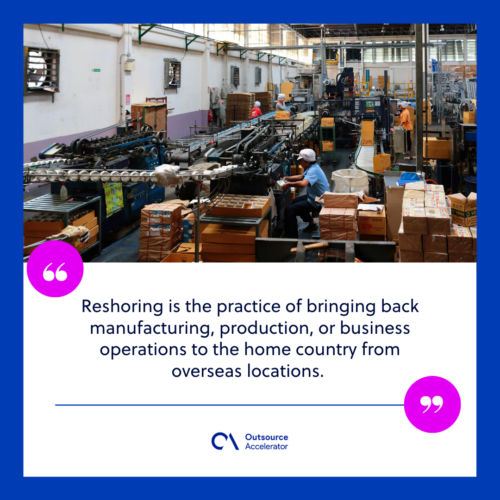
Reshoring is the practice of bringing manufacturing, production, or business operations back to your home country from overseas.
- It reverses work that firms once outsourced or offshored abroad.
- It aims to give you more control, better quality, and a stronger local base.
- It weighs cost, logistics, and risk before any move is made.
In recent years, reshoring has become a popular topic among business leaders. It marks a real shift in how firms plan their operations. As the act of bringing work home, it also brings a fresh look at the old offshoring model.
Firms now weigh the risks and rewards of spread-out production. As a result, the global market is changing fast. This article explains what reshoring is, how it works, and how it can affect your business. It also helps to know the difference between offshoring and outsourcing before you decide.
Reshoring is often driven by a fresh look at cost, logistics, and daily operations. These are the same factors that once pushed work overseas. So the goal is to rebuild or grow a firm’s local presence. In short, firms want more control, more speed, and a stronger edge at home.
How does reshoring work?
The reshoring process is detailed and takes several steps. First, it helps to break it down.
Assessment and analysis
Firms start reshoring with a full review of why they offshored in the first place. As part of this, they study the wider economy. They also look at labor costs, transport bills, and local rules.
Cost-benefit analysis
Next, companies run a detailed cost-benefit analysis. This step compares the pros and cons of moving work home. In most cases, it looks at:
- Labor costs
- Shipping expenses
- Taxes
- Tariffs
- Overall impact on the bottom line
Operational planning
Once the choice to reshore is made, firms plan the move with care. For example, they set up or rework sites. They also secure permits, gain certifications, and build plans to hire and train staff.
Supply chain management
Reshoring often means changes to the supply chain. As a result, firms may need new suppliers. They may also rebuild ties with local partners to keep parts and materials flowing.
Technology and automation
Many firms invest in modern tech and automation to lift output. This helps offset the higher labor costs at home. In fact, smart tools can raise both productivity and quality. For a wider view, see how automation is reshaping global operations.
Government and regulatory considerations
Firms that reshore often work with government agencies. Because of this, they can meet legal rules more easily. They may also tap tax breaks and other support that ease the move.
Workforce transition
Managing the shift of staff is key during reshoring. So firms hire, train, and sometimes retrain workers. This helps the team meet the needs of the new local site.
Quality control and standards
Better product quality is a core goal of reshoring. As a result, firms stress tight quality checks. They also make sure the work meets industry standards.
Marketing and communication
Firms often share the reshoring move with staff, buyers, and the public. For example, they may stress local jobs and better quality. In turn, this can build trust and goodwill.
Continuous improvement
Reshoring is not a one-time event. Instead, it needs steady review and change. So firms refine their plans to stay sharp and quick to react. In the end, success rests on careful planning and the ability to use local strengths.
Benefits of reshoring on your business
Reshoring can help a business in many ways. Here are some of the main gains.
Potential cost savings
This may sound odd, but reshoring can sometimes save money. For example, lower transport and logistics bills help. So does a drop in total production costs.
Quality control
Bringing work home gives you more control over quality. Because the site is close, checks are easier to run. As a result, you cut the risk of defects and recalls. This also lifts customer trust and brand value.
Faster response times
Being near your market lets you react to demand more quickly. So lead times shrink and delivery speeds up. This edge matters most in fast-moving fields.
Job creation and talent development
Reshoring often creates new jobs at home. In turn, this can help local towns grow and cut joblessness. It also builds a skilled workforce. Firms invest in training so staff can meet the needs of local work. Even smaller firms weighing offshore options can use these lessons to plan smarter.
Supply chain resilience
One shock in a single region can hurt firms worldwide. This shows how fragile long supply chains can be. Reshoring can boost resilience by cutting reliance on far-off suppliers. So it also lowers exposure to global risk. Still, the gains will vary by industry, market, and firm.
Disadvantages of reshoring
Reshoring brings clear gains, but it also has real challenges. Here are some common drawbacks.
Capital investment
Reshoring often needs large upfront spending. For example, firms must open sites, buy gear, and train staff. So these costs can block firms with tight budgets.
Higher labor costs
Home-country wages tend to be higher than offshore rates. As a result, labor bills can rise. This can also squeeze profit margins.
Limited skill availability
Firms may struggle to find workers with the right skills. This is more likely if those skills were once sent abroad. So firms may need training programs or school partnerships to close the gap.
Disruptions and transition challenges
Moving from offshore to home work can cause supply chain snags. It may take time to smooth out the change. Because of this, firms can face short-term delays and extra costs.
Market dynamics
The choice to reshore should weigh where demand sits. If your main market is overseas, reshoring may add little value. It can also limit your reach into diverse customer bases in other regions.
Trade and regulatory complexities
Reshoring can face trade rules, tariffs, and compliance duties. These add cost and effort. So it helps to fully understand and meet these rules first.
Reshoring as a new trend in manufacturing
Offshoring was once the go-to move, mostly to cut costs. However, its downsides have led many firms to rethink where they make things. To choose well, it also helps to compare offshoring and nearshoring side by side.
Still, reshoring is not free of trouble. So firms need careful analysis to weigh the gains against the costs. Because of this, reshoring is likely to stay a live and shifting trend for years to come. Firms that also grasp the wider benefits of outsourcing can make more balanced calls.

Firms that take a broad, planned view of reshoring can set themselves up for lasting success. In short, they balance cost, quality, and speed to market.
Frequently asked questions
What is the difference between reshoring and nearshoring?
Reshoring brings work all the way back to your home country. Nearshoring moves it to a nearby country instead. So reshoring favors full local control, while nearshoring keeps some cost savings with a shorter distance. Many firms compare both before they choose.
Does reshoring always cost more than offshoring?
Not always. Home wages are often higher, but reshoring can trim other costs. For example, you save on shipping, storage, and long lead times. So the true cost depends on your product, your market, and your supply chain.
Which industries are most likely to reshore?
Firms with complex or high-value products tend to reshore first. This includes electronics, medical goods, and cars. They value tight quality control and quick delivery. Fields that rely on fast design changes also gain a lot.
Can automation make reshoring more affordable?
Yes. Modern tools and robots can offset higher home labor costs. As a result, output rises without a big jump in staff. This makes local production more viable for many firms.
How long does a reshoring move take?
It varies by firm and industry. Some moves take a few months, while others run for years. So the timeline depends on site setup, hiring, and supply chain changes. Careful planning helps keep the shift on track.






 Independent






