
7 compliance risks you should know about


This article is a submission by D&V Philippines. D&V Philippines has years of experience in the accounting and finance industry. This third-party services company can generate the financial reports you need to make real-time financial decisions.
What are the main compliance risks in outsourcing?
The main compliance risks in outsourcing are data privacy, quality control, tax rules, corruption, documentation, conduct, and mismatched processes.
In short, these risks can lead to fines, lost profits, and a damaged brand. So knowing them early helps you stay safe in a new market. Here is why they matter:
- Breaking local laws can bring penalties or even a ban.
- Poor quality and weak records hurt both trust and cash flow.
- Clear rules keep your home and foreign teams aligned.
When your company invests and outsources to another country, local laws and rules can trip you up. This is one of the first problems many firms face.
Some companies run into trouble because they overlook documents, processes, and regulations. As a result, they incur penalties and fines for simple mistakes.
These add to costs and shrink profits, or they hurt how people see your brand. So knowing the laws of another country is vital to succeed and reap the benefits of outsourcing. For a wider view, it also helps to study global compliance in outsourcing before you expand.
In this article, we will cover some of the compliance risks you need to know about.
7 compliance risks every business must know
Listed below are the top compliance risks companies should watch for:
1. Data privacy
Data is now a big part of any business. Birthdays, passwords, full names, addresses, and shopping habits are all valuable. Many companies, and even hackers, want this information.
Your customers may not want their data shared with third parties when they deal with you.
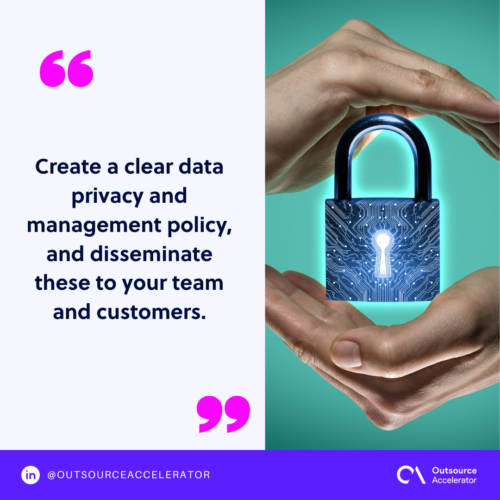
So create a clear data privacy and management policy. Then share it with your team and customers. This keeps everyone on the same page about collecting and sharing data.
The rules on data privacy and management differ by location. So comply with them to avoid penalties, fines, or a shutdown. For practical steps, see these tips on data security in outsourcing.
2. Quality control
Companies that outsource may hit problems with a partner’s product or service quality. Poor work reflects badly on your reputation.
So you might lose customers to rivals if the work does not improve. In such cases, you will need to supervise the process or build new ones to meet your standards.
If you are in finance and accounting, invest in first-rate technology so output stays top quality.
Beyond your customers’ standards, you should also know the quality rules of the city or country you work in.
Each place has its own laws. So if you break them, you may face penalties or lose benefits.
3. Tax regulations
One of the biggest mistakes is failing to pay taxes. This risk can land you in legal and financial trouble.
So learn the taxes of the country you plan to invest in. Doing so helps you avoid penalties and fines. Also identify due dates, needed documents, processes, and other rules.
Knowing the rules also lets you use tax incentives and exemptions that cut costs. To ease the load, many firms turn to outsourced tax compliance.
4. Corruption
Corruption is common in some countries. So doing business there can get complicated.
Your team may face layers of red tape before getting the approvals to set up an entity.
Depending on your home laws, you might face penalties for the corrupt acts of a foreign branch or office.
This can take the form of bribes, misused inside information, favors, or promises of a high post for a favorable action.
So make sure your foreign counterparts follow the law. Spell out the consequences of non-compliance so everyone understands.
5. Proper documentation
You will need proper documents to pay taxes, release salaries, pay suppliers, and set up a company.
Without records, you lose track of your money. As a result, fraud can slip in, and you may face fines, lost incentives, or even litigation.
So proper documentation is a must. Identify the needed documents and keep several physical and digital copies.
6. Right conduct
Some employees might misbehave in ways that harm your image. This can happen between colleagues or with clients.
So to avoid it, create clear guidelines and policies for everyone to follow. Then state the penalties plainly so staff do not break the rules.
7. Processes and policies
Your company and home country may run things differently from your foreign partners. Something allowed at home may not be allowed abroad.
So you must know these gaps. This way, your company avoids breaking laws and cuts the risk of miscommunication.
Coordinate with your partners to agree on policies both sides must follow. For the legal side, this guide to legal and compliance aspects of outsourcing is a useful start.
How can you avoid these compliance risks?
Non-compliance can bring legal, financial, and reputational problems. So compliance is a must when you do business in any country.
However, things can still go wrong. Miscommunication can happen, unrest may flare, a new politician can reverse policy, or a disaster can make countries more cautious.
Despite all this, you still need to stay compliant with laws and rules. So here is what you can do to avoid the compliance risks above:
- Identify the documents you need to submit and their signatories.
- Find a reliable business partner in the country you want to invest in. This lets you hand paperwork to an experienced individual or firm.
- Keep up with local news so you know about possible political changes and stay ready.
- Prepare backup plans for these compliance risks so your team knows how to respond.
- Communicate the standards and steps you want to set to your foreign counterparts. So your management team can roll them out well.
- Make policies clear and easy to reach so everyone can refer to them when needed.
Frequently asked questions about compliance risks
What is a compliance risk in outsourcing?
A compliance risk is the chance of breaking a law, rule, or standard when you work across borders. For example, it can involve tax, data privacy, or local labor rules. As a result, it can lead to fines or reputational harm.
Why is data privacy such a big compliance risk?
Companies now hold large amounts of personal data. So one breach can trigger heavy fines and lost trust. In addition, privacy laws differ by country, which makes careful compliance essential.
How can a local partner reduce compliance risk?
A trusted local partner knows the paperwork, tax rules, and customs of the market. So they help you file the right documents on time. As a result, you cut the chance of costly mistakes.
What happens if a business ignores compliance rules?
Ignoring the rules can bring penalties, fines, and even a shutdown. It can also damage your brand and scare off customers. So staying compliant protects both your money and your name.
How often should you review compliance policies?
Review your policies at least once a year, and after any major legal change. For example, a new tax law or data rule should trigger a fresh check. So regular reviews keep your business safe.






 Independent






