
Green outsourcing: Driving sustainability in global business


This article is a submission by Software Podium. Software Podium helps businesses simplify their purchasing decisions when buying software.
What is green outsourcing, and why does it matter?
Green outsourcing is the practice of hiring external providers that run energy-efficient, low-waste operations, so a business can grow while cutting its environmental impact.
- It pairs cost savings with real sustainability goals.
- It cuts waste, energy use, and carbon across the supply chain.
- It lifts brand trust with eco-aware customers and partners.
A quiet green shift is reshaping the business world. For many firms, green outsourcing is no longer just a buzzword. Instead, it is a practice where sound business sense meets care for the planet. In short, profit and sustainability can grow side by side. Let’s look at how green outsourcing works and why it matters.
The emergence of green outsourcing
Innovation drives this space. So energy-efficient operations, less waste, and digital transformation are now basic needs, not passing trends.
Think back to when outsourcing was only about cutting costs and boosting speed. Over time, a clear shift took hold. The industry took on a new role and began to balance profit with sustainability. Several forces sparked this change. For example, rising environmental awareness, new rules, and shifting customer tastes all played a part.
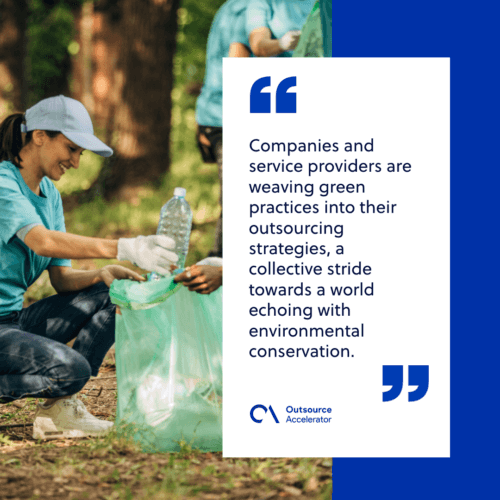
Today, companies and providers weave green habits into their outsourcing strategies. As a result, they take a shared step toward a cleaner, more responsible way of working. This fits the wider move toward sustainable outsourcing across global supply chains.
Benefits of green outsourcing
Now, let’s look at the clear wins. Green outsourcing blends good for the planet with good for business. So economic and ecological gains grow together. In other words, the earth benefits, and so do companies.
Green outsourcing offers many benefits, such as the following:
- Enhances brand image
- Attracting conscious consumers and ethical collaborations
- Reduces carbon footprints
- Conserves natural resources
There is more to gain as well. For example, lean, energy-smart operations often cost less to run over time. In addition, many buyers now check a partner’s ethics before they sign. So a green record can help you win and keep clients. These gains build on the broader benefits of outsourcing that firms already value. Green outsourcing also links closely to corporate social responsibility, which many customers now expect.
Challenges and solutions to green outsourcing
The challenges are as real as the benefits. Common hurdles include the following:
- The initial investment
- Technological adaptations
- Skill gaps
Still, every challenge has a fix. For example, the upfront cost is a gateway to long-term savings and a stronger brand. Technology partnerships also turn a tricky tech shift into smooth, steady progress. Meanwhile, training and clear green procurement standards help close skill gaps and keep suppliers accountable.
Data gaps can be a hurdle too. For example, some providers cannot yet report their energy use or waste in a clear way. So ask for simple, regular reports from the start. In addition, set shared targets you can both track. As a result, both sides stay honest and keep improving over time.
Implementing green outsourcing
Green outsourcing works best with a plan. So strategic planning, technology, and clear policy act as your guiding stars. First, map your goals. Next, set milestones. Then adjust as you learn.
Technology does a lot of the heavy lifting. For example, the right tools and systems turn hard tasks into quick wins. In addition, it helps to vet each provider’s energy use, waste habits, and reporting before you sign. As a result, you can track progress with facts, not guesses. For context on where the market is heading, see the latest outsourcing trends.

The future of green outsourcing
The future of green outsourcing looks less like a choice and more like a norm. So firms that move early will be ready as rules and customer demands grow. Every new tool, plan, and action moves the market one step closer to greener work.
We stand at a clear crossroads. Behind us lie the benefits, the challenges, and the fixes. Ahead lies a future where green is more than a color. In truth, it is becoming a core business value. So the shift is not just coming. It is already here, ready to be embraced and built upon.
Frequently asked questions about green outsourcing
What is the difference between green outsourcing and regular outsourcing?
Regular outsourcing focuses mainly on cost and speed. Green outsourcing adds a third goal: lower environmental impact. So it weighs energy use, waste, and ethics alongside price. As a result, it aims for value that lasts, not just a cheap deal.
Does green outsourcing cost more?
It can cost more at the start. For example, new tools and processes take upfront investment. Still, lean, energy-smart operations often save money over time. Plus, a strong green record can help win eco-aware clients.
How can a business start with green outsourcing?
Begin with clear goals and a simple plan. Next, vet each provider’s energy use, waste habits, and reporting. Then set shared standards and track them. In short, treat sustainability as a key factor, not an afterthought.
How do you measure the impact of green outsourcing?
Track clear metrics such as energy use, waste, and carbon output. Also, watch supplier compliance and brand sentiment. Together, these numbers show whether your green goals work in practice.
Is green outsourcing only for large companies?
No. Firms of any size can adopt green habits. For example, a small business can pick energy-smart providers and cut paper use. Because of this, green outsourcing fits both startups and large firms alike.






 Independent






