
Understanding intermittent leave: An overview


What is intermittent leave?
Intermittent leave is time off taken in small, separate blocks rather than one long stretch, usually for medical or family care needs.
- It lets staff step away in hours or days as needs come up.
- In the United States, the FMLA protects it for qualifying reasons.
- Good tracking keeps the team supported and the work on schedule.
Intermittent leave is one of the harder parts of managing a workforce. It is often hard to predict. As a result, it can disrupt your usual operations.
Still, this type of leave is a valued and required way to care for your team. It matters most when staff or their families face sudden problems, especially medical ones. Because of this, you can track leave well without hurting your team’s welfare. In this article, we look closely at how intermittent leave works.
How intermittent leave is defined
Under the Family and Medical Leave Act, intermittent leave means approved time off taken in short, separate periods for set reasons. Regular leave is taken all at once. Intermittent leave, however, lets staff take time off as needed while still doing their jobs.
This option helps staff who care for a family member with a serious health condition. In short, it lets them work a reduced leave schedule. Employers should make a fair effort to allow these non-consecutive absences. So they support staff through real health needs.
These absences can range from a few hours to several days. Often, they are granted for medical reasons. For example, chronic conditions that need ongoing treatment qualify. This can apply when the staff member or a family member needs urgent care.
How does intermittent leave work?
Staff who need intermittent leave can take time off in small amounts when the employer approves it. First, they must give proper medical papers. A medical certificate or a doctor’s note works as proof for filing.
For example, someone having regular cancer treatment may ask for time off. They may need it for appointments or recovery days after each session. Employers must provide intermittent leave under laws like the Family and Medical Leave Act (FMLA) in the United States. Because of this, clear leave policies help both sides plan ahead.
Importance of intermittent leave
Emergencies are sometimes hard to avoid. Offering intermittent leave is a great way to show you care during these times. It is a key tool for private-sector employers. In turn, it helps eligible staff protect their well-being and stay productive. Specifically, it helps in the situations below.
Accommodating medical needs
Intermittent leave is vital for staff with chronic or recurring conditions. It lets them get needed treatment, attend appointments, and manage their health well.
Work-life balance
It also promotes work-life balance by letting staff handle personal matters without losing work. For example, they may attend family events or care for dependents. Meanwhile, they can deal with sudden emergencies. As a result, staff keep a healthy split between work and home. Many teams treat this as part of broader work-life integration that keeps people engaged.
Supporting mental health
Intermittent leave also helps staff protect their mental well-being. In addition, it lets them take time off during hard moments, attend therapy, or rest. Employers that build employee wellness programs around this support see stronger morale.
Common reasons for filing intermittent leave
The FMLA lists the qualified reasons for filing intermittent leave. Here are the main ones.
Chronic health conditions
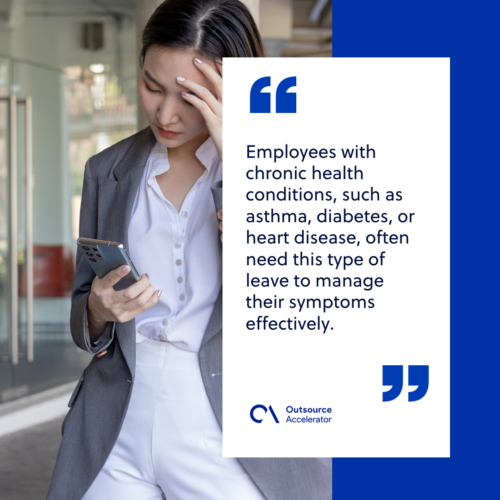
Staff with chronic conditions often need this leave to manage symptoms. For example, asthma, diabetes, or heart disease may qualify. So they can get care and still work well during good periods.
Serious illnesses
Intermittent leave also covers staff with serious illnesses like cancer or multiple sclerosis. These people may need ongoing treatment. In some cases, they face periodic episodes that affect their ability to work.
Parental responsibilities
Parents of young children may need intermittent leave too. For example, they may attend school events or doctor visits. They may also handle childcare issues. The FMLA also lets new mothers file this leave to care for a newborn. However, some countries and firms offer paid maternity leave instead. To learn the rules stateside, see this guide to maternity leave in the US.
Disability or injury
Staff with disabilities or recent injuries can also request this leave. As a result, they can attend rehab, see doctors, or manage pain episodes.
Absence due to caregiving
Some staff care for elderly or ill family members. So they may need intermittent leave to meet those duties. In addition, the FMLA lets eligible staff take up to 26 work weeks of unpaid leave. This time is meant to care for service members with serious illnesses. Employers who support these needs boost morale, loyalty, and retention. In turn, they build a kinder workplace.
Process for requesting intermittent leave
Intermittent leave has strict rules and requirements. So staff cannot file it like other time off. Instead, they must follow the right steps below.
Understanding employer policies
First, staff should learn their employer’s rules on intermittent leave. This includes who qualifies and how to give notice. It also covers papers like medical certifications or other proof.
Providing timely notifications
Next, staff must tell their employer quickly when they make a request. The notice should include the likely length of leave. It should also give the reason and any needed papers.
Communication and coordination
Open and honest talk matters when requesting this leave. So staff should discuss their needs with their supervisors or HR team. As a result, both sides understand each other and reduce disruption to the workflow. Strong human resource management keeps these conversations fair and consistent.
Documentation and record-keeping
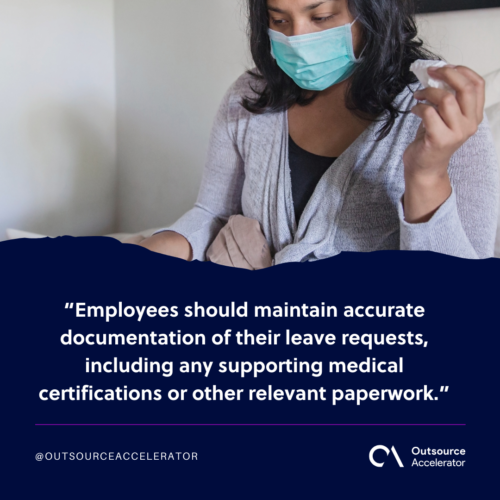
Staff should also keep clear records of their leave requests. This includes medical certifications or other paperwork. In turn, good records keep things clear and speed up future requests. They also provide evidence if a dispute comes up.
Regular updates
Finally, staff should keep employers posted on their condition or need for leave. Regular updates build trust between both sides. As a result, planning and resource use get easier.
Managing and tracking intermittent leave
Good tracking of intermittent leave helps both employers and staff. The steps below can smooth the process.
- Use a dedicated leave management system to track requests well.
- Write clear leave policies so everyone knows the rules and expectations.
- Encourage staff to keep talking openly about their needs.
- Also explore flexible work arrangements, such as remote work or adjusted hours, without hurting output.
- Check the impact of intermittent leave on performance and operations often.
Intermittent leave lets staff take time off in separate blocks. So they gain flexibility to manage health or family needs. Staff should also know their paid leave options. After all, some companies pay time off for these conditions. To see how payouts work, review this guide on leave encashment. Treating leave well also helps solve common employee retention problems.
Intermittent leave FAQs
Who qualifies for intermittent leave?
Under the FMLA, eligible staff qualify when a serious health condition affects them or a close family member. The employer usually asks for medical proof to support the request.
Is intermittent leave paid or unpaid?
FMLA intermittent leave is unpaid by law. However, some companies let staff use paid time off to cover it. So check your own company policy first.
How is intermittent leave different from regular leave?
Regular leave is taken in one block. Intermittent leave, by contrast, is split into short periods. As a result, staff can keep working between absences.
What proof do employers need for intermittent leave?
Employers usually ask for a medical certificate or a doctor’s note. In addition, they may want updates on the condition over time.
Can an employer deny intermittent leave?
An employer must grant leave that meets FMLA rules. Still, they can deny requests that miss the criteria or lack proper papers.
Key takeaways
- Intermittent leave lets staff take short, separate blocks of time off for health or family needs.
- The FMLA protects it for chronic illness, serious conditions, caregiving, and new parents.
- Staff must give notice, provide medical proof, and keep clear records.
- A dedicated leave system and clear policies keep tracking simple.
- Supporting this leave lifts morale, loyalty, and staff retention.






 Independent





