
Driving business excellence through customer insights


What are customer insights and why do they matter?
Customer insights are the clear understanding you gain from customer data, and they matter because they guide smarter decisions that drive growth and loyalty.
- They turn raw data into real knowledge of customer needs, habits, and preferences.
- They differ from market research, which looks at the wider market rather than your own customers.
- They power personalization, better products, stronger retention, and a real edge over rivals.
Success does not hinge only on what you sell. In fact, it also hinges on how well you understand your customers.
Customer insights have become powerful tools for growth, loyalty, and better decisions. So the days of pure guesswork are over.
Today, companies can tap a wealth of information about customer needs, preferences, and behaviors. This article shows how customer insights can transform your business.
What are customer insights?
Customer insights are the deep understanding you get from analyzing customer data. In short, their main job is to inform and improve business decisions.
They reveal what customers prefer, how they act, what they need, and what they expect. As a result, you can serve them far better.

Difference between customer insights and market research
Customer insights and market research both gather customer information. Moreover, they work well together, yet they are not the same.
The table below shows their main differences.
| Customer insights | Market research | |
| Focus | Focus on individual customers or segments | Examines overall market environment |
| Scope | Narrow in scope, applies for current customers | Broad in scope, applies for both current and potential customers |
| Timing | Collected continuously for real-time improvements | Conducted periodically or in response to specific needs |
| Output | Produces granular, actionable information that impacts customer-related operations | Provides aggregate-level data and trends on the broader market |
Sources of customer insights
Customer insights come from many places. So it helps to combine several sources for a fuller picture.
Here are a few of the most useful sources.
Surveys and feedback
Surveys and direct feedback are among the easiest ways to gather customer insights. For example, you can use:
- Online surveys
- Email feedback forms
- In-person interactions
In turn, these reveal satisfaction, preferences, pain points, and ideas for improvement.
Customer service data
Sales and service teams talk to customers every day. So their call logs and chats hold rich customer insights.
For example, this data can reveal objections, buying motives, and market trends. It also pairs well with customer sentiment analysis to show how people really feel.
Social media monitoring
Social platforms carry a wealth of opinion about products and brands. As a result, they are a strong source of real-time signals.
So try monitoring social media mentions, forums, and reviews for fresh customer insights.
Website analytics
Web analytics tools show how visitors behave on your site. For example, you can track page views, click-through rates, time on page, and conversions.
By studying this data, you can map the customer journey. Next, you can add features that lift engagement and fix spots where people drop off.
Focus groups and interviews
In-depth interviews and focus groups give you rich, qualitative data. In addition, open-ended talks help you explore customer motives, struggles, and desires in detail.
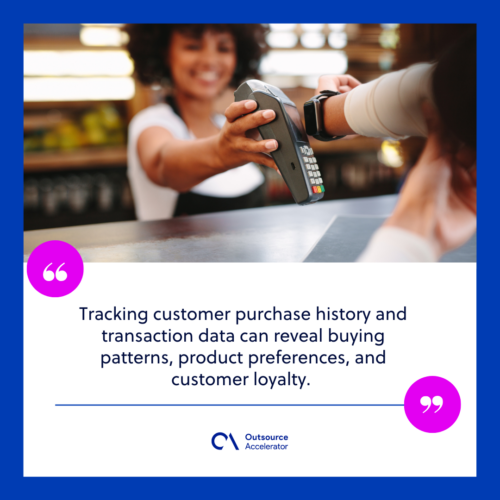
Purchase and transaction history
Purchase history reveals buying patterns, favorite products, and loyalty. Moreover, it flags chances to cross-sell or upsell.
So this data can also fuel more personal marketing campaigns.
Behavioral research
You can also watch how customers act in real or test settings. For example, you can see how they use products, services, or physical spaces.
As a result, this method reveals non-verbal cues, usability issues, and adoption rates. The voice of the customer tools you choose can capture many of these signals in one place.
Leveraging customer insights for business growth
Customer insights are not just data. In fact, they are actionable strategies that drive growth. So here is how to use them well.
Personalization
Personalization is the heart of modern marketing. For example, customer insights help you build campaigns that match each person’s taste.
By studying past behavior and purchases, you can send:
- Tailored product recommendations
- Promotional offers
- Content that speaks to the customer’s interests
As a result, this lifts engagement and raises the odds of a sale.
Segmentation
Segmentation splits your base into distinct groups with shared traits. So customer insights play a central role here.
For example, you can segment customers by:
- Demographics
- Purchasing behavior
- Psychographics
In turn, an online store might spot budget shoppers and luxury buyers. Then it can tailor offers to each group for higher conversion and happier customers.
Product and service improvements
Customer feedback is a goldmine for product teams. For example, it shows which features people love and where fixes are needed.
Insights also flag pain points. For example, a clunky checkout or frequent outages becomes clear fast.
As a result, fixing these issues improves the experience. Moreover, it cuts churn and reduces negative reviews.
Customer retention and loyalty
In many cases, keeping clients costs less than finding new ones. So customer insights help you build stronger, longer relationships. Over time, this also supports better customer retention.
For example, you can create loyalty programs, personal messages, and great service that earn trust. In addition, insights help you predict and prevent churn with timely support and incentives.
Competitive advantage
Customer insights reveal market dynamics that rivals may miss. So you can stand out by using them to offer better service.
To stay ahead, keep gathering and studying data. As a result, you can adapt fast and position your brand as a leader.
In short, using customer insights is a core approach to growth, not just a tactic. So analyze them well, and you can unlock their full potential.
Frequently asked questions about customer insights
What is the difference between customer insights and customer data?
Data is the raw record of what customers do. Insights are the meaning you draw from it. In short, data tells you what happened, while insights tell you why and what to do next.
How are customer insights different from customer intelligence?
Customer insights are the findings themselves. Customer intelligence, meanwhile, is the wider process of collecting and analyzing data to produce those findings. So the two work hand in hand.
Which tools help you gather customer insights?
Common tools include survey platforms, web analytics, CRM systems, and social listening apps. In addition, feedback forms add context. Together, they give you a fuller view.
How often should you review customer insights?
Review them continuously, not once a year. For example, check key signals weekly or monthly. As a result, you can act while the data is still fresh.
Can small businesses use customer insights?
Yes. In fact, small teams can move quickly on what they learn. So even simple surveys and sales data can guide smarter decisions.






 Independent






