
8 strategies for streamlining fulfillment logistics in e-commerce


What is fulfillment logistics in e-commerce?
Fulfillment logistics is the full set of steps that process, pack, and ship online orders so they reach customers on time.
Here is what fulfillment logistics covers at a glance:
- It links order processing, inventory, warehousing, and shipping into one flow.
- It shapes customer satisfaction, cost, and delivery speed.
- It uses smart strategies and technology to help online stores grow.
Customer expectations rise every day, and competition keeps growing. So fulfillment logistics often decides whether a business thrives or struggles. The right strategies can turn an ordinary online store into a customer-first powerhouse.
This article explains the key role of fulfillment logistics. Next, we cover its main parts. Finally, we share eight strategies to boost your e-commerce efficiency.
Defining fulfillment logistics
Fulfillment logistics is the foundation of a successful e-commerce business. It covers the full set of tasks that process, handle, and fill customer orders along the supply chain.
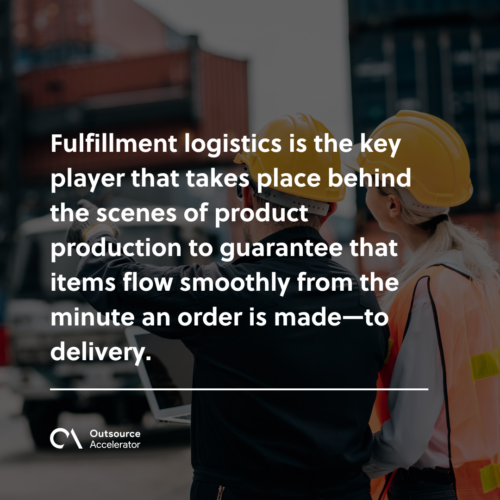
It works behind the scenes, after a product is made. As a result, items move smoothly from the moment an order is placed to final delivery.
At its core, fulfillment logistics includes several linked jobs. Each one helps create a good customer experience. These linked jobs are:
- Order processing. Sets the groundwork for accurate and quick order handling.
- Inventory management. Keeps stock levels right, so you avoid stockouts or costly overstocking.
- Warehouse supervision. Lifts efficiency with planned layouts and clear processes that boost output.
- Quality control inspection. Makes sure packages reach the customer on time and in good shape.
- Shipping coordination. Protects items and gives buyers a great unboxing moment.
Understanding fulfillment logistics can push firms to boost customer satisfaction. In turn, it sets the business up for long-term success. Many brands also lean on outsourced logistics services to handle this work at scale.
What is the significance of fulfillment logistics in e-commerce?
Fulfillment logistics shapes customer satisfaction, efficiency, and profit. In other words, it plays a key role in the success of online stores.
Here are a few reasons why fulfillment logistics matters so much in e-commerce:
Customer satisfaction
Fulfillment logistics drives timely order processing, accurate stock counts, and on-time delivery. As a result, it builds positive experiences. In turn, that lifts customer satisfaction and loyalty.
Competitive advantage
Streamlined fulfillment logistics lets online stores offer faster shipping, better stock availability, and easy returns.
Specialized partners like Acquire Intelligence empower brands to seize this competitive advantage by integrating AI-driven insights into their supply chain.
Their expertise in optimizing fulfillment operations ensures that businesses can meet surging consumer demands with precision. This approach turns logistical complexity into a powerful means for market growth and customer loyalty.
So this gives companies a real edge in the market.
Cost efficiency
Good fulfillment logistics can cut operating costs. For example, it helps by:
- Keeping inventory levels right
- Using less storage space
- Improving overall supply chain efficiency
Scalability
Well-planned fulfillment logistics can handle growth and bigger order volumes. As a result, online stores can scale up without losing efficiency.
Key components of fulfillment logistics
Fulfillment logistics has several key parts. Each one keeps order processing and delivery smooth across the e-commerce supply chain. Let’s look at the role of each part.
Order processing and management
Order handling is the base of fulfillment logistics. This part deals with incoming orders in an accurate and quick way. For example, it includes tracking orders, processing payments, and verifying orders.
Reduce mistakes and speed up order processing
This part means smoother order input, linked order systems, and automating order tracking. As a result, stores raise order accuracy, cut cycle time, and lift customer happiness.
Inventory management and optimization
Inventory management means watching stock levels and product availability. For example, it covers demand forecasting, inventory tracking, and replenishment. The goal is simple. You keep enough stock to fill orders. Still, you avoid excess stock that drives up holding costs.
Good inventory management uses the following steps:
- Using demand forecasting tools
- Setting the right reorder points
- Adding real-time inventory tracking systems
In addition, this part can use lean methods like vendor-managed inventory or just-in-time stock. So stores cut stockouts, reduce carrying costs, and keep orders on time.
Warehouse operations and layout
Warehouse operations cover how products are handled, stored, and moved inside the warehouse. For example, this means sorting items by demand, using smart picking and packing, and planning a layout for smooth flow.
A good layout and tight processes keep orders moving. As a result, handling time drops and stock accuracy rises. Tools like warehouse automation make this even easier.
By using barcode scanning, automated picking, and warehouse management systems, online stores can improve the following:
- Order accuracy
- Order cycle time
- Overall warehouse efficiency
Packaging and labeling
This part keeps products safe in transit. Good packaging guards items from damage. So they arrive in great shape.
Accurate labels help with product identity, tracking, and rules compliance. Meanwhile, strong packaging and labeling means picking the right materials. This rests on set packaging steps and labeling tools such as barcodes or RFID tags.
By focusing on quality packaging and clear labels, online stores cut damage in transit. In turn, they enhance brand reputation.
Shipping and transportation
Shipping and transportation are vital parts of fulfillment logistics. They involve picking the right shipping method to get products to customers.
Efficient shipping keeps delivery fast and cost-effective. Meanwhile, it weighs factors like:
- Package size
- Weight
- Destination
- Preferred courier service
- Customer preferences
It also means better shipping contracts, route planning tools, and real-time tracking. As a result, stores speed up delivery and give buyers a satisfying post-purchase experience. Many stores study e-commerce logistics models to plan this stage well.
8 strategies for streamlining fulfillment logistics
Now you know the key parts of fulfillment logistics. Next, let’s explore eight strategies to streamline these processes and lift efficiency.
1. Automation and technology solutions
Automation and smart technology are vital for better fulfillment. For example, robotic automation can reshape your operations. You can also add strong order and warehouse management systems.
These tools raise order accuracy and show stock in real time. As a result, they cut the need for manual work. So you reduce errors and work faster.
2. Demand forecasting and planning
Accurate demand forecasting is key for fulfillment logistics. By using data analytics and forecasting tools, stores learn how customers buy.
As a result, firms set the right stock levels and avoid overstock or stockouts. In turn, they cut holding costs, reduce waste, and meet customer needs.
3. Just-in-time inventory management
Just-in-time (JIT) inventory management focuses on getting stock close to the time you need it. So products are ready when orders come in. As a result, it lowers stockout risk while keeping the supply chain lean.
4. Cross-docking and drop-shipping
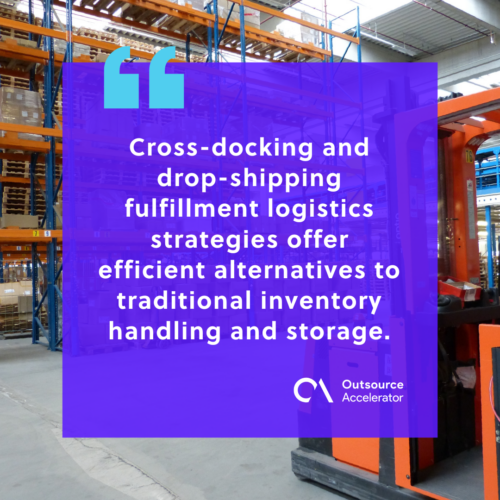
Cross-docking and drop-shipping offer smart options instead of normal storage. Cross-docking moves goods straight from inbound to outbound shipments. So there is no long-term storage.
As a result, you skip slow storing and picking. This means faster orders and lower storage costs. Meanwhile, drop-shipping goes further. It ships products straight from suppliers to customers.
5. Reverse logistics and returns management
Good returns management matters when handling product returns. For example, it makes returns simple with clear, friendly return policies. As a result, you can resell or refurbish items faster.
6. Integration of software systems
Smooth software integration keeps data flowing and accurate. By linking inventory, order, and shipping systems, you drop manual entry and cut errors.
In addition, it shows stock in real time, automates orders, and smooths shipping. As a result, you gain accuracy, speed, and a seamless end-to-end experience. Partners that offer fulfillment services often bring these linked systems with them.
7. Continuous monitoring and optimization
To stay ahead, watch your key performance indicators (KPIs) often. For example, track order accuracy, cycle time, and delivery performance. As a result, you can spot areas to improve.
Ongoing checks help you find bottlenecks and new trends. So you can fix processes and address issues before they hurt customers. Tools like supply chain analytics make these patterns clear.
8. Staff training and performance evaluation
Staff training gives your team the skills to run fulfillment logistics well. For example, good training programs help staff do tasks, learn the process, and work faster.
Review staff often and reward strong work through incentives and rewards. As a result, you keep a motivated team. So order management gets easier because people want to go the extra mile.
Finally, ongoing training and reviews keep the team ready to meet growing customer demands.
Master fulfillment logistics strategies for effective sales outcomes
With these strategies, online stores can lift efficiency and speed up order fulfillment. As a result, they position themselves to win in the e-commerce market. So keep this key information in mind as you grow.
Frequently asked questions
What does fulfillment logistics include?
Fulfillment logistics includes order processing, inventory management, warehousing, packaging, and shipping. Each step works together to move an order from checkout to the customer’s door. Returns handling is part of it too.
How is fulfillment logistics different from the supply chain?
The supply chain covers everything from sourcing raw materials to final sale. Fulfillment logistics is the stage that processes and delivers customer orders. In short, it is one key piece of the wider supply chain.
Can small businesses outsource fulfillment logistics?
Yes. Many small stores use third-party providers to handle storage, picking, and shipping. As a result, they save on warehouse costs and scale faster. This lets owners focus on sales and products.
How does technology improve fulfillment logistics?
Technology adds speed and accuracy. For example, automation, barcode scanning, and real-time tracking cut errors and manual work. So orders ship faster and customers stay happy.
What metrics show healthy fulfillment logistics?
Watch order accuracy, fulfillment cycle time, and on-time delivery rates. In addition, track return rates and shipping costs. Together, these numbers show how well your fulfillment runs.






 Independent






