
7 surefire strategies for successful startup recruiting


Startup life moves fast. One moment you’re refining your pitch deck, the next you’re scrambling to fill roles because your product is finally gaining traction.
At some point, every founder faces the daunting challenge of startup recruiting. You’re trying to attract top talent while competing with bigger brands that offer more money, more perks, and way more stability.
But the best candidates aren’t always chasing the biggest salary. They’re looking for impact, autonomy, and the chance to build something meaningful.
If you’re strategic, you can attract people who thrive in the creative chaos of startup life. And that starts with having a clear, intentional approach to hiring.
Let’s walk through what startup recruiting involves, why it’s so tricky, and seven proven strategies to help you bring the right people on board.
What is startup recruiting?
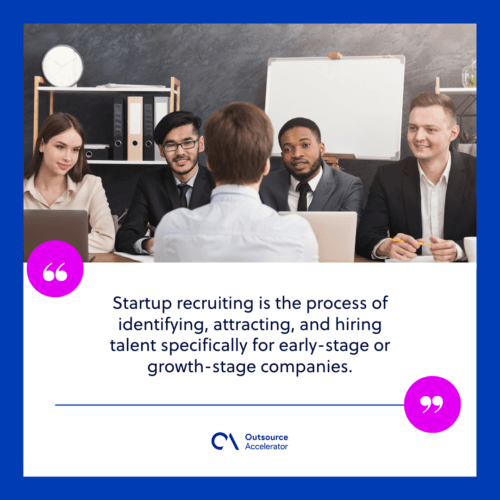
Startup recruiting is the process of identifying, attracting, and hiring talent specifically for early-stage or growth-stage companies. Unlike corporate hiring, it usually happens without a dedicated HR team.
Every hire matters. One great hire can push your startup forward. One bad hire can stall you out.
Recruiting for a startup includes everything from defining your employer brand and crafting compelling job descriptions to sourcing passive candidates and running interviews that test for adaptability, not just skills.
Hiring at a startup also requires a balance of speed and intention. You can’t afford to wait months for the perfect candidate, but rushing to fill a role often backfires.
The best startup recruiters know how to sell the mission, screen for alignment, and build a hiring funnel that can scale as the business grows.
Challenges startups face when recruiting the right talent
Recruiting is hard for everyone, but it’s especially hard when you’re a startup with limited resources. According to Medium, one of the top reasons startups fail is that they didn’t have the right team.
Here are some common roadblocks that might lead to that:
- Limited brand recognition. You’re not Google. You’re not even mid-tier yet. Convincing top candidates to take a chance on your unknown startup takes creativity and persistence.
- Budget constraints. Startups often can’t compete with corporate salaries or benefits. That makes it tougher to attract candidates looking for financial security or stability.
- Unclear roles and shifting priorities. In a startup, today’s front-end developer might be tomorrow’s customer support lead. Job descriptions change. That ambiguity can turn off candidates who crave structure.
- Lack of dedicated hiring expertise. Founders wear a lot of hats. Recruiting usually isn’t their strong suit, and it shows in awkward interviews, vague offers, and inconsistent hiring processes.
- High risk, high expectations. Working at a startup requires grit, flexibility, and a tolerance for uncertainty. That narrows the talent pool. Not everyone wants to work nights and weekends chasing product-market fit.
7 strategies for effective startup recruitment
Despite the obstacles, startups can and do build incredible teams. The key is being intentional. Here are seven strategies that work:
1. Craft a compelling employer brand
Startups that attract top talent tell a strong story. What’s your mission? What problem are you solving? Why does it matter?
Your website, job ads, and social media should reflect not just what your company does, but who you are. Share your values. Post about your wins and your lessons.
The goal is to attract people who get excited about the journey, not just the destination.
2. Prioritize culture and values fit
Skills matter, but at an early-stage startup, attitude is everything. You want people who align with your values and thrive in fast-paced, unpredictable environments.
Forbes even shared that nine in ten workers say that they don’t want to work for an organisation that doesn’t share their values.
During interviews, ask questions that reveal how candidates handle ambiguity, feedback, and failure. Look for signs of grit and curiosity. You can teach technical skills. You can’t teach hunger.
3. Build a strong referral pipeline
Referrals are gold. Research from Dr. John Sullivan revealed that 88% of recruiters say they source above-average applicants thanks to employee referrals.
Ask early team members to tap into their networks. Offer incentives for successful hires. Reach out to former colleagues and mentors.
Word-of-mouth recruiting is cost-effective and often brings in people who already understand startup culture.
4. Sell the vision, not the perks
You might not have beanbags or stock options that mean much (yet). That’s okay. What you do have is potential, and that’s powerful.
During interviews, be transparent about the challenges, but paint a picture of what’s possible. Show how this role will grow as the company grows. As we’ve said, top performers want more than a job; they want a mission.
5. Move fast, but don’t rush
Startups live and die by speed, but hiring too quickly leads to misfires. Have a structured hiring process, even if it’s lightweight.
Define what a successful candidate looks like. Use scorecards to evaluate fit. Keep the interview loop tight. And follow up quickly because good candidates don’t stay on the market long.

6. Hire for adaptability
Your first few hires will wear multiple hats. Prioritize candidates who can learn quickly, shift gears, and figure things out on the fly.
Test this in interviews with scenario-based questions: “What would you do if…?” Give them hypothetical challenges you’ve faced. See how they think, not only what they’ve learned or know.
7. Treat candidates like customers
The hiring process is part of your brand. A bad experience can cost you future applicants (or future users, too).
Communicate clearly. Respect their time. Be honest about where they stand. Whether or not they get the job, they should walk away with a positive impression of your company.
Strengthen your startup recruiting plan
You don’t need a massive HR department to recruit well. What you need is clarity, consistency, and the willingness to learn as you go.
Start by defining your company’s mission and values, then build hiring practices that reflect them.
And don’t forget that recruiting is about people. Listen more than you talk. Look for potential, not perfection. Be the kind of company that great people want to join, and then keep earning that trust every day.
Startups don’t succeed because they got lucky with one superstar hire. They succeed because they built a team that believed in the mission, stuck around during the hard parts, and built something extraordinary together.






 Independent





