
Is offshore outsourcing cheap labor?


Is offshore outsourcing cheap labor?
No, offshore outsourcing is not cheap labor, because it pays fair, competitive wages in the local market while giving companies access to skilled global talent.
- Cheap labor means low pay and poor conditions, which offshoring does not.
- Offshore roles often rank among the best-paying jobs in their country.
- Both the client and the worker gain from the deal.
Outsourcing first began to help firms in manufacturing. Over the years, it grew into a smart method for growing companies in many fields. Now, it is a core part of how businesses run.
Technology keeps changing the market, and outsourcing changes with it. As a result, many firms now see the value of offshore outsourcing. Still, some people wrongly tie it to cheap labor.
Does lower pay mean firms risk the quality of work? Or do foreign firms take unfair gains from the global workforce? In this guide, we clear up the myth and show what offshoring really offers.
Offshoring vs cheap labor
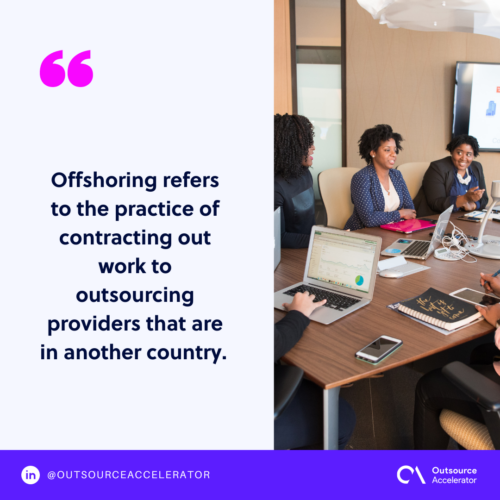
Offshoring means hiring an outsourcing provider in another country. Unlike nearshoring, these partners sit far away, often several time zones from the client. So the work moves across borders while the client stays home.
Firms of all sizes have many services to choose from. For example, the business process outsourcing (BPO) market offers a wide range of solutions. In addition, many global BPO firms compete for the work.
Teams can farm out many roles to support daily work. These include IT, customer service, digital marketing, finance, accounting, back-office, and legal tasks. Firms often hand tasks to providers such as MVP Asia Pacific. As a result, they cut costs and reach highly skilled talent.
In contrast, cheap labor goes back to the industrial revolution. Historically, the US, Germany, and Britain used cheap labor for factory work. So the two ideas come from very different places.
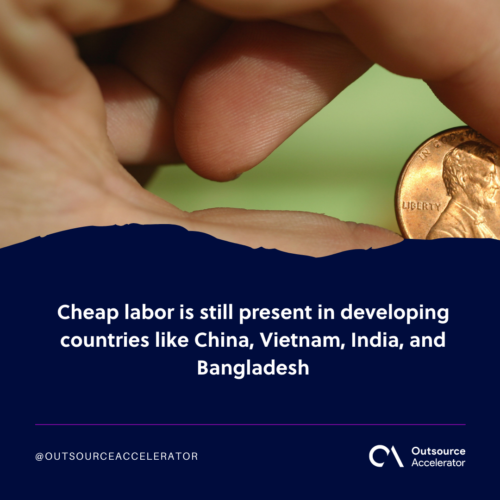
Cheap labor is common in factories where workers do hard jobs for low pay. In most cases, firms use it only to cut costs. Moreover, workers often face unsafe conditions with few or no benefits.
This practice still exists in some developing countries. However, governments around the world now enforce labor laws to protect workers. Because of this, offshore outsourcing and cheap labor are not the same thing. The myth of offshore teams as cheap labor simply does not hold up.
Why is offshore outsourcing considered cheap labor?
Offshore outsourcing has long been tied to cheap labor. Many people think foreign firms exploit skilled workers in developing countries. However, the real picture is very different.
It is true that firms offshore to save on costs. Yet the client is not the only side that gains. For example, workers get stable, well-paid jobs that lift their careers.
Say a US company moves its whole call center to the Philippines. Yes, there is a big pay gap between US and Filipino agents. However, in the Philippines, call center jobs rank among the top-paying roles in the country.
The country also has a much lower cost of living than the US. So local pay goes a long way there. Because of this, these firms are not taking unfair gains from Filipino talent.
In fact, the BPO sector has driven the growth of the Philippines BPO industry for years. Moreover, offshoring has created many jobs for the local workforce. As a result, whole communities benefit from the work.
What can offshore outsourcing offer businesses?
The global BPO market size keeps climbing fast. It reached about 328 billion US dollars in 2025. Experts expect it to grow to roughly 696 billion US dollars by 2033. So demand for these services is strong and rising.
Offshore outsourcing may look like cheap labor to some. In reality, it offers clear benefits. There are also many reasons to offshore beyond cost savings.
Flexibility
Time-zone gaps give businesses more flexible hours. Through offshoring, firms can run daily work over longer periods. In some cases, they can operate up to 24 hours, even on holidays or weekends.
Global talent pool
Offshoring lets firms tap a deep global talent pool. Moreover, it helps fill skill gaps and worker shortages at home. The benefits of offshore talent reach far beyond simple cost cuts.
For example, UK firms often offshore IT specialists in India. As a result, they reach a large pool of skilled tech professionals.
Enhanced productivity
Offshoring saves costs, but it also frees up time. So in-house staff and managers can focus on core tasks. Because of this, teams have more room to improve what they do best.
Offshore outsourcing is not cheap labor
So, is offshore outsourcing cheap labor? No, it is not. Yes, offshoring to developing countries costs less than hiring in-house. However, it is a win-win for both the client and the provider.
Before you decide, it helps to weigh the pros and cons of offshore outsourcing. As a result, you can build a fair, strong partnership that lasts.
Frequently asked questions
Is offshore outsourcing the same as cheap labor?
No. Cheap labor means low pay and poor conditions. In contrast, offshore outsourcing pays fair local wages for skilled work.
Why do companies choose offshore outsourcing?
Firms offshore to cut costs and reach skilled talent. In addition, they gain flexible hours and more time for core work.
Does offshoring hurt workers in developing countries?
No. Offshore roles often rank among the best-paying jobs locally. As a result, they support families and boost the local economy.
What tasks can businesses offshore?
Firms can offshore IT, customer service, finance, and accounting. Moreover, they can move back-office, legal, and marketing tasks.
Is offshore work good quality?
Yes. Offshore teams include highly skilled professionals. So the work meets strong quality standards when managed well.
Key takeaways
- Offshore outsourcing is not cheap labor, since it pays fair local wages for skilled work.
- Both the client and the worker gain from the deal.
- Offshore roles often rank among the top-paying jobs in their country.
- The global BPO market keeps growing, with demand rising each year.
- Firms gain flexibility, a global talent pool, and higher productivity.






 Independent





