
Microtasking 101: A proven method to get more done


What is microtasking and why does it work?
Microtasking is a productivity method that breaks big, complex tasks into small steps you can finish quickly.
- It makes large projects feel less scary, so you start sooner.
- Each small win builds momentum and keeps your motivation high.
- You focus on one tiny task at a time, which cuts distractions.
Staying productive can be hard, especially with a long list of work and constant distractions. As a result, it is easy to feel overwhelmed and slip into procrastination.
According to Zippia, apathy at school and work is a big issue, with 41% of adults procrastinating due to a lack of motivation. However, there is a simple fix that keeps gaining fans: microtasking.
Below, we explain what this method is and how it fights procrastination. In addition, we break down its pros and cons, the steps to use it well, and where it is headed next.
What is microtasking?
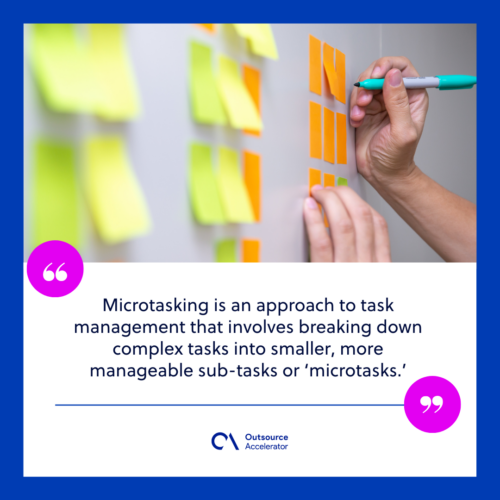
Microtasking is a way to manage work by breaking complex tasks into smaller sub-tasks, or “microtasks.” Instead of tackling one large project at once, you split it into bite-sized pieces. Because each piece is small, it is easy to understand and needs little effort.
For example, instead of writing a whole blog article in one sitting, you could break it into smaller goals like:
- Brainstorming ideas
- Conducting research
- Outlining the structure
- Writing the introduction, body, and conclusion
- Proofreading
So, dividing the work into smaller parts makes it less daunting and far more doable.
How microtasking is used against procrastination
As noted, procrastination often strikes when tasks feel too big or when motivation runs low. However, microtasking helps you get past both of these blocks.
When you face a large project, it is easy to feel swamped and put it off. But when you break it into smaller steps, the stress fades. As a result, you are far more likely to take the first step.
Finishing small goals also gives you a sense of progress, which lifts motivation. For example, each completed microtask is a quick win. Because of this, you feel driven to keep going and do more.
In short, it is a way to trick your brain into seeing progress and staying motivated the whole way through.
Pros and cons of microtasking
Like any productivity method, microtasking has ups and downs. So, let us look at both in detail.
Benefits of microtasking
Microtasking offers these clear benefits:
- Better productivity. By splitting duties into smaller parts, you get more done in less time. As a result, a series of microtasks can lead to a more productive day.
- Less overwhelm. Dividing tasks into simple steps helps ease stress and anxiety.
- Improved focus. Microtasking lets you work on one task, which limits distractions.
- Flexibility. Small tasks are easy to reorder and adjust by priority. So, it stays a flexible way to manage work.
Challenges of microtasking
Meanwhile, microtasking can also bring these drawbacks:
- Lack of context. When you focus only on small tasks, you may lose sight of the big picture. So, step back now and then to check your overall progress.
- Potential for fragmentation. Breaking work into small goals can scatter your effort if you are not careful. For this reason, keep every task tied to the bigger goal.
- Risk of underestimating time. Microtasks are small, yet they can still run long. So, it helps to accurately estimate the time required for each one.
- Potential for cognitive load. Switching between many small jobs can tire your mind. As a result, set aside focused time for specific work to avoid burnout.
6 steps for effective microtasking
To get the most from microtasking, use it in a clear, ordered way. Here are six steps to help you.
- Plan. Take the larger project and break it into small, doable microtasks. (Pro tip: make each microtask a SMART goal.)
- Prioritize. Next, arrange these smaller jobs by importance or urgency.
- Allocate time. Estimate the time each sub-task needs, then block out time for it. This keeps your focus sharp and helps prevent delay.
- Use tools. Use productivity tools or apps to sort and track microtasks, such as to-do lists or time trackers.
- Track progress. Also, keep a record of finished work to measure progress and stay driven.
- Reassess and adjust. Finally, review your progress often and tweak the remaining microtasks as needed.
Impact of microtasking in the future of work
As technology keeps shaping how we work, microtasking is likely to grow even more common.
For example, platforms built for this method, such as Amazon Mechanical Turk, have gained fans over the years. So, this points to steady demand for microtask-based work.
In addition, gains in artificial intelligence (AI) and automation can bring smarter tools that speed up these tasks and lift output.
Meanwhile, the rise of remote work and gig economy trends may push adoption further. Many people now want flexible, efficient ways to manage their workload.
Because of this, firms and workers can tap a global pool for short, specific jobs. So, with the right tools in place, microtasking can reshape how we work and get things done.
Frequently asked questions about microtasking
What is a microtask?
A microtask is a small, simple step that is part of a bigger task. Because it is short, you can finish it fast and with little effort.
How is microtasking different from multitasking?
Microtasking means you finish one small task at a time. Multitasking means you juggle many tasks at once. As a result, microtasking keeps your focus sharper.
Does microtasking really help with procrastination?
Yes. Small tasks feel easy to start, so you delay less. In addition, each quick win builds the motivation to keep going.
What tools help with microtasking?
To-do lists, task boards, and time-tracking apps all help. So, pick a tool that lets you sort tasks and track progress with ease.
Is microtasking good for teams?
Yes. Teams can split a big project into small jobs and share them. Because of this, work moves faster and stays easy to follow.
Key takeaways
- Microtasking breaks big tasks into small steps you can finish fast.
- It fights procrastination because small tasks feel easy to start.
- Each quick win builds motivation and keeps your focus sharp.
- Plan, prioritize, and track your microtasks to get the best results.
- AI, remote work, and the gig economy will make this method more common.






 Independent





