
Home warranty customer service: managing claims at scale

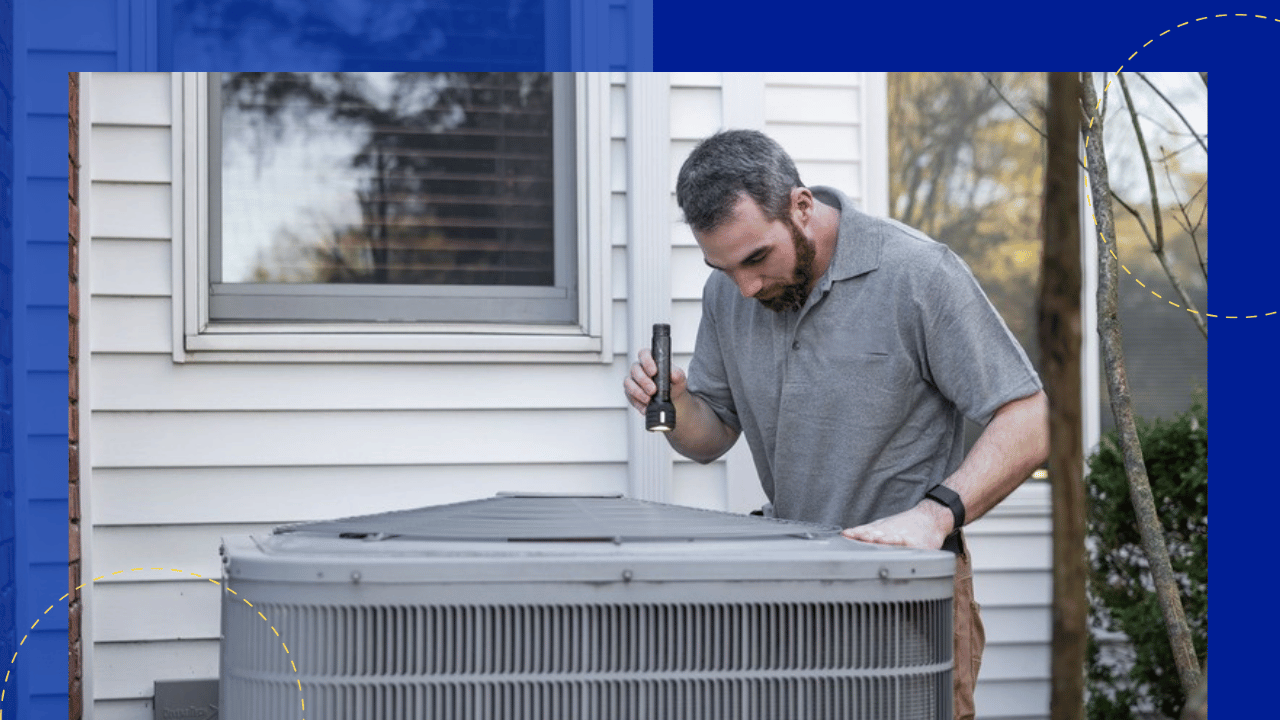
This article is a submission by ContactPoint 360, a customer experience outsourcing partner that combines practical AI capabilities with expert human support to deliver consistent, high-quality customer interactions at scale.
Most homeowners forget they even have a home warranty until something in the house stops working. It tends to happen at the worst time.
The AC quits halfway through a July heatwave, or the water heater dies the morning relatives arrive for the holidays, and suddenly the contract sitting in a kitchen drawer is the most important piece of paper in the house.
From the provider’s side, that phone call is where the product gets judged. The homeowner on the line is uncomfortable, annoyed and already doing the math on what a new unit might cost if the claim doesn’t go through.
Handling one of those calls well isn’t especially hard. Handling thousands a week, across large contractor networks and different state regulations, with demand that jumps whenever the weather turns, is a different job altogether.
The market is large. IBISWorld estimated US home warranty revenue at around $4.6 billion in 2026. Customer trust has lagged behind, though. InvestigateTV reviewed complaints lodged since 2019 with the FTC, the Better Business Bureau and 25 state regulators and found thousands of them, with more than 1,500 sent to the Texas attorney general’s office alone.
This article looks at what tends to go wrong in home warranty customer service as claim numbers grow, and the steps providers are taking to keep up.
Why home warranty claims are harder to handle than regular customer service requests
A typical support desk deals with questions. Home warranty customer service deals with things that are broken, often badly, inside someone’s house.
It also involves a third party the agent can’t control. The homeowner talks to the provider, but the repair is done by an independent contractor with their own schedule, their own diagnosis and their own parts suppliers.
If the technician is late, the customer doesn’t call the technician. They call the warranty company.
Then there’s the weather. A heatwave in Texas can send cooling claims soaring within days, and a cold snap in the Midwest does the same to furnace calls.
You can forecast the season. You can’t forecast the week, and you certainly can’t hire and train agents in the time it takes a heat dome to settle over a region.
And lastly, contracts. Coverage caps, maintenance requirements, and pre-existing condition clauses are drafted by lawyers but explained, in real time, by frontline agents.
Get the interpretation wrong in one direction and the provider pays for something it shouldn’t. Get it wrong in the other and a customer hears “no” when the answer should have been “yes.”
Common problems in the home warranty claim process
It rarely falls apart in one big moment. It’s more like a slow leak, spread across four stages:
- Intake: A claim arrives without a model number, or with “it’s making a noise” as the only description, and now someone has to call back. That’s a day gone.
- Waiting for a technician: This is where most frustration builds. If the homeowner hears nothing for 48 hours, they call to ask what’s happening. That call doesn’t move the claim forward; it just occupies an agent who could be working on a new one.
- The decision: Approved, partly covered or denied, this is when the customer decides whether the premium was worth paying.
- Resolution: Even after a decision, claims have a way of reopening. A part is back-ordered, the fix doesn’t hold, or a cash-in-lieu offer arrives that the homeowner considers far too low.
Good warranty claims processing gives each of these stages an owner, a target timeframe, and a plan for keeping the customer in the loop.
How providers should handle a denied home warranty claim
Online reviews would have you believe most home warranty claims get denied. The numbers tell a different story:
- Most claims are approved. In a 2026 This Old House survey of 2000 homeowners who had filed a claim, about 90% said their claims were approved.
- Denials usually come down to three causes. In the same survey, pre-existing conditions and items not covered by the plan each accounted for about 29% of denials, followed by repair costs above the coverage limit (20%) and lack of maintenance (13%).
- Often times, regulators are watching. In January 2026, the Arizona Attorney General’s Office announced an $11.8 million settlement with a national home warranty provider over allegations that it misrepresented what its warranties covered.
Providers who handle denials well tend to do four things:
- Point to the exact clause and explain it in plain words, not policy language.
- Share what the technician found, so the reasoning behind the decision is clear.
- Explain the appeal process in the same conversation, before the customer asks.
- Review denial calls regularly through a supervisor or QA team, since one careless phrase can turn into a complaint to the state attorney general.
A homeowner who is told no, clearly and with reasons, may still be disappointed, but they’re far less likely to take the matter to a regulator or a review site.
Building warranty claims management that scales
More agents are the obvious answer to more claims, and usually the least efficient one. The bigger gains come from making each agent’s work easier.
Start with a triage. A family with no heat in January and a homeowner with a squeaky dishwasher shouldn’t be waiting in the same line. Simple priority tiers get the urgent jobs to a contractor first.
Filing should be easy, too. Plenty of homeowners search for how to file a home warranty claim before they ever contact their provider, so the answer ought to be right there on the website and in the customer portal.
A guided form that asks for the model number, a description and a couple of photos up front saves a callback later. Keep the phone line open, though. Some people prefer it, and for a burst pipe, a web form isn’t good enough.
Behind the scenes, agents need the full picture. A warranty claims management system (or dedicated warranty claims software) should put the contract, claim history, contractor notes and past conversations on one screen.
Without it, customers get asked the same questions repeatedly, and goodwill wears down fast.
Proactive status updates are an easy win that a lot of providers still skip. A quick update like, when a technician is assigned, and again when parts are on order or a decision has been made, heads off the “any news?” calls that clog queues during busy weeks.
Finally, look hard at what you measure. Average handle time on its own pushes agents to rush. First-contact resolution, repeat contacts per claim and time from filing to dispatch tell you far more. So does the share of denials overturned on appeal, which is a fairly honest test of how good the first decision was.
What to automate and what to leave with people
A lot of claims work is repetitive, and that’s where automation earns its keep: status checks, appointment booking, document collection, first notice of a claim.
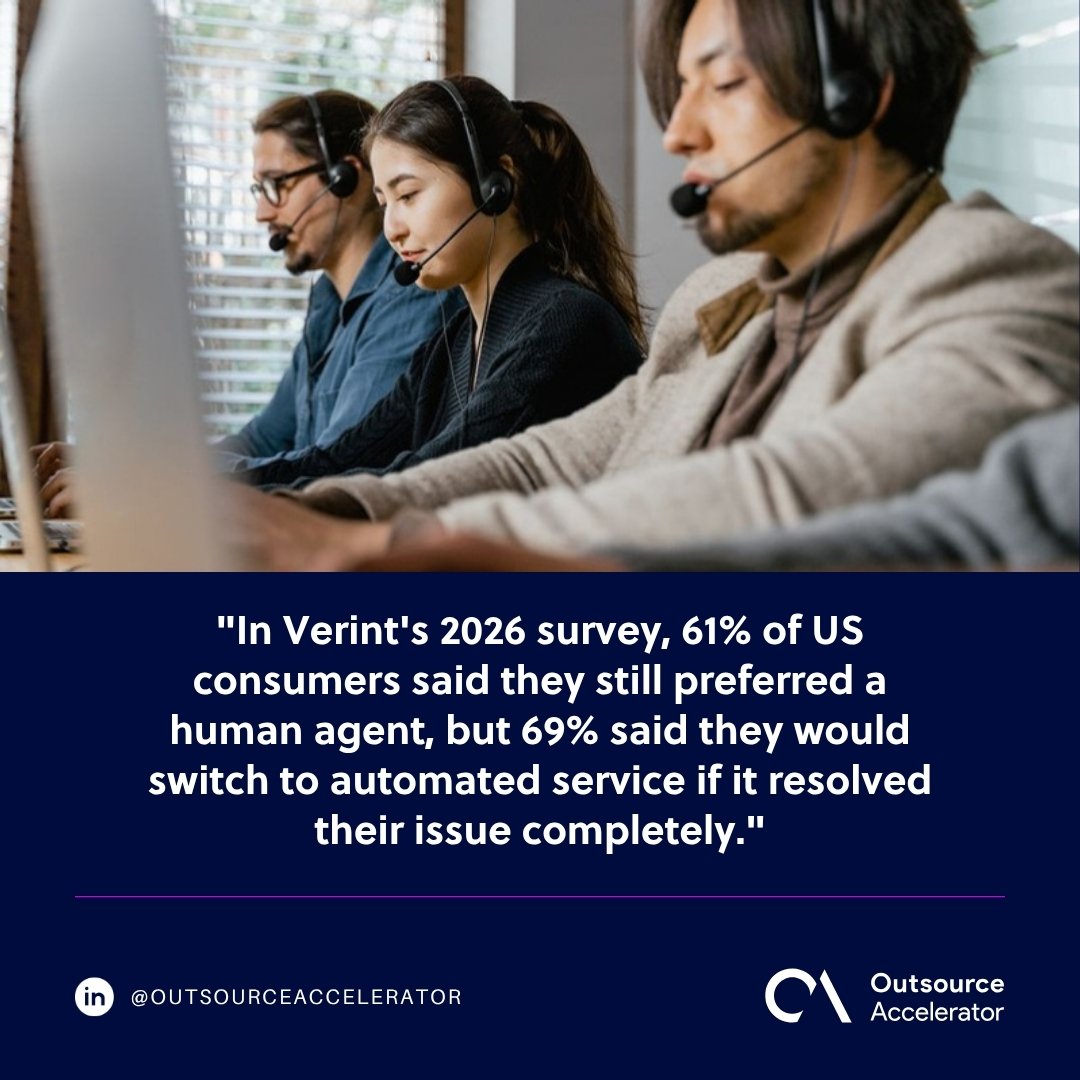
Customers are fine with this, provided it actually works. In Verint’s 2026 survey, 61% of US consumers said they still preferred a human agent, but 69% said they would switch to automated service if it resolved their issue completely.
That second number comes with a big condition attached. A chatbot that handles half a question and then leaves the customer in a queue is worse than having no chatbot at all.
Some conversations should always go to an experienced agent: denials, expensive replacements, anyone calling for the third time about the same claim. When that handoff happens, the context has to travel with the customer so they aren’t starting from scratch.
In-house, outsourced or somewhere in between?
Seasonality is the main reason warranty providers look at outsourcing. Staff up for July and you’re paying people to wait for the phone in April. Staff for April and July turns into a very long month of holding music.

Here’s how the three main staffing models compare for home warranty customer service:
| Factor | In-house | Fully outsourced | Hybrid |
|---|---|---|---|
| Handling seasonal peaks | Hard; needs year-round overstaffing or long hold times | Easier; partner scales agents up and down with volume | Easier; partner absorbs overflow while the core team stays steady |
| Cost structure | Mostly fixed (salaries, space, tools) | Mostly variable (per agent, hour or contact) | Mix of fixed core costs + variable overflow costs |
| Control over policy and denials | Full | Shared; depends on training and QA | Full on sensitive calls; shared on routine work |
| After-hours and weekend cover | Costly to staff | Usually included | Covered by the partner |
| Contract and coverage expertise | Built internally over time | Depends on the partner’s warranty experience | Kept in-house for complex cases |
Many providers settle on a hybrid setup. Some choose a specialized home warranty call center for exactly this reason, since the agents need to understand contract terms and contractor workflows from day one, not month three.
If you’re evaluating a partner, ask the below questions:
- Have your agents handled warranty, insurance or service contract claims before?
- How do you train people on coverage language and exclusions?
- How quickly can you bring trained agents before a seasonal peak?
- Who reviews denial and escalation calls, and how often?
- How do you handle data security and state service contract rules?
- Will you report first-contact resolution, repeat contacts, and handle time?
It’s also worth looking at how established home warranty companies frame their coverage and service promises. Those promises set the bar your support team has to clear.
How does better claims handling improve customer retention
Renewals are where home warranty companies make their money, so a poor claim experience costs far more than one unhappy call.
People who feel let down rarely renew, and they tend to mention it to friends and neighbors. Verint’s research put the share who would move to a competitor after a single bad experience at 79%.
The providers keeping customers longest are generally the ones that see claims handling as the main thing they sell, rather than an admin function sitting behind sales.
In practice that comes down to sound processes, systems that talk to each other, automation used where it genuinely helps, and enough trained agents (in-house, outsourced or both) to cope when the weather turns.






 Independent





