
How lean BPOs increase output without increasing burnout


- Traditional BPOs focus on hiring to solve problems; lean BPO operations focus on increasing “leverage” through automation and data.
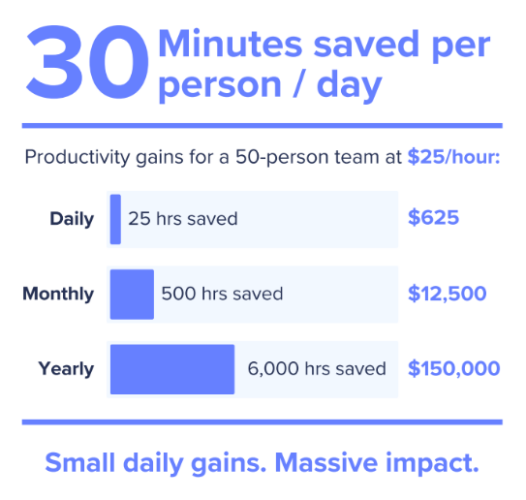
- Reclaiming just 30 minutes of unproductive time per person daily through AI and better workflows can save a 50-person team 500 hours every month.
- Modern ops engines provide real-time clarity into progress, eliminating the need for constant “status check” pings that disrupt deep work.
- Automating compliance and SOPs (Standard Operating Procedures) reduces the “informal know-how” trap that causes errors as teams grow.
For decades, the outsourcing industry operated on a linear math: more clients required more headcount.
But as we move through 2026, that model is hitting a wall. BPOs that try to keep up by simply adding more “seats” are finding themselves trapped in a cycle of spiraling complexity, thinning margins, and employee exhaustion.
Leaders today are facing a new mandate: they must do more with less, without burning out their teams or bloating their tech stacks.
The solution lies in a fundamental shift toward lean BPO operations. Instead of just trimming the fat, you are building the operational muscle to scale.
We take a look at Hubstaff’s Lean Advantage Report for BPOs to see that the most successful teams aren’t the ones hiring the fastest—they are the ones scaling the smartest.
By designing lean systems and automating the repetitive, these organizations are increasing their output while simultaneously lowering the stress levels of their distributed staff.
Why is burnout so common in traditional BPO operations?
Traditional BPO operations are often “heavy” by design. They rely on manual oversight, frequent meetings, and rigid hierarchies that create significant friction for the individual worker.
A 2024 study on Southeast Asian workforces found that the Philippines—the global hub for the BPO industry—has the highest burnout prevalence in the region at 70.7%.

In 2026, the average annual turnover rate for call centers is projected to be between 40% and 45%, which is more than double the average across all other professional industries.
In these environments, burnout is rarely caused by a single project; it is a slow-motion collision with inefficient systems.
4 drivers of BPO exhaustion
Manual task overload
High performers are often held back by manual data entry, payroll reconciliation, and reporting. These tasks eat up cognitive energy better spent on client success.
The “Check-in” tax
In a distributed setup, the lack of visibility often leads managers to resort to constant “status check” pings. This interrupts the “flow state,” forcing employees to constantly restart their work and leading to mental fatigue.
Informal know-how
As teams grow, workflows that depend on “unwritten rules” or last-minute fixes become unstable. This inconsistency is a silent killer; it forces staff to constantly reinvent the wheel, leading to mistakes and frustration.
Disconnect in AI usage
Hubstaff’s report says that while 85% of professionals claim to use AI, research shows that only 4% of actual work time involves these tools. This gap indicates that most teams have “AI bloat” without the actual efficiency gains to reduce their workload.
The operational divide
| Traditional BPO Model | Lean BPO Operations | |
| Growth strategy | Hiring more headcount | Increasing leverage |
| Management | Manual check-ins & daily pings | Passive, real-time visibility |
| Systems | Informal know-how & last-minute fixes | Standardized SOPs & automated data |
| Outcome | Spiraling complexity & burnout | Predictable, sustainable growth |
What are lean operations, really?
In the context of modern outsourcing, lean BPOs identify “waste”—any activity that costs time or dollars but doesn’t add value—and eliminate it through automation.
Hubstaff CEO Jared Brown points out that the biggest wins don’t come from reducing headcount, but from automating the work that prevents high performers from staying in the flow.
Deloitte’s 2024 Global Outsourcing Survey found that 83% of executives are already leveraging AI within their outsourced services, signaling a massive shift toward “AI-powered” lean BPO operations.
Lean operations are built on three pillars: Visibility, Automation, and Productivity Insights.
It’s about building a modern ops engine that allows for distributed management without micromanagement. When a team is lean, they don’t hire to fill gaps in a broken process; they fix the process so that their current staff can handle more volume with less effort.
3 strategies for driving lean BPO operations
Scaling your footprint without bloating your overhead requires a specific tactical approach.
Here are three strategies for driving lean BPO operations to help you maximize every hour billed:
1. Replace disruptive check-ins with passive visibility
The most immediate way to reduce burnout is to protect your team’s focus time. Lean BPOs move away from the “daily ping” and toward effortless, real-time clarity.
- Activity dashboards: Using tools like Hubstaff, team leads get passive insight into progress through real-time dashboards and optional screenshots.
- Asynchronous updates: Instead of a morning meeting, set up recurring summaries of time spent and productivity outliers to be sent straight to stakeholders’ inboxes or Slack.
- Result: Team members can progress across time zones without the friction of constant interruptions, allowing them to stay in the “flow” longer.

2. Standardize and “clone” top workflows
Inconsistency creates stress. To scale without chaos, lean BPOs must turn their best practices into repeatable systems.
- Identify what works: Use data insights to pinpoint your most efficient team members and projects.
- Create a shared SOP library: Record these workflows and store them centrally.
- The Flywheel effect: By creating a repeatable foundation, teams spend less time “reinventing the wheel” and more time executing, which directly increases profitability.
3. Automate compliance and administrative “drag”
Compliance is often seen as a cost center, but for lean teams, it is a competitive edge that builds trust and stability.
- Effortless audits: Use automated time-logs and productivity reports that are ready for HR or finance in seconds, eliminating the “fire drill” of manual audit prep.
- Localized logistics: Integrate time tracking with EOR (Employer of Record) providers like to streamline cross-border payroll and contracts.
- Result: By embedding compliance into the workflow, you remove the administrative burden from your delivery leads, allowing them to focus on scaling client accounts.
The 30-day sprint to operational excellence
Scaling smarter doesn’t require a sweeping transformation that disrupts the business. Lean BPOs stack small wins through a focused 30-day sprint.
Week 1: Get visibility
Use an ops engine to audit how time is actually being spent. Tag non-billable hours and flag manual tasks to identify where your biggest “friction points” are hiding.
Week 2: Remove one major bottleneck
Choose one high-effort, repetitive task—such as payroll prep or client reporting—and automate it. This provides a “fast win” that proves the value of operational change to the team.
Week 3: Make progress visible
Configure auto-generated reports filtered by client or project. Schedule these to go to leaders weekly via email or Slack so they stay informed without chasing updates.
Week 4: Turn results into repeatable ops
Build a lightweight ops dashboard to showcase time saved and identify top-performing teams. This becomes the blueprint for your next phase of growth.
Are lean BPO operations the only sustainable path forward?
Growing your headcount used to be the default answer, but it’s just not enough to stand out anymore. Technology is no longer a “nice-to-have”; it is essential for predictable, repeatable, and sustainable growth.
Lean BPOs are thriving because they recognize that productivity equals leverage. By saving just 30 minutes a day per person, a 50-person team can redirect 6,000 hours of “friction” into “focus” every year—a reclaimed value of roughly $150,000.
The future of outsourcing belongs to those who scale the smartest. By automating repetitive tasks and designing clearer systems, you boost your total output while giving your team the space to do their best work without burning out.
FAQs
Does “Lean” mean my team has to work harder?
No. It means they work on fewer manual, repetitive tasks. The goal is “less busywork, more breakthroughs” by using technology to handle the administrative “drag”.
How does visibility reduce stress?
It creates empowerment. When progress is clear and data is automated, you eliminate the “transparency gap” that leads to micromanagement and unnecessary meetings.
Can lean operations help with global compliance?
Absolutely. By integrating tools for time logs and localized contracts, compliance becomes a frictionless, automated part of the workflow rather than a distraction.
Key takeaway
Scale clarity, not chaos. The best operators in 2026 are those who use automation and insights to create an infrastructure that scales without spiraling complexity.
Ready to see the full data behind these operational shifts? Download Hubstaff’s complete report, “The Lean Advantage Playbook for BPOs & Virtual Teams,” to access the behavior analysis of 140,000+ users and the 30-day framework for scaling smarter.






 Independent





