
5 common IT compliance standards you should know

IT compliance standards give consumers a key line of defense when they share personal data with businesses. They also set risk controls that can save startups and small firms from huge losses.
In 2023, JP Morgan was fined US$4 million for mistakenly deleting emails without proper steps. If deleting emails can cost that much, a data breach can cost far more. The damage hits both finances and reputation.
IT compliance takes time and resources to keep up. Still, providers like ConnectOS help clients lower these risks through offshoring IT solutions. Overall, this article explains the common IT compliance standards every business should know.
What are IT compliance standards?
IT compliance standards are the rules and requirements that businesses must follow to keep data secure, private, and lawful.
- They protect personal and financial data from misuse.
- They help firms avoid fines, lawsuits, and lost trust.
- They set clear best practices for handling sensitive information.
What is IT compliance?
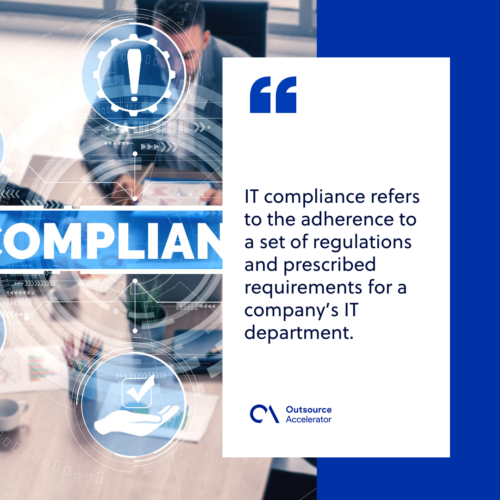
IT compliance means following a set of rules for a company’s IT department. It covers data security, integrity, and defense against cyber risks. In short, it keeps both the business and its clients safe. Many teams also study common compliance risks before they pick a standard.
IT security vs. IT compliance
IT security and IT compliance overlap in purpose and practice. Still, they are not the same thing. IT security guards the company’s information and tech assets. So it blocks unauthorized access, data breaches, and other attacks. This work protects the firm, its internal assets, and its clients.
IT compliance is different. It covers the legal and regulatory rules a firm must meet to operate. As a result, it is built to protect clients and their data. Strong data security in outsourcing depends on both working together.
Why maintain IT compliance?
Keeping IT compliance matters for a few clear reasons.
- Protection from breaches. IT compliance standards help protect sensitive data from unauthorized access. As a result, they preserve customer trust and loyalty.
- Protection from added costs. According to recent findings, non-compliance can cost twice as much as meeting the rules. So following these standards helps you avoid penalties.
- Implementing best practices. Meeting IT compliance standards keeps firms in line with industry best practices. In turn, they act as responsible data custodians.
A single data breach can undo years of trust in a moment.
5 common IT compliance standards to know
Many IT compliance standards may apply to you. It depends on your industry and where you do business. Here are the five common standards businesses should know.
1. GDPR
First, the General Data Protection Regulation (GDPR) is an EU rule for personal data. It sets guidelines for how firms collect, store, and process that data. It applies to all firms that deal within the European Union, no matter where they sit. So GDPR compliance means strong data protection based on the risk of the work.
2. SOX
Next, the Sarbanes-Oxley Act (SOX) is a US federal law. It requires financial transparency and audits in public companies. Its goal is to shield shareholders, staff, and the public from fraud and errors. In particular, the Act focuses on these areas:
- Establishing corporate responsibility
- Implementing accounting regulations
- Adding new protections
- Increasing criminal punishment for violators
3. FISMA
The Federal Information Security Management Act (FISMA) sets security rules for government agencies and contractors. It works with the E-Government Act of 2002 to enforce federal data security. So FISMA calls for strict controls and regular risk checks. As a result, it guards sensitive government information.
4. HIPAA
The Health Insurance Portability and Accountability Act (HIPAA) protects people’s health information. In addition, it applies to healthcare providers of all sizes and their contractors. In practice, HIPAA compliance means secure data storage and trained staff. It also lets patients control how their data is used.
5. GLBA
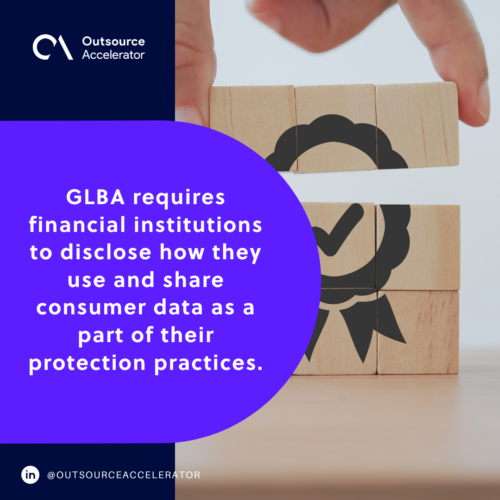
Last, the Gramm-Leach-Bliley Act (GLBA) protects consumer financial data. It applies to credit unions, insurers, and other lenders. So GLBA requires these firms to disclose how they use and share consumer data. This is part of their protection practices. Firms in finance often pair it with clear regulatory reporting habits.
Following IT compliance standards: How offshore teams can help
Keeping IT compliance can be complex and costly for many firms. That is where offshore teams from providers like ConnectOS add value. As a result, businesses get expert support without a heavy in-house load.
In particular, ConnectOS provides Integrated Resourcing solutions from the Philippines. These fit each business’s needs and meet all geographically relevant compliance standards. Their deep skill in IT security and compliance helps clients meet their duties. It also keeps them in line with international standards when hiring global teams. Strong IT security and compliance support makes global growth far safer.
Learn more about ConnectOS and their industry-leading IT security and compliance practices.
Frequently asked questions about IT compliance standards
What is the difference between IT security and IT compliance?
IT security protects your systems and data from attacks. IT compliance makes sure you meet legal and regulatory rules. So one guards assets, and the other meets duties.
Which IT compliance standard applies to my business?
It depends on your industry and location. For example, GDPR covers EU data, while HIPAA covers US health data. Many firms must meet more than one standard.
What happens if a business ignores IT compliance standards?
It can face heavy fines, lawsuits, and lost trust. In fact, non-compliance can cost twice as much as compliance. It can also open the door to data breaches.
Can offshore teams help with IT compliance?
Yes. Skilled offshore teams handle security and compliance work for clients. Providers like ConnectOS help firms meet global standards while hiring abroad.
How often should IT compliance be reviewed?
Review it regularly, not just once. Rules and threats change over time. So most firms run frequent risk checks and audits to stay current.
Key takeaways
- IT compliance standards keep personal and financial data secure and lawful.
- The five common ones are GDPR, SOX, FISMA, HIPAA, and GLBA.
- Non-compliance can cost twice as much as meeting the rules.
- Offshore teams like ConnectOS help firms meet global compliance standards.






 Independent





