
Hire AI engineers: What to look for beyond coding skills

At a glance
- AI engineers and automation specialists build AI tools into a company’s daily work, from finance reports to HR processes.
- Among RemotePeople’s clients, the companies using AI the most are also hiring the most.
- The hard part is finding people who can prompt well and understand several parts of the business.
- Search across borders, test for business sense and use a compliant hiring model.
Many companies treat AI as a reason to hire less. Some of the fastest-growing businesses are doing the opposite.
They need people who can put AI to work across finance, operations, HR and sales. Those people are scarce, and they rarely live down the road.
Antoine Boquen, co-founder and CEO of RemotePeople, sees this pattern among his clients. He explained on the Outsource Accelerator Podcast why the clients using AI the most are the ones hiring the most, and why the best AI hires think like business owners.
This guide covers what an AI hire really does, why demand keeps growing, what to screen for and how to hire one abroad.
What does it mean to hire AI engineers?
To hire AI engineers is to bring in people who build and apply AI inside your business. For most companies, that means using existing tools well, not inventing new models.
The work ranges from intelligent automation of routine tasks to brand-new hybrid roles. Antoine sees job titles appearing that did not exist a few years ago.
“We hire now, like, legal engineers. We hire HR engineers that are working on implementing AI product for HR.”
These hires sit between a department and its tools. They know enough about the department to spot what can be automated, and enough about AI to make it work.
Why AI-native companies are hiring more
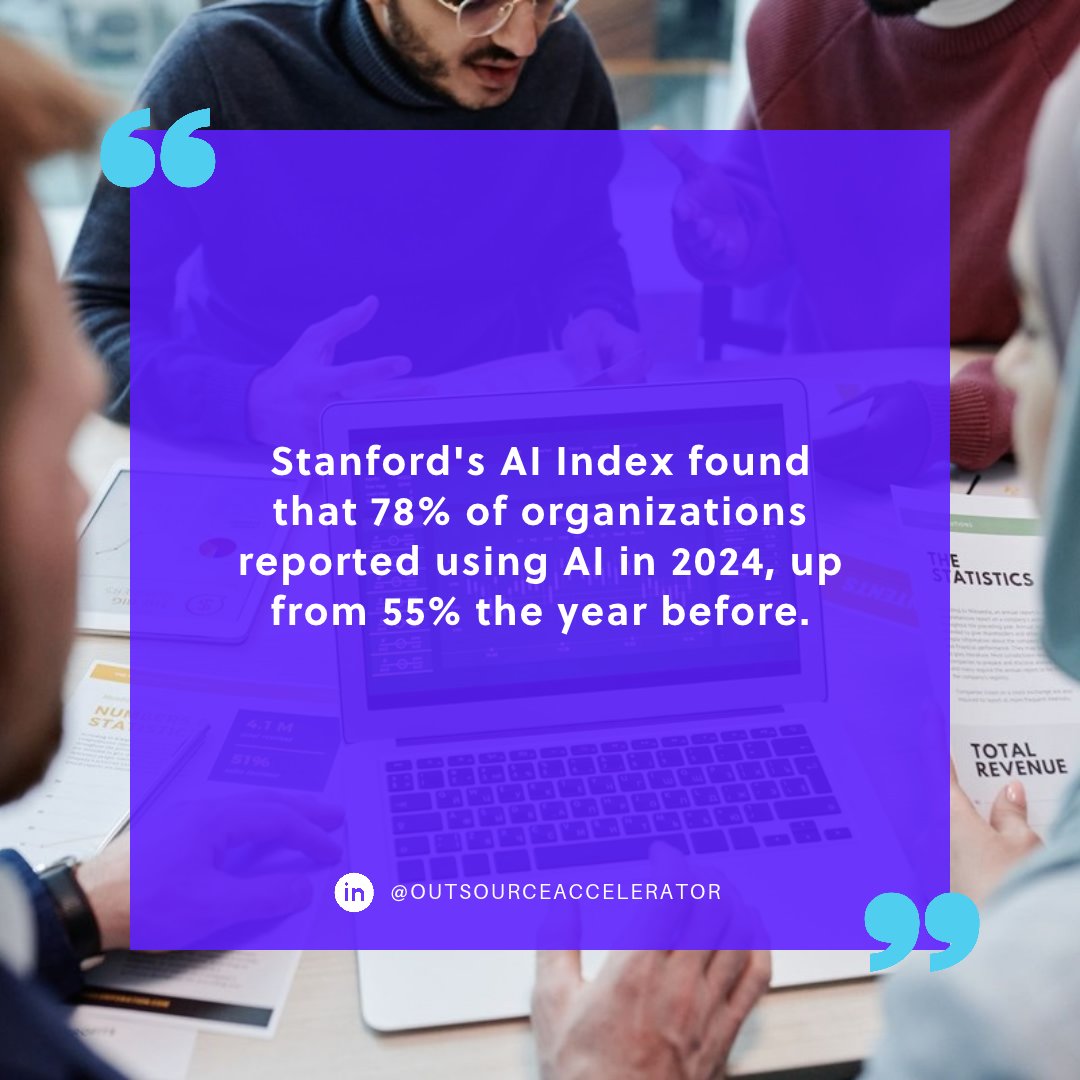
AI is now standard business practice. Stanford’s AI Index found that 78% of organizations reported using AI in 2024, up from 55% the year before.
That shift has not cut hiring among Antoine’s clients. He sees the opposite pattern.
“It doesn’t mean that because you use AI, you stop recruiting. It’s quite the opposite, actually.”
His reasoning is simple. Companies that use AI well grow faster, enter more markets and need more people to do it.
Firms that ignore AI face a different future. Antoine expects them to lose ground to competitors and, over the next few years, to cut headcount.
Why AI talent is hard to find locally
Demand for AI skills is high, but the supply of experienced people is small. The best candidates are already busy.
“Unfortunately, I would say at the moment, the best people, you know, that have this AI expertise, they’re not everywhere, and they’re already, you know, working for a lot of companies, so it’s difficult to find them.”
Antoine says most of his clients hiring AI engineers are based in California. They have the budget but cannot find enough people at home, so they look worldwide.
Wider demand for technical talent keeps rising too. The US Bureau of Labor Statistics projects employment of software developers, quality assurance analysts and testers to grow 10 percent from 2025 to 2035.
Education is also catching up. The same Stanford report found that 81% of US K–12 computer science teachers say AI should be part of foundational CS education, but fewer than half feel equipped to teach it. Antoine expects that gap to last a few years, until schools change how students learn to use AI.
What to look for in an AI hire
Strong coding skills help, but they are not enough on their own. Antoine puts prompting near the top of the list, and he says it takes real practice.
“First of all, they’re extremely good at prompting. It’s try and fail.”
The second trait is breadth. AI joins tasks that used to sit in separate departments, so your hire needs to see the whole picture.
“With AI, you need to be multifunctional. Almost, you know, like a person could be a full business unit that can produce something, sell it, like altogether, you know, from, from end to end.”
That does not mean expert-level knowledge of everything. It means enough grounding to judge what the AI tells you.
“So you need the basics in everything in order to be successful with AI.”
| What to screen for | Why it matters |
|---|---|
| Prompting skill | Good results come from many rounds of trial and error |
| Business understanding | The hire must know which processes are worth automating |
| Range across departments | AI work often spans finance, operations and HR at once |
| Curiosity and self-learning | Tools change fast, and training is still catching up |
How to hire AI engineers
A clear brief and a wide search matter as much as the budget. These steps keep the process focused.
1. Start with the business problem
Write down the processes you want to improve before you write a job ad. A hire who automates the wrong things wastes both their time and yours.
2. Search beyond your city
The person who can change how your company works may live anywhere. Antoine’s advice is to hire them wherever they are.
“A person that could transform your organization by implementing, you know, like new AI efficiencies, you would recruit this person wherever he, I mean he or she is, right?”
A global remote hiring approach widens your pool far beyond local job boards.
3. Test for prompting and business sense
Give candidates a real task from your business and ask them to solve it with AI tools. Watch how they refine their prompts and question the output.
Ask about their understanding of the department behind the task, not just the code. Skills in prompt engineering show up quickly in a live exercise.
4. Pick a primary time zone
A team spread across every time zone is hard to manage. Base your search around your leadership’s hours, then add one secondary region that overlaps well.
5. Hire compliantly in the candidate’s country
Hiring abroad without a local entity brings labor, payroll and tax rules you may not know. An employer of record (EOR) employs the person on your behalf and handles that compliance, while you manage the work.






 Independent






