
Maintaining cultural identity in the age of global employment


How can employees keep their cultural identity in a global workforce?
Employees keep their cultural identity when firms respect differences, promote two-way learning, and build inclusive teams.
- Cultural awareness training builds respect across teams.
- Inclusive policies protect diverse values and practices.
- Celebrating traditions keeps each culture visible and valued.
With the rise of outsourcing, offshore staffing, and remote work, today’s workforce is more global than ever. As firms adopt global employment strategies, workers from many nations want to keep their own cultural identity.
In this article, we define cultural identity. We look at how a global workforce affects it. Then we share strategies to protect cultural identity in the age of globalization.
Defining cultural identity
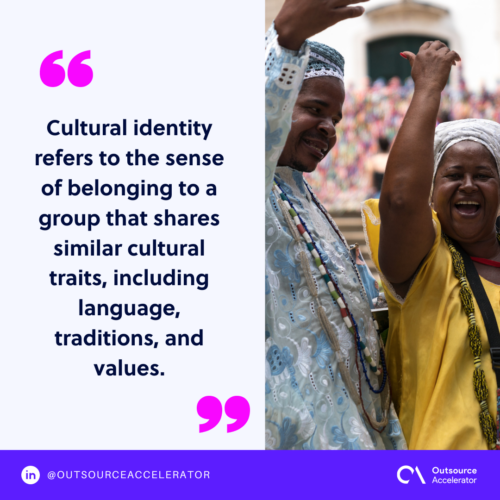
In short, cultural identity is the sense of belonging to a group with shared traits. These traits include language, traditions, and values.
Naturally, they shape how workers see themselves and how they work with others. Upbringing and experience form cultural identity. Still, it is dynamic and can change over time.
Workers in the same nation often share a similar cultural identity. But in globalized employment, one question stands out. How can workers keep their culture while they adapt to others? For many teams, strong Filipino work culture is a good example of this balance.
In the 498th episode of the Outsource Accelerator Podcast, BSA Solutions CEO Zana Gawan-Taylor said “diversity should be a two-way street.” She added that her company values “two-way communication and two-way learnings.”
“It [means] Filipinos learning and understanding the Australian culture and also Australian to understand the Philippine culture,” Zana added.
The impact of global employment on cultural identity
Global employment moves jobs across borders. It also brings diverse teams together worldwide. Naturally, this shapes cultural identity in big ways.
On the plus side, it fosters cultural exchange. This enriches the workplace with new views and practices. As a result, workers learn about other cultures and build mutual understanding. Firms that handle cultural differences in outsourcing well tend to see stronger teams.
However, global employment also brings challenges. One concern is cultural homogenization. Here, unique identities blend into one uniform global culture.
Pressure to fit global business norms can shrink personal expression. So workers may feel cut off from their heritage. This is why cultural compatibility matters so much for cross-border teams.
5 Strategies to maintain cultural identity for outsourcing firms
Outsourcing firms like BSA Solutions manage diverse, cross-border teams. So trusted providers must use clear strategies to protect cultural identity.
To get started, here are some strategies that outsourcing firms can use:
1. Encourage cultural awareness and sensitivity
Indeed, cultural sensitivity programs help workers understand and respect differences. For example, they can cover communication styles, social norms, and etiquette. Structured cultural awareness training makes this easier to roll out.
Even leaders gain from this training, as in Zana’s case.
“I’m working with Kaizen Leadership Asia in terms of getting foreigners or businesses who do business with Filipinos to have an open perspective, of open view of the different cultures and, making it a two-way learning rather than, “You have to adapt my way.””
2. Create inclusive work environments
Set policies that support diversity and inclusion. For example, use anti-discrimination policies, flexible work options, and diversity training for all staff. Good diversity management ties these efforts together.
Meanwhile, leadership plays a key role here. Leaders should model inclusive behavior and back diversity plans. In turn, they build a culture of respect for every identity.
3. Appreciate differences
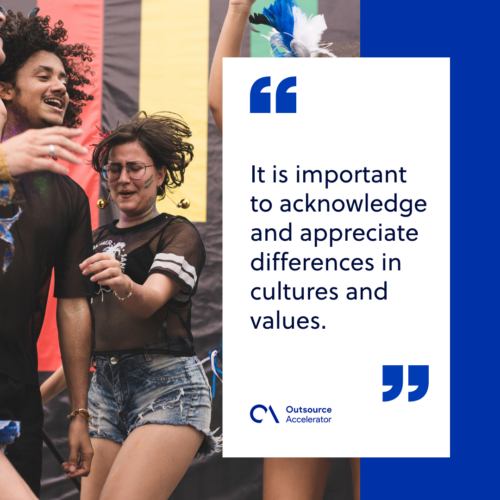
Above all, it is important to notice and value differences in cultures. So teams should treat each culture as worthy in its own right.
In the podcast, Zana said, “It’s not right to say that Australian culture is better than the Philippines culture, because I think there are many aspects of Philippine culture that is admirable…
[Like] how they survive, how they can do more with less, how the community works, the generosity and the humility. There are a lot of aspects in Philippine culture that, for me, is, “Why should you take it off them? We should be actually exemplifying from them.”
4. Engage in Corporate Social Responsibility (CSR) efforts
Working with local communities can help protect culture. For example, firms can join projects that promote local traditions.
Outsource Accelerator awards the top CSR efforts from global BPO firms each year. Check out the winners of the Outsourcing Impact Awards (OIR) 2023 here.
OIR categories include:
- Diversity, equity, and inclusion
- Community building
- Health and wellness
- Education
This shows that more BPO firms now run CSR efforts for their staff and communities.
5. Celebrate cultural diversity
Finally, host events that mark cultural holidays and traditions. As a result, the workplace feels more inclusive. Encourage staff to share their practices to build mutual respect.
As global employment grows, cultural identity matters even more. By valuing diversity, firms lift employee satisfaction and retention. In turn, they help build a richer, more vibrant global workforce.
Frequently asked questions about cultural identity
What is cultural identity?
Cultural identity is the sense of belonging to a group. The group shares traits like language, traditions, and values. It shapes how people see themselves and others.
How does global employment affect cultural identity?
It brings both gains and risks. Workers learn from other cultures and grow. However, they may also feel pressure to blend into one global norm.
How can outsourcing firms protect cultural identity?
They can run cultural awareness training and set inclusive policies. They can also celebrate traditions and value each culture. As a result, staff feel seen and respected.
Why does cultural identity matter at work?
It lifts engagement, respect, and retention. It also brings fresh ideas to the team. So the whole workforce becomes stronger and more creative.
Key takeaways
- Cultural identity is the shared language, traditions, and values of a group.
- Global employment can enrich or erode cultural identity.
- Two-way learning helps teams respect every culture.
- Inclusive policies and training protect diverse identities.
- Valuing culture lifts satisfaction, retention, and team strength.






 Independent





