
Exploring the potential of career coaching


Career coaching gives you a clear way to move your career forward. Many people face doubts and roadblocks in their working lives. Fortunately, career coaching offers a practical fix. So it helps you clear hurdles, find your strengths, and reach your goals.
With this process, you build key skills and make smart choices. As a result, your decisions line up with what you want from work.
How does career coaching help your career?
Career coaching helps by guiding you to set clear goals, build key skills, and make confident choices that move your career forward.
In short, a good coach helps you:
- Explore the right career paths and options.
- Sharpen your resume, interview, and networking skills.
- Gain confidence to negotiate pay and lead teams.
Career coaching covers many areas. For example, it spans career discovery, salary talks, and leadership growth. Next, let us look at what it is and the types on offer.
What is career coaching?
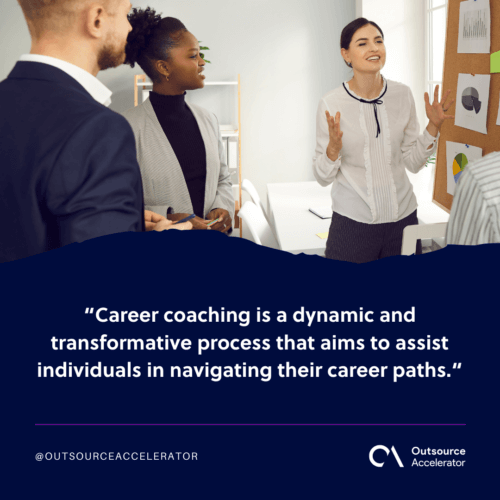
Career coaching is a dynamic process that helps people navigate their career paths. These programs guide your professional journey. As a result, they help you build skills and reach your goals.
The usual setup pairs you with a professional career coach in a one-on-one or group setting. These coaches offer guidance, support, and resources. So you can spot your strengths and make smart career choices.
10 types of career coaching
There is a wide range of career coaching services for people and teams. Here are some of them.
1. Career discovery
Many people end up hating what they thought were dream jobs. However, career discovery coaching can prevent this. Career discovery is a core part of coaching. For example, it uses these steps to find the right path:
- Self-assessment. You take part in exercises to understand your skills, values, interests, and traits.
- Research and exploration. Next, you research and narrow your career choices.
- Taking action. Then you are encouraged to act in your chosen field.
- As a result, you uncover new options and make better choices.
2. Resume development
A strong resume grabs an employer’s attention. So coaches offer basic training in resume development. This helps you build a tailored resume that shows your skills and wins. As a result, you stand out in a crowded job market.
3. Interview coaching
Interviews can be nerve-wracking. However, a coach helps you gain the confidence and skills to ace them. For example, coaches help you share your experience and show your value clearly.
4. Job search coaching
Job searching can feel overwhelming in a fast, crowded market. So coaches help you build effective job search strategies. For example, they help you spot openings and use the right platforms. They also guide cover letters, online profiles, and networking.
5. Mentorship
Mentorship is a valuable part of career coaching. It lets you learn from seasoned pros in your field. For example, coaches can connect you with mentors who share insights, guidance, and support.
6. Career development
Career development focuses on building skills and moving up. So people and teams take courses, training, and seminars. For example, they earn extra skills, certifications, or education through upskilling programs. Firms like Digital Consulting PH also offer corporate training to help. In addition, this coaching suits both in-house and remote teams.
7. Salary negotiation
Negotiating pay can feel intimidating. Still, you can do it in a calm, civil way. For example, coaches share strategies to guide these talks. As a result, you can research standards, practice, and advocate for fair pay.
8. Networking
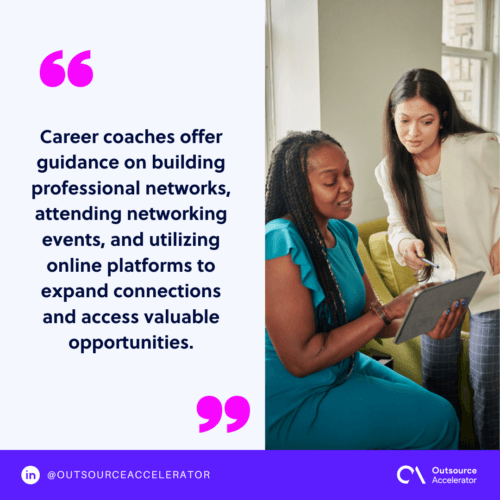
Effective networking is key to career success. So coaches help you build networks and attend events. They also show you how to use online platforms to grow connections. As a result, you tap hidden job markets and gain insights from pros.
9. Leadership coaching
Leadership coaching builds leadership skills and abilities. Sometimes firms spot staff who want to lead or grow as leaders. So this coaching gives them strategies to lead well. As a result, it also makes leadership hiring easier within the organization.
10. Executive coaching
Executive coaching is a high-level service for senior leaders. It covers strategy, leadership growth, and personal support. So it helps executives excel in demanding roles. For example, coaches boost leadership presence for C-suite and mid-management teams. In addition, they help leaders sharpen decisions and handle remote team management and complex dynamics.
Benefits of career coaching
Career coaching offers many benefits to a person. Firms gain too, because coaching supports talent acquisition and retention. These benefits include the following.
A fresh career perspective
Career coaching gives you a fresh view of your path. So when you feel stuck, a coach helps you explore options. As a result, you make informed choices as you progress.
Personalized support
Through tailored support, coaching helps you spot and clear roadblocks. For example, it tackles both inner doubts and workplace challenges. As a result, you unlock your potential and lift job satisfaction.
Self-awareness
One key benefit of coaching is better self-awareness. For example, self-reflection and assessments reveal your strengths and values. As a result, you can align your choices with your true self.
Access to tools and resources
Coaching gives you useful tools to navigate a shifting job market. For example, you build resume and interview skills. In addition, training can grow your hard and soft skills for work.
What to expect from a career coaching session
In a session, you get a private, judgment-free space. So you can freely discuss your goals, challenges, and concerns. First, the coach assesses your current situation. Next, you set clear goals and build an action plan. As a result, the coach shapes the right program to help you. Coaches also use various techniques to fit your needs.
How to prepare for a career coaching session
Reflect on career goals
Before a session, reflect on your career goals and any challenges. As a result, self-reflection helps you share your needs clearly. In turn, the coach can offer targeted support.
Be open to feedback
Coaching is a team effort. So you gain most by staying open to new ideas. Still, keep an open mind and welcome honest feedback.
Ask for clarifications and guidance
Come prepared with questions or focus areas. As a result, your session works harder for you. For example, ask for guidance on specific challenges and stay engaged.
Finding the right career coach
Finding the right coach is key to a good experience. Here are tips to help you choose:
- Research the coach’s qualifications, certifications, and experience. Also read reviews from past clients to gauge results.
- Seek referrals from colleagues, mentors, or professional networks. For example, word-of-mouth reveals a coach’s style and impact.
- Book initial consultations. Then ask questions and see if the coach’s approach fits your needs.
- Pick a coach with relevant experience. For example, some focus on specific industries, transitions, or leadership.
- Trust your instincts. A strong rapport matters, so choose a coach you feel comfortable with.
- Check availability and pricing. Make sure the schedule fits yours and the cost fits your budget.
Career coaching can unlock opportunities and speed up growth. As a result, it guides you toward greater satisfaction at work. In short, it gives you the skills, insight, and confidence to reach your goals. So take the first step and start your journey of discovery today.
Frequently asked questions about career coaching
What does a career coach actually do?
A career coach guides your professional growth. For example, they help you set goals, build skills, and plan next steps. As a result, you make clearer, more confident choices.
Is career coaching worth the money?
For many people, yes. For example, coaching can speed up a job search or a promotion. Still, the value depends on your goals and the coach’s fit.
How long does career coaching take?
It varies by goal and program. Some people need a few sessions, while others work over several months. So discuss timelines with your coach upfront.
What is the difference between a career coach and a mentor?
A coach offers structured, paid guidance toward set goals. A mentor, however, shares advice from their own experience. For example, many people use both for a fuller view.






 Independent






