
How blockchain e-commerce is empowering today’s businesses

What does blockchain mean for e-commerce?
Blockchain e-commerce uses a secure, shared digital ledger to run online payments and records, which makes transactions faster, cheaper, and harder to tamper with.
- It lets shoppers buy across borders without a bank in the middle.
- It cuts fees and adds transparency to the supply chain.
- It powers loyalty tokens, secure records, and crypto payments.
Over time, new technology keeps reshaping how businesses work. Blockchain is one of the latest advances gaining ground in the global economy. Today, it is a strong force in the e-commerce sector.
For forward-thinking leaders, blockchain e-commerce offers real potential. This is true for secure record-keeping and for payments made through cryptocurrency. However, blockchain e-commerce is more than just the use of cryptocurrency. So we will walk you through the basics of blockchain, and how it keeps transforming online retail.
How does blockchain work?
Blockchain is a type of Distributed Ledger Technology (DLT). In short, it works as a decentralized database run by many participants.
In short, it records information in a way that makes changing, cheating, or hacking the data nearly impossible. Each transaction uses an immutable cryptographic signature called a “hash.”
In general, blockchain acts as a digital ledger of linked transactions. These transactions are copied and spread across the whole network of computers on the chain. As a result, every block holds a set of transactions, and each new one is added to every participant’s ledger.
So a change to one block is easy to spot. To corrupt the system, a hacker would need to alter every block across all copies of the chain. For that reason, the data stays very secure.
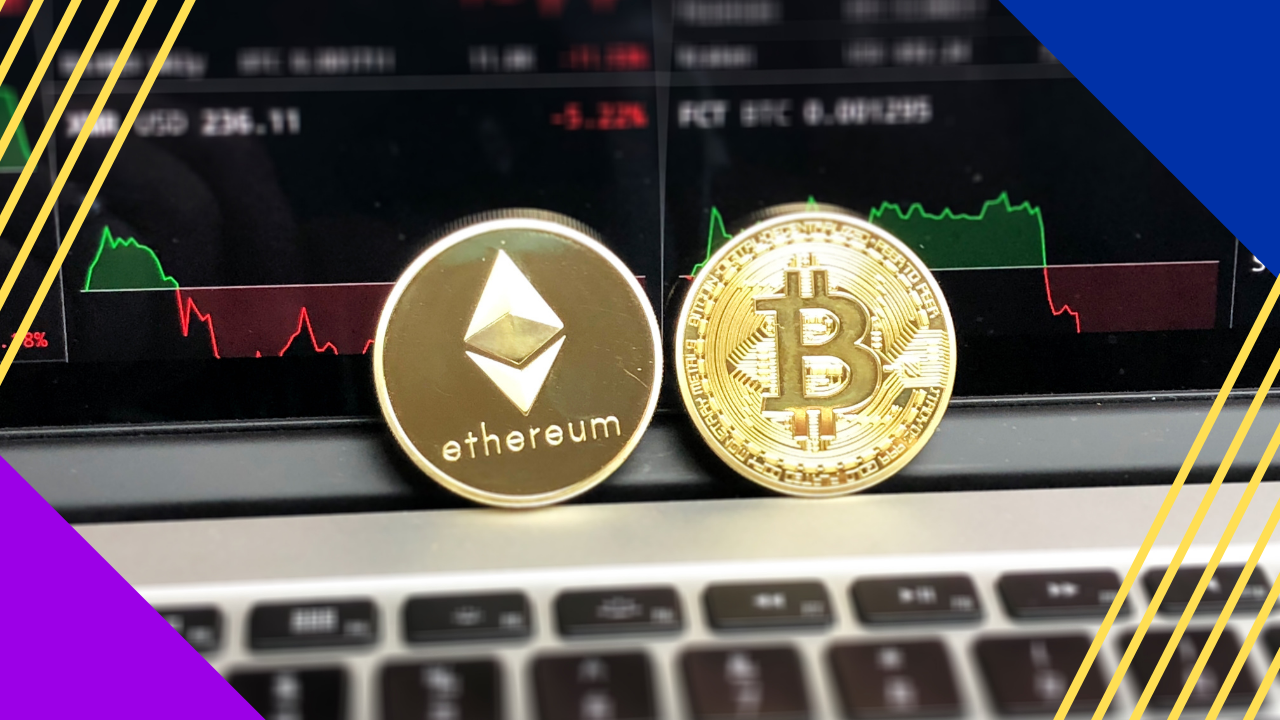
For example, Bitcoin is one of the most popular examples of cryptocurrency on the blockchain. In fact, blockchain was created as the backbone of Bitcoin.
Unlike the SQL system, where one party manages all entries, the blockchain is handled by everyone who uses it. On top of that, bitcoins cannot be hacked, spent twice, or faked. Other examples of cryptocurrencies are Ethereum, Binance Coin, Lite Coin, and Cardano.
What is blockchain e-commerce?
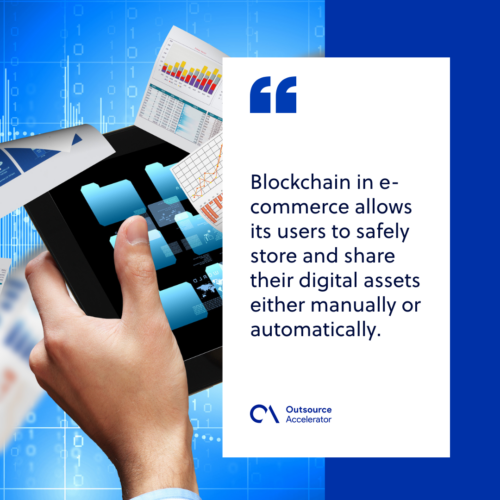
Blockchain enables safer and faster payments for both e-commerce businesses and customers. In addition, it lets users store and share digital assets safely, either by hand or on autopilot.
Beyond payments, blockchain e-commerce also supports other tasks. For example, it can help with customer care, product searches, and purchases. Notably, Bitcoin and Ethereum are two of the most widely used blockchain technologies in online retail.
Ethereum gives e-commerce businesses a platform to run their own blockchain. Bitcoin, meanwhile, is mainly used by shoppers to buy on sites that accept it. As adoption grows, many brands pair this shift with e-commerce outsourcing to manage the extra workload.
4 ways blockchain is transforming the e-commerce industry
Blockchain e-commerce has steadily moved into the mainstream. More so, it has proven useful for both consumers and retailers. So here are four ways blockchain is reshaping the field. For a deeper look, see our guide to blockchain in e-commerce.
Better access to global customers
Bank-to-bank payments, especially across borders, can be limited. Plus, customers in developing countries sometimes lack good banking options. Blockchain, however, lets global shoppers skip the bank as a middleman. As a result, it opens access to a wider range of global retailers and brands.
Cost-saving
Online retailers do not have to invest as much in different tools and systems. Through blockchain, they can run tasks like inventory management, payments, and product descriptions. For payments, it also helps shoppers avoid bank transfer fees and card processing charges.
Personal offers and referral and loyalty programs
It is also easier to give redeemable reward points once shoppers hit a spending target. Through blockchain, retailers can issue reward tokens that customers redeem across different sites. In addition, blockchain can power loyalty programs and personalized offers, which helps brands attract more buyers.
More refined supply chain management
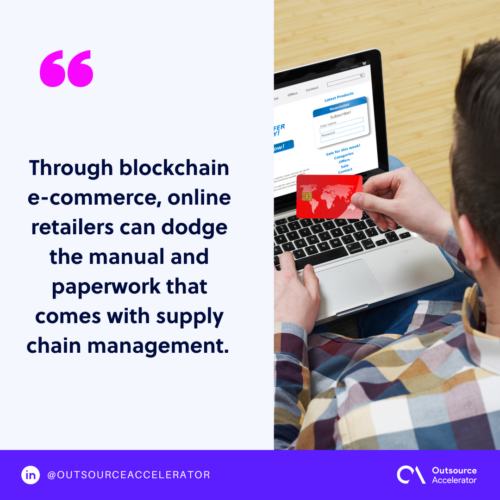
With blockchain e-commerce, retailers can skip much of the manual paperwork of supply chains. For example, they can track shipments and expected arrival dates. It also helps store operators see which vendors supply which products. So it promotes transparency across the whole supply chain, and it pairs well with supply chain analytics.
The blockchain e-commerce revolution
In fact, many shoppers today prefer to buy online rather than visit a store. Still, blockchain supports those online payments and sales, and more. While blockchain e-commerce is still a fairly new idea, its rise owes a lot to the benefits it brings.
Its growth tracks closely with fintech and cryptocurrency. For context on what comes next, see the latest fintech trends. As the tech matures, strong e-commerce security will stay central to buyer trust.
Frequently asked questions about blockchain e-commerce
Here are common questions about how blockchain works in online retail.
What is blockchain e-commerce?
Blockchain e-commerce uses a shared, secure digital ledger to run online payments and records. So it makes transactions faster, cheaper, and harder to tamper with.
Is blockchain safe for online shopping?
Yes, it is very secure by design. Each transaction is linked and copied across many computers, so altering one record is nearly impossible. Still, buyers should use trusted platforms and wallets.
How does blockchain cut e-commerce costs?
Blockchain lets shoppers skip banks as the middleman. As a result, it trims transfer fees and card processing charges, and it reduces the need for extra systems.
Which cryptocurrencies are used in e-commerce?
Bitcoin and Ethereum are the most common. Bitcoin is mainly used for purchases, while Ethereum gives businesses a platform to run their own blockchain. Others include Binance Coin, Lite Coin, and Cardano.
How does blockchain improve supply chains?
Blockchain records each step in a shared ledger. So retailers can track shipments and confirm which vendor supplied which product. This adds transparency and cuts manual paperwork.






 Independent






