
Top 7 AI workforce management tools for contact centers

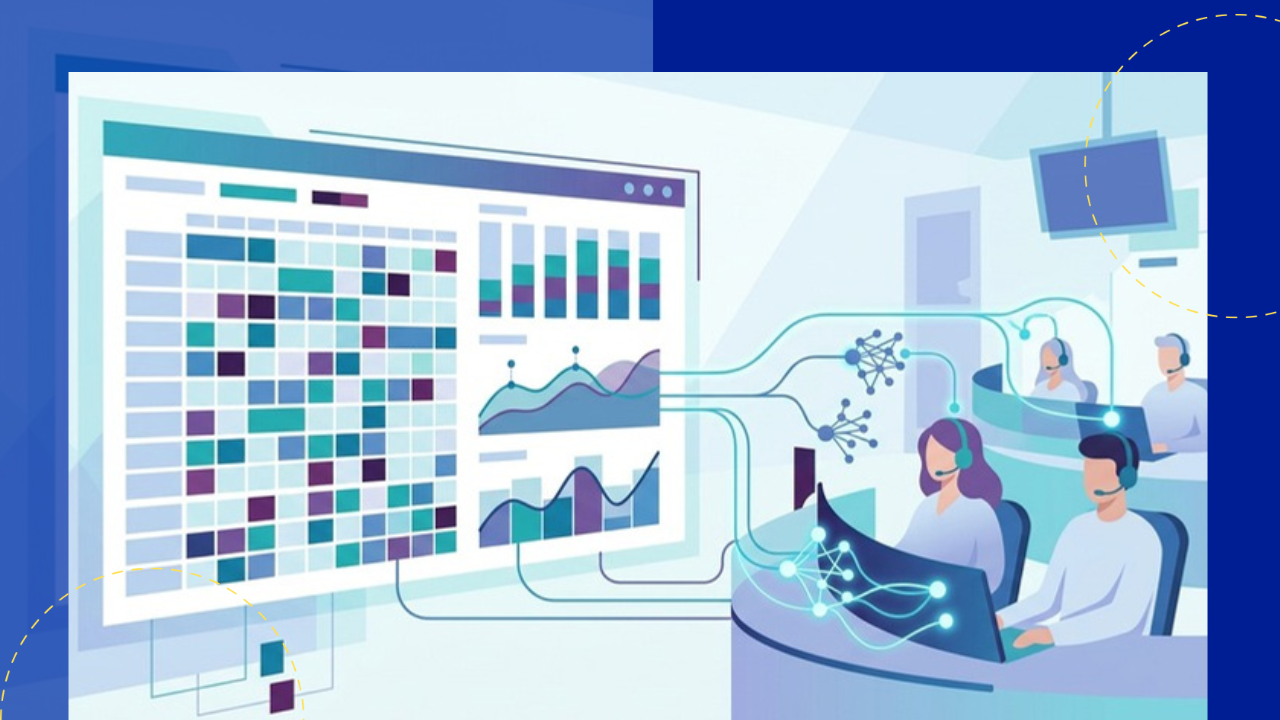
- AI workforce management tools use historical interaction data to forecast contact volume and build agent schedules with less manual guesswork.
- Contact centers adopt them to trim overstaffing costs, protect service levels, and ease agent burnout.
- This guide reviews seven established platforms, adds a comparison table, and lists criteria for choosing one.
- BPO providers can run the same software to staff client campaigns across shifts and time zones.
AI workforce management tools are software platforms that predict how many customer interactions a contact center will receive, then schedule agents to match that demand. They pair statistical forecasting with machine learning to read patterns in past volume, handle times, and seasonality.
The payoff is practical. Better forecasts mean fewer idle agents during quiet spells and fewer abandoned calls during peaks, which supports both cost control and customer experience.
This matters to two audiences. Companies weighing outsourcing want to understand the systems a partner runs, while BPO firms need reliable staffing engines to hit contractual service levels.
Research houses note that firms are redesigning their contact center workforce rather than simply cutting it, and modern scheduling software sits at the center of that shift.
List of AI workforce management tools
1. NICE Workforce Management
NICE offers one of the most widely deployed WFM suites, sold as part of its CXone customer experience platform. Its forecasting and scheduling engine draws on historical interaction data to project demand across voice and digital channels.
The company markets AI capabilities under its Enlighten brand for tasks such as intraday staffing adjustments.
2. Verint Workforce Management
Verint is a long-established vendor in the workforce engagement category, with WFM used by large enterprises and outsourcers alike. Its platform forecasts staffing needs, generates schedules, and tracks adherence across omnichannel operations.
Verint has invested in AI-driven analytics and bots that work alongside its scheduling tools.
3. Calabrio ONE
Calabrio ONE brings workforce management together with quality management and analytics in a single cloud suite for contact centers.
The WFM module handles forecasting, schedule generation, and intraday management, and the vendor promotes AI-assisted forecasting. It integrates with several major cloud contact center platforms.
4. Genesys Cloud
Genesys is a leading contact center platform that folds workforce engagement management into its cloud product. The tools span forecasting, scheduling, and performance tracking, so many customers avoid buying a separate WFM system.
Genesys applies AI across routing and forecasting to align staffing with predicted demand.
5. Five9
Five9 provides cloud contact center software with an integrated workforce management and optimization module. The capability forecasts interaction volume, builds schedules, and monitors adherence for voice and digital queues.
Five9 has broadened its AI portfolio through both internal development and acquisitions.
6. Talkdesk
Talkdesk is a cloud-native provider whose workforce management lives inside a wider engagement suite. The platform forecasts demand, automates scheduling, and supports intraday changes for distributed teams. Talkdesk positions AI as a core part of its automation and analytics features.
7. injixo
injixo is a cloud workforce management product built specifically for contact centers by the vendor InVision. It concentrates on forecasting, scheduling, and real-time management, and markets machine-learning forecasting.
Because it focuses on WFM rather than full telephony, teams often layer it on top of an existing contact center system.
How to choose an AI workforce management tool
Start with your stack. If you already run a cloud contact center platform, its native module may cover forecasting and agent utilization without a second purchase.
Weigh forecast accuracy against ease of use. A powerful engine that your planners cannot operate day to day will underperform a simpler tool that the team actually trusts and maintains.
Check channel coverage, integration with your telephony and HR systems, and how the vendor handles intraday reforecasting. These details decide whether the software supports genuine call center optimization or just automates the old spreadsheet.
Buyers exploring a wider AI contact center roadmap should confirm the WFM layer connects cleanly to quality and analytics modules.
| Tool | Type | Best suited for |
|---|---|---|
| NICE WFM | WFM within a wider CX platform | Large, omnichannel operations |
| Verint WFM | Workforce engagement suite | Enterprises and outsourcers |
| Calabrio ONE | Cloud WFM plus QM and analytics | Mid-size to large contact centers |
| Genesys Cloud | CCaaS with built-in WEM | Teams wanting one integrated stack |
| Five9 | Cloud contact center with WFM module | Voice and digital queue management |
| Talkdesk | Cloud-native engagement suite | Distributed, remote-first teams |
| injixo | Dedicated cloud WFM | Adding WFM to existing telephony |
Frequently asked questions
These questions come up often from companies comparing vendors and from BPO teams standing up new campaigns.
What are AI workforce management tools?
They are platforms that forecast contact volume and schedule agents using historical data and machine learning. Beyond planning, many analyze conversations too, and generative AI in customer care can transcribe calls and surface the issues driving demand.
How does AI improve forecasting and scheduling?
Traditional forecasting relies on simple averages, so it struggles with sudden shifts. AI models read many variables at once, spot patterns humans miss, and update forecasts through the day as real volume arrives.
Do BPO companies need dedicated WFM software?
Most established providers use it. Managing agents across several clients, shifts, and time zones is difficult to do accurately by hand, and WFM software keeps staffing aligned with each contract.
How much do these tools cost?
Pricing is rarely public and depends on seat count, channels, and modules. Vendors typically quote per agent per month, so ask for a tailored proposal and confirm which features are included.
Key takeaways
Choosing well comes down to fit with your existing systems, forecast quality, and the team that will run the tool.
- All seven platforms above are established, currently operating, and offer AI-assisted forecasting and scheduling.
- Native modules in Genesys, Five9, and Talkdesk suit teams that want one integrated stack.
- NICE, Verint, and Calabrio are common choices for larger or outsourced operations, while injixo adds WFM to existing telephony.
- Match the tool to your channels and integrations, then request a custom quote before committing.






 Independent





