
Offshoring: Europe’s digital skills gap and why companies need to outsource
Why should European companies outsource to close the digital skills gap?
European companies should outsource to close the digital skills gap because offshoring, especially staff leasing in the Philippines, gives fast, affordable access to skilled IT talent that is scarce at home.
- Europe still faces a wide digital skills gap across IT, cybersecurity, and AI.
- Offshoring fills open roles quickly, while local upskilling programs take years.
- Staff leasing adds more control and lower cost than full outsourcing.
Talent surveys have long shown a shortage of skilled workers across Europe, from the UK to Germany. Many firms report real trouble finding and keeping their ideal staff. Researchers also warn that these shortages could cost the region a large share of its future output by 2030. As a result, there is an urgent need to rethink hiring.
Information technology is one of the most exposed sectors in Europe today. Report after report points to a large digital skills gap that firms struggle to fill. So in this article, we explain why offshoring to the Philippines can be a smart move for your organization.
Why European companies need to outsource digitally skilled talent
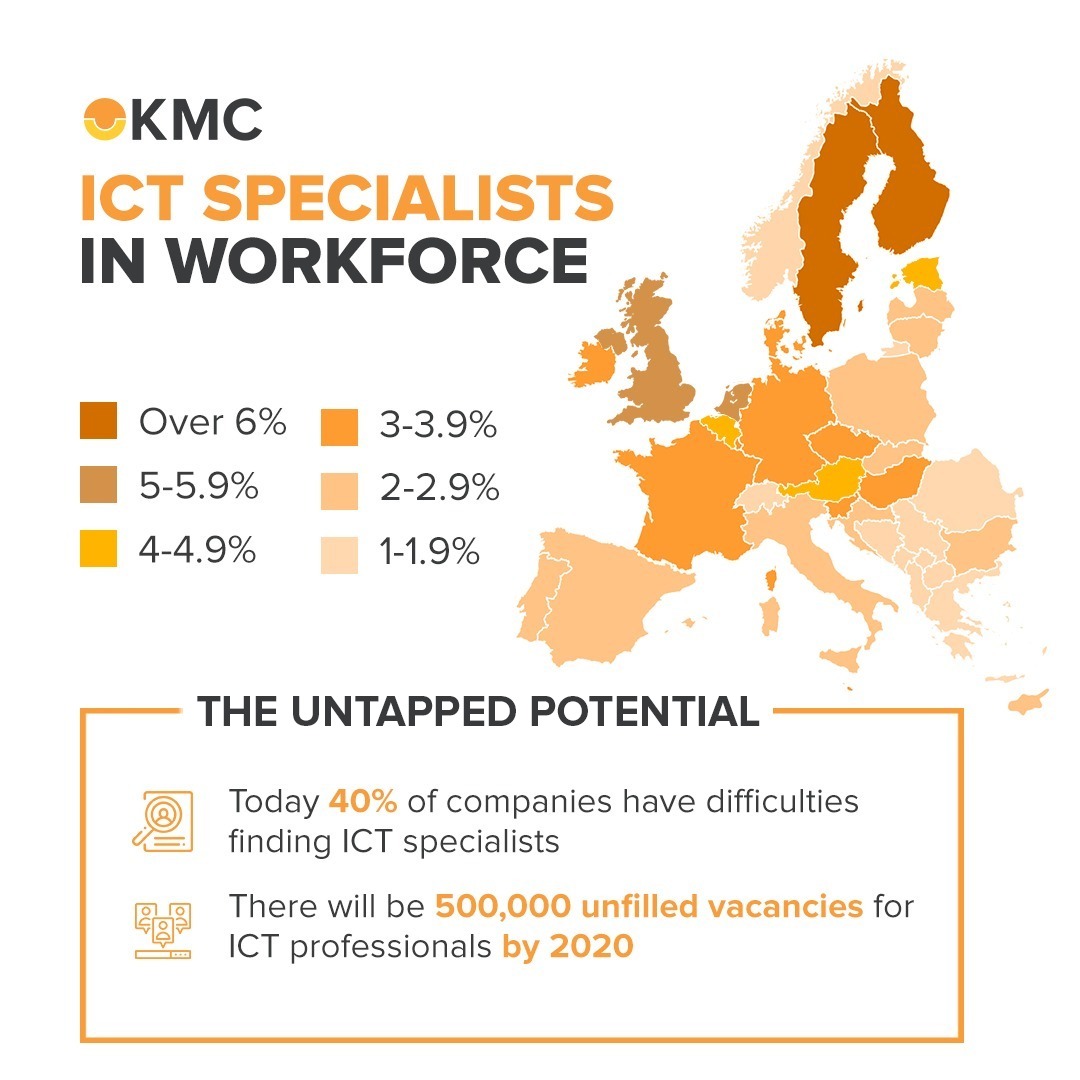
European companies keep struggling to find and keep staff with strong digital skills. Many report gaps in cybersecurity, artificial intelligence, and robotics. These are exactly the skills that modern businesses need most.

Info taken from: ec.europa.eu
The gap is not small. The European Commission reports that around 44% of Europe’s adult population have low-level or no digital skills. In addition, a large share of the workforce still lacks basic digital skills. The EU now aims for 80% of adults to reach at least basic digital skills by 2030, but it remains off track.
European governments do run upskilling programs. The UK, for example, has pledged major funding to close its skills gap. However, these efforts take years to pay off. So companies need an immediate way to fill open roles. This is where outsourcing to the Philippines comes in. Filipino talent is easy to engage through staff leasing, and it offers a practical alternative to pricier in-house hires.
Staff leasing as the new outsourcing

Full outsourcing is still an option for European firms. However, Staff Leasing in the Philippines is often a better fit. It gives clients several benefits that the full outsourcing model lacks. To understand the wider model, it helps to see how staff leasing works in practice.
The first benefit is control. With staff leasing, clients join the interview and screening of each candidate. By contrast, traditional outsourcing often assigns ready-made staff to a client. So leasing gives you a bigger say in who joins your team.
The second benefit is cost. Outsourcing to the Philippines is already cost-efficient. Still, staff leasing saves even more, since setup and rollout are faster than full outsourcing. As a result, teams get to work sooner.
IT roles European firms often offshore
Many digital roles suit the staff leasing model well. For example, firms commonly lease:
- Software and web developers, backed by trusted software development outsourcing teams.
- Cloud, data, and support engineers across core IT outsourcing services.
- Security analysts, since outsourced cybersecurity services help close a key European gap.
Filipino IT staff also fit European teams well. For a start, most speak strong business English, so daily work stays clear. In addition, many have experience with Western clients and tools. As a result, onboarding is often quick and smooth. Teams can also set overlapping hours to keep projects moving in real time.
Affordable talent costs
Cost is a big draw. Filipino talent is affordable across many fields, and IT is one of them. In fact, IT salaries in the Philippines are far lower than in the UK, Germany, or Spain. Often they are a fraction of Western European pay.

Across the board, IT and computer science roles in the Philippines cost less than in much of Europe. So staff leasing to the Philippines is an effective move for firms that need world-class IT talent. It is also fast and practical, which matters while Europe’s own upskilling programs catch up.
KMC is one of the pioneers and most trusted staff leasing providers in the Philippines. It handles some of the world’s biggest brands across many industries, including information technology. For more on its service, get in touch through the contact options above.
Frequently asked questions about offshoring to close the digital skills gap
What is staff leasing?
Staff leasing lets a company hire full-time offshore staff through a local provider. The provider handles payroll, benefits, office space, and compliance. Meanwhile, the client manages the day-to-day work. So you keep control without setting up a foreign entity.
Why is the Philippines a strong choice for IT talent?
The country has a large, English-speaking workforce and a mature outsourcing sector. Many graduates train in IT and computer science each year. As a result, firms can find skilled developers, engineers, and analysts at scale.
How fast can a European company build an offshore IT team?
Staff leasing is quicker than full outsourcing or in-house hiring. A provider can source, screen, and onboard staff in weeks, not months. So open roles get filled while local training programs still run.
Is offshore IT work secure?
Yes, when you pick the right partner. Reputable providers follow strict data rules and modern security standards. It helps to agree on access controls, audits, and compliance terms before the team starts.






 Independent






