
How to reduce IT operational costs

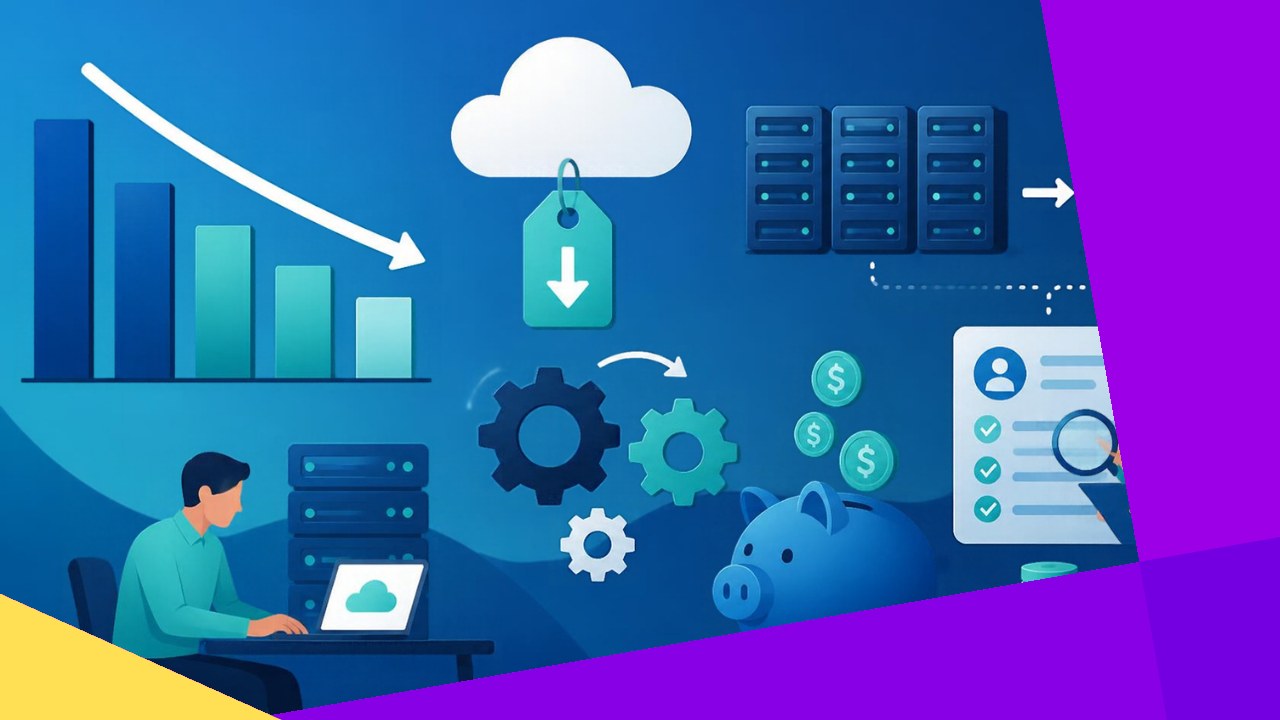
- Reducing IT operational costs starts with visibility: find where the money actually goes before you cut anything.
- The biggest savings come from many small levers, including cloud right-sizing, automation, tool consolidation, license cleanup, and energy use.
- Outsourcing selected functions is one lever among several, not the whole plan.
IT budgets creep upward quietly. A new tool here, an idle server there, a license nobody cancelled, and the monthly bill keeps climbing. Reducing IT operational costs is rarely about one dramatic cut. It is about finding small sources of waste across cloud, software, hardware, and staff time, then closing them one by one.
The good news is that most of these savings do not hurt performance. In many cases they improve it, because a leaner stack is easier to run and secure. This guide walks through the practical levers that growing companies can pull, roughly in the order that tends to pay off fastest.
Start by finding where the money goes
You cannot cut what you cannot see. Before touching anything, pull together your cloud bills, software subscriptions, hardware contracts, and support costs into one view. Tag each line by team or service so you know who uses what.
This step alone often surprises people. Idle resources, duplicate tools, and forgotten renewals tend to surface fast. Once you can see the spend clearly, the next decisions get much easier.
Right-size cloud and cut idle resources
Cloud is usually the fastest win. Teams over-provision for safety, then never scale back. The waste adds up. Flexera’s State of the Cloud report found that organizations estimate “wasted cloud spend” at 29% of their total cloud bill, so there is real money sitting idle.
Match capacity to actual use
Review usage data and resize instances that run well below capacity. Shut down test environments overnight and on weekends. Set budgets and alerts so spend never drifts unnoticed again.
Commit where usage is stable
For workloads you know you will run, reserved or committed-use pricing cuts the rate sharply. Keep on-demand pricing only for unpredictable spikes. This mix keeps you flexible and still lowers the bill.
Automate repetitive IT work
Staff time is a major operational cost, and much of it goes to routine tasks. Password resets, user onboarding, patching, and backups all run fine without constant hands-on effort. Automating them frees your team for higher-value work and reduces errors.
Start with the tasks your team does most often. Script them, then move toward self-service for common requests. Infrastructure as code also helps, because it makes environments repeatable instead of hand-built each time.
Consolidate tools and vendors
Most IT teams carry overlapping tools. Two ticketing systems, three chat apps, several monitoring dashboards that do nearly the same job. Each one adds a license, an integration, and a learning curve.
Audit your tool list and ask a blunt question of each item: does this earn its cost? Merge overlapping tools onto one platform where you can. Fewer vendors also means stronger negotiating leverage at renewal time, since you are buying more from each one.
Rationalize software licenses
License waste is quiet but constant. Companies pay for seats that left years ago, premium tiers nobody uses, and features bundled into plans by default. A regular license review catches all of it.
Match active users to paid seats every quarter. Downgrade over-specified plans. Track renewal dates so you decide on each contract instead of auto-renewing. Good tracking of your IT assets makes this routine rather than a scramble.
Outsource selected functions
Outsourcing is one lever, not the answer by itself. It works best for functions that are steady, specialized, or hard to staff around the clock, such as help desk, monitoring, or infrastructure management. A provider spreads those costs across many clients, so you pay less than running a full in-house team for the same coverage.
Be selective. Keep the work that is core to your product in-house, and hand off the predictable, process-heavy functions. For a deeper look at the trade-offs, see this guide to cutting technology spend through an external partner. Scope the contract tightly so savings do not leak into change fees.
Maintain hardware and manage energy
Reactive repairs cost more than planned upkeep. Preventive maintenance, steady patching, and timely hardware refreshes prevent the expensive outages and emergency replacements that blow a budget.
Energy is an overlooked line too, especially if you still run on-premises equipment. Efficient hardware pays back over time. According to the ENERGY STAR data center program, a certified server “consumes 30% less energy than a standard server,” so refresh cycles can lower both your power and cooling costs.
Comparing the main cost levers
| Lever | Typical effort | Speed of payback |
|---|---|---|
| Cloud right-sizing | Low | Fast |
| Automation | Medium | Medium |
| Tool and vendor consolidation | Medium | Medium |
| License cleanup | Low | Fast |
| Outsourcing | High | Slower |
| Maintenance and energy | Medium | Slower |
Start with the fast, low-effort wins to build momentum and free up budget. Then fund the bigger structural changes with the savings you bank early.
Frequently asked questions
How much can a company realistically save on IT operating costs?
It varies by starting point, but double-digit percentage savings are common in the first year when waste has never been reviewed. Companies with tighter operations see smaller gains and should focus on structural levers like automation rather than quick cleanups.
Will cutting IT costs hurt security or reliability?
It should not, if you cut waste rather than capability. Removing idle servers and duplicate tools usually improves security by shrinking the attack surface. The risk appears only when teams skip patching or monitoring to save money, which tends to cost far more later.
What should we measure to prove the savings are real?
Track cost per user, cost per workload, and total spend against a baseline month. Pair those with uptime and ticket resolution times so you confirm service held steady. Savings that come with falling service quality are not savings.
Who should own the cost-reduction effort?
Give one owner clear accountability, usually an IT or operations lead, with finance as a partner. Shared ownership without a single point of responsibility tends to stall, because no one is tasked with chasing each renewal and usage review.






 Independent





