
A practical guide to IT asset management outsourcing

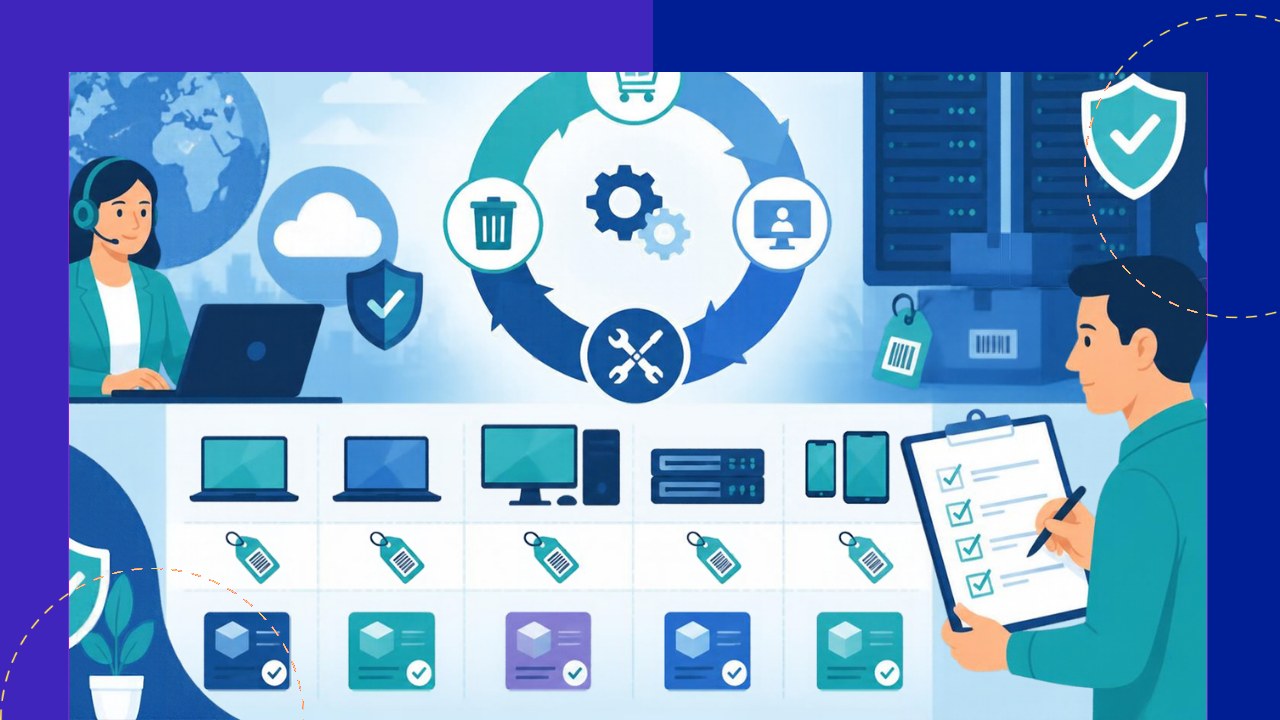
- IT asset management outsourcing hands the tracking of your hardware, software, and licenses to a specialist provider.
- A good provider manages the full asset lifecycle, from purchase to retirement, and keeps your license compliance clean.
- Start small: define the assets in scope, agree on the data you need, and set clear reporting before you hand anything over.
Most growing companies lose track of their devices long before they notice. Laptops get reassigned, software renews on autopilot, and nobody can say who holds what. IT asset management outsourcing fixes that gap by giving a dedicated provider the job of tracking every piece of hardware and software you own. You keep the decisions. They keep the records accurate.
This guide explains what IT asset management (ITAM) covers, why teams outsource it, and what to check before you pick a partner.
What IT asset management actually covers
ITAM is the practice of tracking and governing your technology assets across their whole life. That includes physical gear and the software that runs on it.
Hardware tracking covers laptops, servers, phones, and network devices. Software tracking covers applications, cloud subscriptions, and the licenses that permit their use. Compliance work makes sure you pay for what you use and use only what you pay for. The lifecycle piece follows each asset from purchase to disposal.
Security leans on this work too. NIST’s practice guide on IT asset management points out that a physical inventory can show where a computer sits but cannot say what operating system a laptop runs or whether it faces a known threat. Good ITAM connects those dots.
Why companies outsource IT asset management
The appeal is simple. Tracking assets well takes steady effort, specialist tools, and attention that small IT teams rarely have to spare.
Cost control is the clearest win. When you know what you own, you stop paying for idle software seats and unused subscriptions. You also avoid surprise true-up bills when a vendor audits your licenses. A provider that does this daily spots waste faster than a stretched internal team.
Accuracy is the second benefit. Providers use proper discovery tools and keep the data current, so your records match reality. That matters for security. CISA’s Cyber Essentials urges every organization to “learn what is on your network” and “maintain inventories of hardware and software assets.” You cannot protect what you cannot see.
The third benefit is capacity. Outsourcing frees your engineers for work that moves the business, not chasing serial numbers and renewal dates.
The asset lifecycle a provider runs
A strong provider manages each asset through a clear set of stages. Think of it as a loop that runs from procure to retire.
1. Plan and procure
The provider helps forecast what you need and records each new asset as it arrives. Every device gets tagged and logged from day one.
2. Deploy and track
Assets are assigned to people, sites, or systems. The provider keeps the location, owner, and configuration up to date as things move.
3. Maintain and optimize
Here the provider watches usage, flags underused licenses, and schedules updates. This stage is where most of the savings show up.
4. Retire and dispose
When an asset reaches end of life, the provider handles secure wiping, disposal records, and license recovery. Nothing walks out the door untracked.
What to look for in a provider
Not every partner runs ITAM the same way. A few things separate the strong ones from the rest.
Ask how they discover assets. Automated discovery across your network and cloud beats manual spreadsheets every time. Ask what tools they use, and whether they can plug into the systems you already run. Many teams pair a provider with their own platform that tracks every device and license so the data lives in one place.
Check their reporting. You want clear dashboards and regular reviews, not a yearly data dump. Review their security practices, since they will handle sensitive inventory data. Make sure the contract spells out data ownership. The records they build belong to you.
| Factor | In-house ITAM | Outsourced ITAM |
|---|---|---|
| Setup speed | Slower, needs hiring and tooling | Faster, provider brings tools |
| Cost pattern | Fixed salaries and licenses | Predictable service fee |
| Specialist depth | Limited on small teams | Dedicated and current |
| Control of data | Full, kept internally | Full, if the contract says so |
How to get started
You do not need to outsource everything at once. A staged start lowers risk and builds trust.
1. Define the scope
List the asset types you want tracked first. Many teams begin with laptops and software licenses, then expand later.
2. Agree on the data and reports
Decide what fields you need for each asset and how often you want reports. Write these expectations into the agreement.
3. Run a baseline audit
Let the provider build an accurate inventory before anything else. This baseline shows what you actually own and where the gaps sit.
4. Review and expand
After a quarter, check the results against your goals. The framework for identifying and managing assets in the NIST Cybersecurity Framework gives a useful yardstick: assets should be managed in line with their importance to the business. Once the first stage runs smoothly, bring more asset types into scope.
Frequently asked questions
How is ITAM different from IT service management?
IT service management handles requests, incidents, and the delivery of IT services to users. ITAM focuses on the assets themselves: what you own, where it is, and what it costs. The two often share a database, so a help desk ticket can pull up the exact device involved.
Will outsourcing ITAM mean giving up control of my assets?
No. The provider manages the tracking, but you keep ownership of both the assets and the data about them. The key is the contract. Spell out that the inventory records are yours and can be exported at any time, so you never get locked in if you change partners.
What does IT asset management outsourcing typically cost?
Pricing usually follows the number of assets or endpoints under management, charged as a monthly fee. A small estate costs little to run, while thousands of devices cost more. Most teams find the fee is offset by the license savings and avoided audit penalties the provider uncovers in the first year.
How long before we see results?
The baseline audit alone often reveals savings within weeks, since idle licenses and forgotten subscriptions surface fast. Deeper gains, such as tighter procurement and cleaner disposal, build over a few quarters as the lifecycle process settles into a routine.






 Independent





