
Should you invest in IT procurement outsourcing?

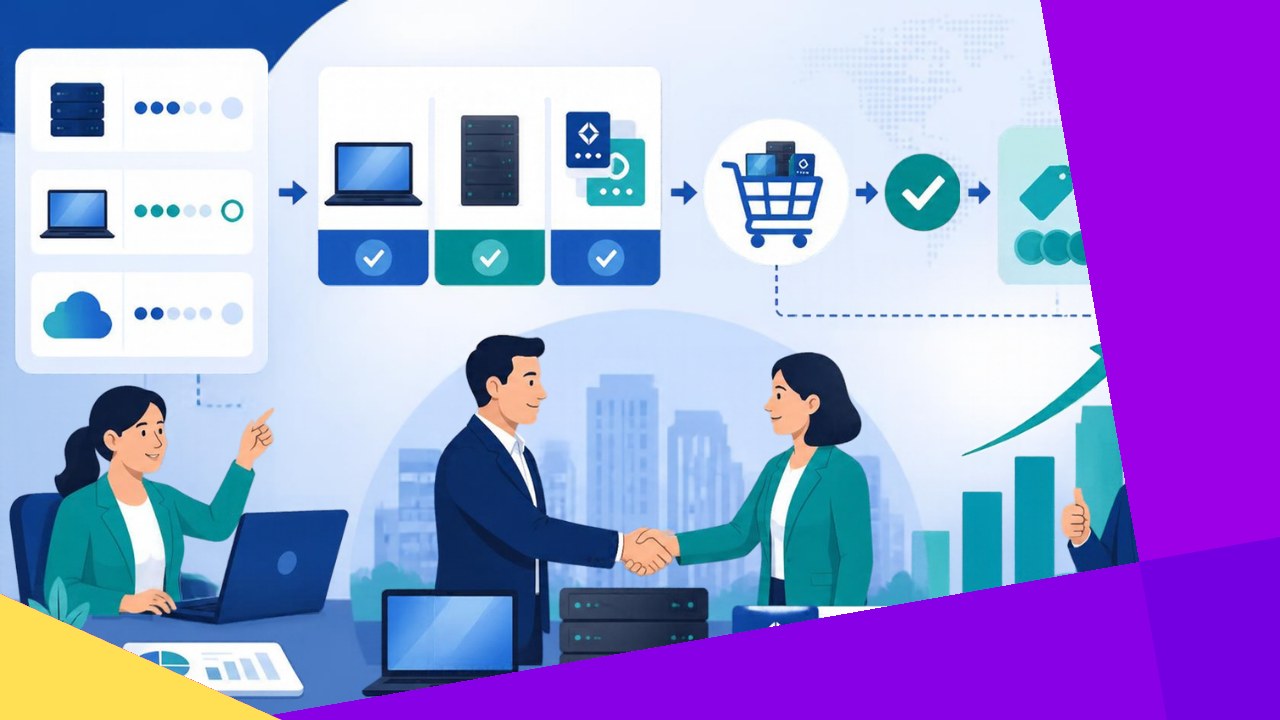
- IT procurement outsourcing hands the sourcing of hardware, software, licenses, cloud, and vendor relationships to a specialist partner.
- The main draws are lower unit costs, sharper category expertise, and faster fulfillment, but you trade some control and gain new supply chain risk.
- It makes the most sense when your spend is large or messy, your team is stretched thin, and your buying is reactive rather than planned.
Every growing company reaches a point where buying technology eats more time than it should. Quotes pile up, licenses renew on autopilot, and nobody can say what the business owns. IT procurement outsourcing is one response. You let an external partner source and manage your hardware, software, cloud services, and vendor contracts, while your staff focus on building systems.
So should you invest in it? Honestly, it depends on your spend, your team, and how disciplined your buying is today. This guide covers what the service includes, where it helps, where it can bite, and whether it fits.
What IT procurement outsourcing actually covers
Procurement is more than placing orders. A good partner owns the full buying cycle, so the scope is broader than people expect. Here is what typically sits inside it.
Sourcing and purchasing
The partner finds suppliers, requests quotes, and negotiates pricing on laptops, servers, and network gear. Because they buy at volume across many clients, they often secure rates a single company cannot match.
Software and license management
They handle software purchases, subscriptions, and renewals, then track entitlements so you do not pay twice or drift out of compliance. This overlaps with tracking what you own across its lifecycle, which many providers bundle in too.
Cloud and vendor management
The partner manages cloud commitments, reviews usage, and keeps one view of every vendor. They chase renewals, flag price hikes, and handle the back-and-forth that usually lands on a busy lead.
The benefits worth paying for
When procurement outsourcing works, it pays for itself in three clear ways. Each maps to a problem in-house teams often struggle with.
Lower and more predictable cost
Specialist buyers know the real price of things. They consolidate purchases, cut maverick spend, and stop silent renewals from creeping up. That discipline is how teams go about trimming avoidable IT spend without hurting quality.
Category expertise you rent, not hire
Hiring a seasoned procurement manager is expensive and slow. Outsourcing gives you that expertise on demand. The partner already knows the suppliers, the contract traps, and the fair rate.
Faster, cleaner fulfillment
A dedicated team processes orders quickly and keeps paperwork tidy. New hires get equipped on time, and contracts sit in one system instead of scattered inboxes. For a lean IT function, that speed can justify the fee.
The risks you need to weigh
No outsourcing decision is free of trade-offs. Go in with eyes open on these points.
First, you give up some direct control. The partner buys on your behalf, so you depend on their judgment and honesty about pricing. Weak reporting hides the truth, so insist on open-book numbers.
Second, you inherit supply chain exposure. Every supplier your partner uses becomes part of your risk surface. As CISA notes, “a supply chain is only as strong as its weakest link,” so securing the ICT supply chain belongs in any procurement conversation.
Third, security and provenance matter. Counterfeit parts and tampered software are real threats. NIST’s work on cyber supply chain risk management stresses “identifying, assessing, and mitigating the risks,” so your contract should set vetting standards.
Finally, watch for lock-in. If the partner holds every vendor relationship, leaving them later gets painful. Keep copies of contracts and asset records in your own systems from day one.
When it makes sense, and when to keep it in-house
The decision comes down to scale and discipline. Outsourcing shines when buying is high-volume, fragmented, or neglected. It is less compelling when spend is small and already well run.
| Lean toward outsourcing when | Keep it in-house when |
|---|---|
| Spend is large and spread across many vendors | Spend is small and sits with a few trusted suppliers |
| No one owns procurement full time | You have a capable buyer who knows the market |
| Renewals and licenses often slip or overlap | Your asset and license records are already clean |
| You are scaling headcount fast | Buying volume is stable and predictable |
Many companies land on a middle path. They outsource high-volume, repeatable buying while keeping strategic vendor choices in-house. That hybrid keeps control where it matters.
How to decide with confidence
Before you sign anything, map your current buying. Pull a year of IT purchases and list every vendor, renewal date, and license. Most teams find surprises here, and the exercise often reveals quick savings.
Next, set the numbers you will judge success by. Cost saved against baseline, order turnaround time, and compliance accuracy are good starting points. Agree how and how often the partner reports them. If a provider resists transparency, treat it as a warning sign.
Then run a pilot before a full handover. Give the partner one category, such as laptops or a renewal cycle, and measure the result. A short trial tells you more than any sales deck.
Frequently asked questions
How is IT procurement outsourcing different from IT asset management?
Procurement is about buying: sourcing, negotiating, and purchasing technology. Asset management tracks what you already own after the purchase. They connect, since clean asset data feeds smarter buying, but a procurement partner can source without owning your full asset register.
Does outsourcing procurement mean losing control of vendors?
Not if you structure it well. You can keep final approval on major vendors and strategic contracts while the partner handles sourcing and admin. Write escalation thresholds into the agreement so purchases above a set value always return to you for sign-off.
What size company benefits most from this service?
Mid-sized firms often gain the most, because their spend is large enough to negotiate yet their teams are too lean to buy strategically. Very small companies may lack the volume to justify the fee, while large enterprises sometimes run mature in-house procurement already. Buying maturity matters more than headcount.
How quickly can savings appear?
Quick wins often show within the first renewal cycle, usually one to three months, as duplicate licenses and silent price rises get caught. Deeper savings from renegotiated contracts and consolidated suppliers build over the first year. Treat early catches as proof of concept.






 Independent





