
How rural healthcare web app development expands access to care

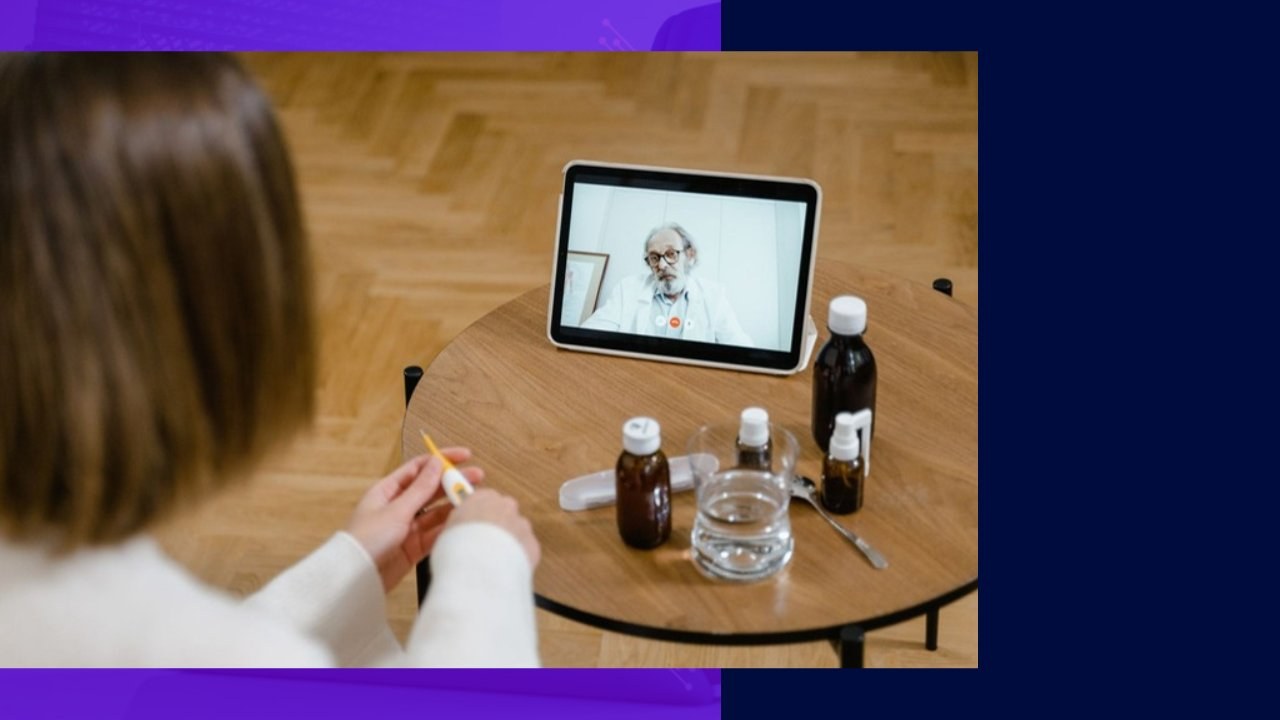
- Rural healthcare web app development builds browser-based tools that connect remote patients to clinicians without a long drive to a facility.
- Distance, clinician shortages, and patchy broadband are the core problems these apps try to solve.
- The hard parts are low-bandwidth design, security compliance, and integration with existing clinical systems.
- Many rural providers and health-tech firms outsource the build to control cost and reach scarce engineering talent.
Rural healthcare web app development is the practice of building secure, browser-accessible applications that let patients in remote areas reach doctors, book visits, share records, and join video consultations without traveling hours to a clinic.
For communities where the nearest specialist may sit a hundred miles away, a well-built web app can be the difference between timely care and none at all.
The stakes are real: rural residents face higher rates of chronic illness and fewer providers per capita than their urban counterparts, and software is one of the few levers that scales faster than hiring.
Why rural healthcare web app development matters for access
Geography is the constraint these apps are designed to defeat. A web app removes the need to install anything, runs on whatever phone or library computer a patient already has, and meets people where connectivity is thinnest.
Adoption data backs the demand. According to PCORI research on telehealth in rural America, virtual care has measurably widened access for patients who once skipped appointments because of travel.
The pattern holds across primary care, behavioral health, and chronic-disease follow-ups, where a short video check-in often replaces an all-day round trip.
There is a workforce angle too. Rural clinics rarely employ in-house specialists, so a web app that routes a patient to a distant cardiologist or psychiatrist extends a small staff’s reach far beyond its physical walls.
The same platform can also fold in remote patient monitoring, letting a nurse track blood pressure or glucose readings from dozens of homes without anyone making the drive in either direction.
4 features that define effective rural healthcare web apps
The best rural-focused apps share a handful of design choices that separate them from generic telehealth tools. Each one responds to a specific rural constraint.
1. Low-bandwidth and offline-tolerant design
Connectivity is the make-or-break factor in rural deployments. A study in the Journal of Medical Internet Research found that rural patients often default to telephone visits and lag on patient-portal activation, partly because heavy interfaces fail on weak connections. Apps that degrade gracefully, compress media, and cache data offline reach far more people.
2. Security and regulatory compliance
Health data carries strict obligations. Any app handling patient records in the US must meet HIPAA requirements, and platforms aiming at enterprise customers often pursue ISO 27001 certification as proof of disciplined security practice.
3. Interoperability with clinical systems
A web app that cannot talk to the clinic’s electronic health record creates double work. Standards-based integration lets a remote visit flow straight into the patient chart, which keeps clinicians using the tool.
4. Accessibility for older and low-literacy users
Rural populations skew older, so large type, plain language, and simple navigation are functional requirements rather than nice-to-haves. Designing for the least confident user widens the audience for everyone. The JMIR findings reinforce the point: patients over 65 and non-English speakers leaned toward telephone visits and lagged on portal sign-up, so apps that build in language options and a one-tap path into a video call recover users who would otherwise drop off.
How rural healthcare web app development gets built
Few rural providers carry a software team, so the build usually happens through a vendor, a health-tech startup, or an outsourced engineering partner. Each route trades cost against control.
In-house development gives the tightest oversight but demands salaries and specialist skills that small organizations struggle to justify. Buying an off-the-shelf telehealth product is fast and cheap upfront, yet it rarely bends to local workflows or rural connectivity quirks.
Custom outsourced development sits between the two, pairing tailored functionality with access to engineers who already know healthcare compliance.
The decision rarely comes down to price alone. A rural buyer also has to weigh how long the product must last, whether grant funding ties their hands on hosting or data residency, and who answers the phone when the app breaks during a clinic’s busiest hour.
Off-the-shelf tools shift that maintenance burden to the vendor but lock the clinic into someone else’s roadmap; a custom build keeps the roadmap local but only works if the partner stays available for updates and security patches long after launch.
That middle path is why so many firms in this space lean on partners.
The economics of outsourcing app development let a clinic or startup fund a serious build without standing up a permanent department, and offshore teams expand the pool of available talent well beyond a local market.
Here is how the three main approaches compare on the factors rural buyers weigh most.
| Approach | Upfront cost | Customization | Time to launch | Best fit |
|---|---|---|---|---|
| In-house build | High | Full | Slow | Large health systems |
| Off-the-shelf platform | Low | Limited | Fast | Clinics needing basics now |
| Outsourced custom build | Medium | High | Moderate | Startups and mid-size providers |
Where AI and outsourcing intersect in rural health apps
Newer builds increasingly fold in machine learning for triage, transcription, and risk scoring, which raises the engineering bar again. The overlap between clinical software and AI in healthcare software development means teams now need data-science skills alongside front-end and compliance expertise.
For a rural provider, assembling that mix internally is rarely realistic. An outsourced partner that already runs healthcare projects can supply the full stack of roles on demand, then scale them down once the product stabilizes.
Frequently asked questions about rural healthcare web app development
A few questions come up repeatedly from both providers and the firms that build for them.
What is rural healthcare web app development?
It is the design and engineering of browser-based applications that connect rural patients to clinicians for consultations, records, scheduling, and monitoring, built specifically for low-connectivity, high-distance conditions.
How much does a rural healthcare web app cost?
Cost varies with scope, compliance needs, and team location. A simple scheduling-and-video tool costs far less than a platform with EHR integration and AI features, and outsourcing the build typically lowers the figure compared with in-house hiring.
Is a web app or a mobile app better for rural healthcare?
Web apps avoid app-store friction and run on any device with a browser, which suits rural users on shared or older hardware. Many teams ship a responsive web app first, then add native features only where demand justifies them.
Does a rural healthcare web app need to be HIPAA compliant?
Yes. Any application that stores or transmits identifiable US patient data must meet HIPAA, and serious vendors layer additional safeguards such as ISO 27001 on top.
Key takeaways
The throughline is that software, built well, stretches scarce rural medical capacity further than almost anything else.
- Rural healthcare web app development targets distance, clinician shortages, and limited broadband as its core problems.
- Low-bandwidth design, HIPAA security, interoperability, and accessibility decide whether an app actually gets used.
- Outsourced custom builds balance cost, customization, and speed better than pure in-house or off-the-shelf options for most rural providers.
- AI features add value but raise the skill bar, pushing more teams toward specialized development partners.






 Independent





