
Human-in-the-Loop: Where staff and AI team up

What is human-in-the-loop?
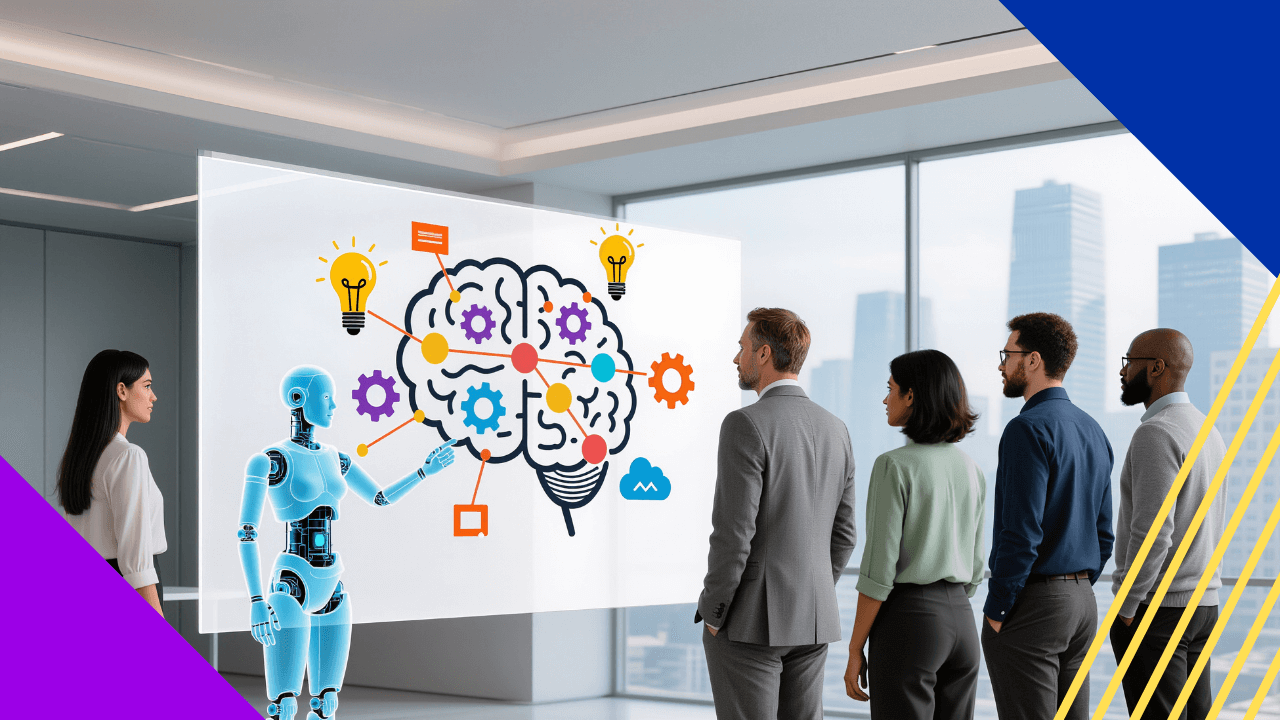
Human-in-the-loop (HITL) is a setup where people guide, check, and correct an AI system so it stays accurate and fair.
- Humans add context, judgment, and ethics that models often miss.
- It works as a feedback loop, so the system learns over time.
- It suits fields where safety and accountability matter most.
Businesses now build artificial intelligence into daily work. For example, one AWS report found that 52% of UK businesses now use AI, up from 39% a year ago, with 92% of adopters reporting revenue growth.
Fast gains in machine learning, language models, and predictive analytics show that AI keeps evolving. As a result, it offers smarter automation and deeper insight. So this article explains how human judgment plus strong algorithms drive better results. It covers what human-in-the-loop means, why staff input matters, and how to apply it.
Human-in-the-loop places human expertise inside the AI workflow. So it handles tasks that need context, judgment, or ethical reasoning. While machine learning models excel at large data sets, they still struggle with edge cases, bias, or missing inputs.
Human input fixes these gaps by adding clarity and critical thinking. As a result, AI systems get more accurate, reliable, and adaptable. In a HITL setup, people review, step in, or correct AI outputs, and the system learns from that input. So it balances the speed of automation with the care of human judgment. For a wider view, learn how machine learning works at scale.
How does human-in-the-loop work?
Human-in-the-loop adds human judgment at different stages of an AI system. So models learn better, adapt to real conditions, and make fewer errors. It can happen before, during, or after training, forming a continuous feedback loop:
Supervised Learning: Building the foundation
Supervised learning leans on human-labeled data. For example, data scientists tag examples, such as marking emails as spam or not spam. These labels help models learn the right links. So human input here is not optional. In fact, the quality of labeled data shapes how the model performs in the real world.
Reinforcement learning from human feedback (RLHF): Optimizing complex behavior
RLHF helps when standard training falls short. People score or rank AI outputs to train a reward model that guides learning. So it suits complex tasks like dialogue or ethical calls, where the right answer is unclear. As a result, human feedback refines behavior and aligns the model with your goals. This matters most in generative AI, where outputs vary widely.
Active learning: Focusing human effort where it counts
In active learning, the AI model flags data it cannot classify with confidence. So instead of labeling everything, the system asks for human input only on the hardest cases. As a result, learning gets faster and takes less effort.
In short, HITL pairs computer speed with human judgment. So systems become more adaptable, explainable, and useful in real settings.
Primary benefits of human-in-the-loop to organizations
Firms that adopt AI need precision, responsibility, and flexibility. So HITL adds human oversight to AI systems, which lifts reliability. As a result, this teamwork brings gains beyond the tech itself:
Improved accuracy and reliability
AI often struggles with edge cases or missing data. So HITL lets people step in, fix errors, and guide the model. In addition, experts spot patterns the AI may miss. Over time, this loop helps models improve and stay steady across conditions.
Ethical oversight and accountability
Automated systems can produce biased or unfair results. So HITL lets firms pause, adjust, or override a decision when ethics come into play. This control matters most in high-stakes fields like hiring, lending, and healthcare. In addition, HITL supports clear accountability. As a result, firms can log decisions, track steps, and meet rules like the EU AI Act. Careful oversight also reduces machine learning bias.
Greater transparency and explainability
Black-box models leave stakeholders in the dark. So HITL adds human checks across the AI pipeline. When people join the decision, they leave a record of actions and reasoning. As a result, firms can explain how and why a decision was made. This helps in regulated fields and customer-facing tools.
Reduced risk and developer burden
HITL cuts the odds of harmful or costly mistakes, especially where accuracy is key. It also eases the pressure to build a perfect model upfront. So teams can improve steadily through structured human feedback. Together, these gains make HITL a strong tool for safe, accountable AI adoption. It also shapes smarter AI in customer service and other AI-augmented BPO services.
Human-in-the-loop FAQs
Human-in-the-loop raises key questions as more firms adopt AI-assisted work:
Is HITL only useful during training?
No. HITL plays a big role in training, yet it also supports live monitoring in production. So people can step in during use when the system meets an unfamiliar or high-risk case.
Does HITL slow down automation?
Not really. In fact, HITL can speed up development by catching issues early. As a result, models learn faster and make fewer costly errors later.
Can HITL be scaled across large datasets?
Yes. Many firms use a tiered HITL system. For example, they automate routine tasks and send edge cases to human review. So this hybrid model balances scale and precision.
Which industries need HITL the most?
High-stakes fields gain the most. For example, healthcare, finance, and hiring rely on fair, accurate calls. So human oversight lowers risk where a wrong output could cause real harm.
How do I start with human-in-the-loop?
First, map the steps where judgment or ethics matter. Next, add clear review points and simple feedback tools. As AI adoption grows, HITL helps teams build systems that are fast, efficient, and accountable.






 Independent






