
Quiet cracking at work: 6 subtle habits that harm teams


What is quiet cracking?
Quiet cracking is a slow, often involuntary breakdown in which employees stay on the job but gradually lose motivation, energy, and focus under constant stress.
- It is driven by pressure, burnout, or a sense of being unsupported, not by a choice to coast.
- Workers often still show up and hit deadlines, so the strain hides behind normal output.
- Left alone, it can lead to higher turnover, more mistakes, and lasting harm to team morale.
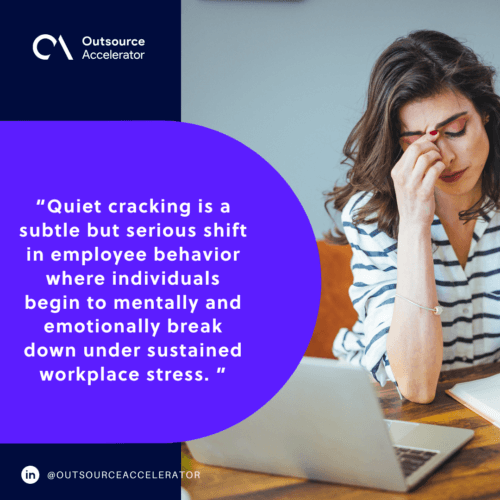
Quiet cracking is a subtle but serious shift in how people behave at work. Over time, they start to break down mentally and emotionally under steady stress.
Unlike quiet quitting, which means disengaging without leaving, quiet cracking is often involuntary. Instead, it is driven by pressure, burnout, or a lack of support.
Employees may still try hard, but they slowly lose drive, energy, and clarity. As a result, this hidden strain hurts both well-being and team output. Over time, it can also raise turnover, add mistakes, and damage workplace culture.
The rise of quiet quitting marked a shift in how people respond to burnout, weak recognition, and unclear goals. Instead of resigning, many simply checked out and did the bare minimum. Now that trend has grown into something deeper: quiet cracking.
The scale is hard to ignore. According to Gallup’s global workplace research, employee engagement dropped to 21%. Gallup also estimates that low engagement now costs the world economy about $10 trillion in lost productivity each year, close to 9% of global GDP. So these numbers point to a workplace culture under real pressure. Strong employee engagement is the clearest counterweight.
Common causes of quiet cracking
Quiet cracking does not happen overnight. Instead, it builds up as pressure, doubt, and disconnection pile on. Employees may look fine on the surface, yet inside they struggle to keep up.
Here are some of the most common causes that push people toward quiet cracking:
Poor leadership
Managers set the tone for how valued people feel. For example, weak communication, little feedback, or no recognition can make strong performers feel invisible. Over time, this chips away at trust and drive.
Economic uncertainty
When the job market feels shaky, people may feel stuck in roles they no longer enjoy. The fear of losing income beats the wish for change. As a result, a sense of helplessness grows and engagement fades.
Lack of career growth
Without chances to learn or move up, people lose their sense of purpose. So they stall, and that stall quietly drains motivation. A clear path matters for long-term job satisfaction.
Uncertain company direction
Confusion about where the company is headed can create anxiety. When people cannot see how they fit, doubt grows. Because of this, they feel cut off from the bigger goals.
Increased workload and expectations
When demands rise but support does not, stress builds fast. Constant pressure then leads to burnout, especially when the line between work and life blurs. Clear employee wellness support can ease this load.
Quiet cracking often grows from these avoidable conditions. So spotting the root cause is the first step toward change.
Spotting 6 quiet cracking habits and how to address them
Quiet cracking often goes unseen because it does not look like classic burnout. People still show up, join meetings, and meet deadlines. Yet under the surface, they are not okay.
For managers, catching these subtle signs early is vital. It protects morale, output, and team health. So take note of these six quiet cracking habits and how leaders can respond:
1. Declining initiative
When once-proactive people stop sharing ideas or volunteering, it may signal fatigue.
What to do: Check in one on one, not just about work but about how they feel. A kind, honest talk can open the door to early help.
2. Withdrawal from team interactions
Some people pull back from chats, skip optional meetings, or stay silent in groups. Often, they are checked out.
What to do: Build a safe space. For example, invite input in small settings or private chats to re-engage them without pressure.
3. Sudden drop in work quality
A sharp fall in care or effort is often a quiet cry for help. It can lead to costly mistakes and missed deadlines. As a result, extra pressure lands on the rest of the team.
What to do: Avoid quick criticism. Instead, ask what changed and how the workload may be affecting their output.
4. Avoiding new challenges
People who are quietly cracking may shy away from learning or lead roles.
What to do: Offer small, low-risk projects to rebuild confidence. Also pair them with a mentor to spark growth without overload. This supports employee retention over time.
5. Increased cynicism or detachment
Sarcasm, passive comments, or an “I don’t care” tone are subtle signs of disengagement.
What to do: Address the tone calmly, then dig deeper. For example, honest feedback sessions and transparent communication help restore trust.
6. Frequent absences or late logins
A pattern of late logins, frequent call-outs, or missed meetings can reflect exhaustion.
What to do: Review the workload, talk about stress, and offer flexibility where you can. Small changes can make a big difference.
Quiet cracking often hides behind routine, so it is easy to miss until the damage is done. Still, leaders who stay observant and open to feedback catch issues sooner. As a result, they protect both the individual and the long-term strength of the whole team.

Quiet cracking FAQs
Quiet cracking is drawing more attention as workers struggle quietly under pressure. So here are answers to common questions about what it means and why it matters.
What’s the difference between quiet cracking and quiet quitting?
Quiet quitting is a choice to meet only the minimum for a role. Quiet cracking, on the other hand, is a slow breakdown from stress, burnout, or strain, even when the person wants to do more.
Who is most at risk of quiet cracking?
High performers and loyal employees are often most at risk. That is because they push through stress until it becomes too much.
Can quiet cracking be reversed?
Yes. For example, early support, open talk, and fair workloads help people regain balance and drive.
Is it always visible to managers?
No. Quiet cracking is subtle, and it often hides behind surface-level output. So regular check-ins matter.
How can leaders prevent quiet cracking?
Leaders can prevent it with clear goals, steady feedback, and manageable workloads. In addition, small culture shifts, like regular recognition and flexible hours, can make a big impact before strain turns into burnout or turnover.






 Independent






