
A beginner’s guide to hiring a medical personal assistant


A medical personal assistant (MPA) is vital in providing essential support to healthcare professionals and ensuring seamless patient care.
But, finding the right MPA isn’t as simple as reviewing resumes. You must identify candidates who embody the right blend of compassion, precision, and expertise.
In this article, we’ll explore the key qualities to look for when selecting a medical personal assistant. We’ll also discuss the essential steps to guide you throughout your hiring process.
What is a medical personal assistant?
A medical personal assistant provides comprehensive support to healthcare providers, typically doctors, surgeons, and other medical practitioners. This usually means administrative and clerical duties, but MPAs can sometimes go beyond that.
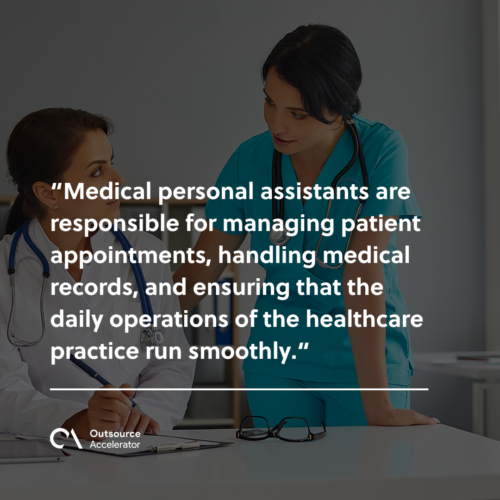
They’re responsible for managing patient appointments, handling medical records, and ensuring that the daily operations of the healthcare practice run smoothly.
They often serve as liaisons between the medical staff and patients, coordinating communication and keeping confidentiality.
Essential qualities of a medical personal assistant
A medical personal assistant must possess these qualities and skills to excel in their role.
The following contribute to the overall efficiency and effectiveness of healthcare operations while ensuring the well-being and satisfaction of patients:
Medical knowledge and experience
A strong foundation in medical terminology and procedures is crucial for MPAs. They need to understand the basics of medical conditions, treatments, and protocols to effectively assist healthcare providers.
Prior experience in a healthcare setting, such as a hospital or clinic, can also be invaluable. It equips them with practical insights into the workflow and challenges of the medical field.
Organizational and administrative skills
Medical personal assistants must be highly organized, capable of managing multiple tasks and responsibilities simultaneously. They handle scheduling, patient records, billing, and other administrative duties, ensuring that everything runs smoothly.
Strong organizational skills help in keeping track of appointments, managing doctors’ schedules, and ensuring accurate documentation.
Communication skills
Effective communication is key in a healthcare environment. MPAs must be able to clearly and compassionately communicate with patients, families, and medical staff.
They need to relay information accurately, whether it’s explaining instructions to patients or conveying messages between healthcare providers.
Maintaining professionalism and confidentiality in all interactions is also essential.
Empathy and compassion
Working in healthcare requires a deep sense of empathy and compassion.
Medical personal assistants often interact with patients who are anxious, ill, or in pain. Being able to understand and respond to their emotional and physical needs is critical.
A compassionate approach helps in building trust and providing comfort to patients and their families.
Adaptability and problem-solving abilities
The healthcare environment is dynamic and often unpredictable. MPAs must be adaptable, able to handle unexpected changes, and think on their feet.
Whether it’s dealing with last-minute schedule changes or addressing an urgent patient issue, they need strong problem-solving skills to find efficient solutions quickly.
Attention to detail
In the medical field, even minor mistakes can have serious repercussions. Medical personal assistants must have a keen eye for detail, ensuring that all records, prescriptions, and instructions are accurate.
They are responsible for maintaining precise documentation, following protocols, and ensuring compliance with legal and medical standards.
Strong ethical standards and integrity
MPAs are often privy to sensitive patient information and must uphold the highest ethical standards. They are responsible for maintaining patient confidentiality and adhering to all legal and professional guidelines.
Integrity is vital, as they must be trusted to handle sensitive information and make decisions that impact patient care.
Technical proficiency
Modern healthcare relies heavily on technology, from electronic health records (EHR) systems to telemedicine platforms.
MPAs should be comfortable using various software and tools, capable of troubleshooting basic technical issues, and staying up-to-date with technological advancements in healthcare.
Interpersonal skills
Building positive relationships with patients, healthcare providers, and other staff members is crucial.
A medical personal assistants should be personable and approachable, able to work well in a team, and create a welcoming atmosphere. Good interpersonal skills facilitate effective teamwork and improve patient experience.
Time management
MPAs must balance multiple responsibilities, ensuring that urgent matters are addressed promptly without compromising the quality of their work.
Effective time management helps maintain smooth operations and reduce stress.
How to find a qualified medical personal assistant
It’s essential for healthcare professionals to find a skilled medical personal assistant who can offer invaluable support and expertise.
The following steps can guide you in the process of finding the right candidate for your medical practice:
1. Define job requirements and create a job posting
As with any position, start by outlining the specific duties, qualifications, and skills required for the role. Having a detailed job description helps attract candidates with the right background and sets clear expectations.
Next, a well-crafted job posting highlights the benefits of working in your organization. Include details about the work environment, team culture, and any unique aspects of the position.
2. Screen resumes
Once you start receiving applications, screen resumes to identify those who meet the minimum qualifications. Look for relevant medical experience, certifications, and specific skills.
This narrows down the pool to those most likely to succeed in the medical personal assistant role.
3. Conduct interviews
The initial interview phase will assess the candidates communication skills, professional demeanor, and overall fit. Ask questions that gauge their understanding of medical terminology, administrative tasks, and patient care.
Later on, you can conduct more in-depth interviews that delve deeper into their work experience, motivations, and long-term career goals.
4. Administer skills and practice assessments
Practical assessments are a valuable tool for evaluating a candidate’s technical skills and problem-solving ability.
For a medical personal assistant, these can include tasks like organizing a mock schedule, managing hypothetical patient scenarios, or using medical software.
5. Check background and references
Perform thorough background checks and verify work history, credentials, and references. A thorough background check will confirm qualifications and reveal any potential red flags.

6. Make a job offer and negotiate terms
Once you’ve identified the best candidate, extend a formal job offer as a medical personal assistant. Include details about the salary, benefits, work schedule, and other pertinent terms of employment.
Be prepared to negotiate aspects like salary and start date, and be open to discussing any specific needs or concerns.
7. Onboard and train
Develop a comprehensive onboarding and training program to introduce the new medical personal assistant to the healthcare facility. It may be helpful to assign a mentor or supervisor to guide them during their initial period.
A well-structured onboarding process ensures the new MPA feels welcomed, supported, and prepared to excel in their role.
8. Evaluate performance
Assess the medical personal assistant’s performance regularly based on KPIs, patient feedback, and protocol adherence.
Provide training and support as needed to ensure ongoing development and success.






 Independent





