
Why the Philippines is a go-to country for business process outsourcing

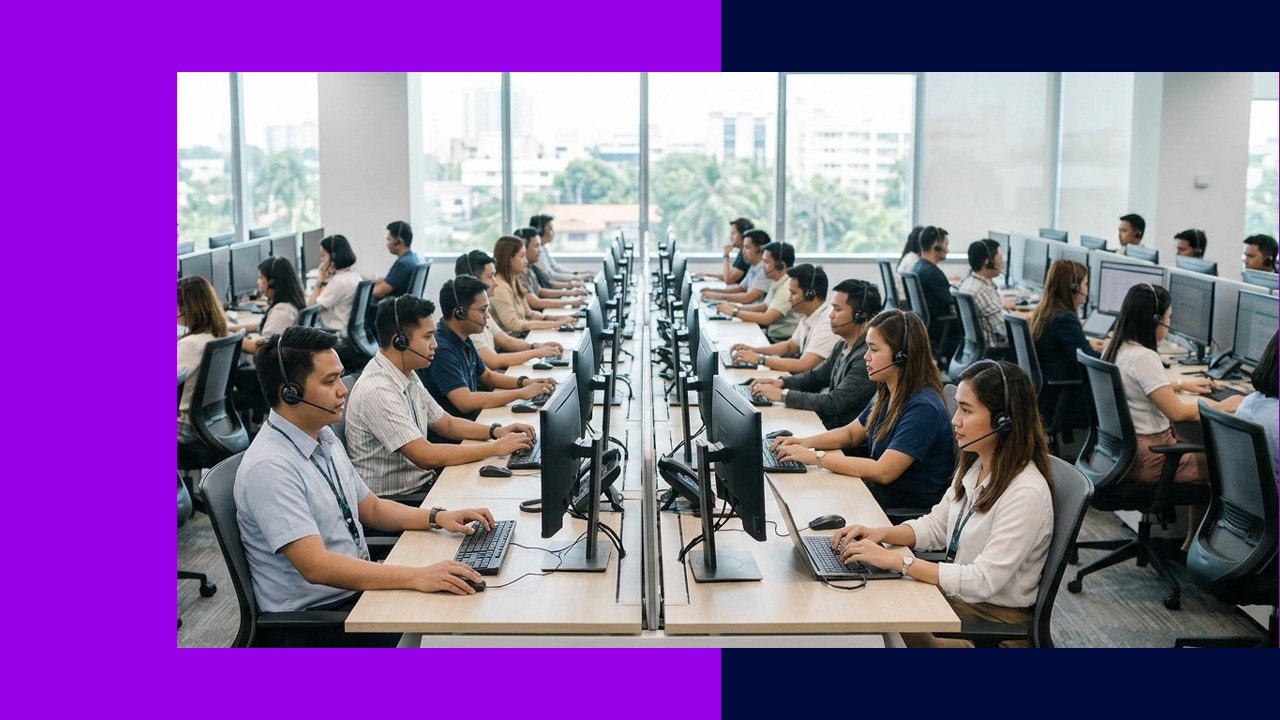
At a glance
- Business process outsourcing in the Philippines grew from a late start in 1992 to the world’s BPO capital.
- Three forces drive its lead: low costs, a highly competitive workforce, and government support.
- The sector spans call centers, IT, finance, creative, and digital services.
- Its scale and English proficiency make it a first-choice destination for global companies.
Why is the Philippines a go-to country for business process outsourcing?
The Philippines leads in business process outsourcing because it pairs low costs with a skilled, English-speaking workforce and steady government support.
- It rose from its first contact center in 1992 to the BPO capital of the world by 2010.
- Companies pay a fraction of home-market costs for the same quality of work.
- The talent pool is large, well trained, and strong in English.
Business process outsourcing in the Philippines started later than in many countries. However, it has more than caught up. After the first contact center opened in 1992, the country became the BPO capital of the world by 2010. Today, companies fold outsourcing into their business processes management plans. As a result, they run back-office work and streamline complex daily tasks with ease.
The sector is now vital to the national economy. So three clear reasons explain why multinationals keep choosing it as their outsourcing hub.
1. A genuinely low-cost base
Cost is the first draw. The overall cost of living in the Philippines sits well below many Asian peers. As a result, wages stay competitive without squeezing workers. For companies, that means paying far less than comparable in-house staff would cost at home.
The savings are big enough to reshape a budget. So cost tops most shortlists. Still, the value goes beyond the hourly rate. For a full breakdown, see our guide to Filipino worker salaries and how they compare worldwide. Lower overhead also frees up money for growth, hiring, and new products.
2. A highly competitive workforce
Low cost does not mean low skill. Sustained spending on education and training keeps the country producing capable professionals across many fields. So companies get both value and quality in one place.
Language is a decisive edge. The Philippines ranks #28 worldwide on the EF English Proficiency Index, which helped it outrank other destinations for English-language work. Skilled staff also need less supervision. As a result, leaders can focus on higher-level priorities.
Culture matters too. Filipino teams are known for strong service and a warm, customer-first style. This suits voice work and call center services especially well. For the wider case, see Outsource Accelerator’s 12 reasons to outsource to the Philippines.
The workforce keeps moving up the value chain too. For example, more teams now handle data analytics, software work, and finance tasks. So the country is not just about voice support anymore. As AI reshapes the industry, local providers also train staff on new tools. As a result, roles shift toward higher-skill, higher-value work.
3. Strong government support
The government has worked hard to build the country’s outsourcing brand. Because the sector helps both the nation and foreign firms, it has drawn incentives. These include tax breaks and investor-friendly rules.
That backing has helped the industry weather political and economic shifts while it keeps growing. In fact, the sector’s rise has become a pillar of national progress. Our overview of BPO and the Philippine economy shows just how deep that link runs.
The range of services on offer
BPO in the Philippines serves everyone from SMEs to large enterprises. Call centers make up the largest share. Alongside them sit IT and software development, medical transcription, finance and accounting, and website and graphic design. So firms can outsource one task or a full function.
Beyond voice, demand for back office outsourcing keeps rising. Finance, data, HR support, and content work now move offshore too. As a result, companies can scale support teams quickly without heavy local hiring.
Getting started is simpler than many expect. First, define the tasks you want to hand off. Next, shortlist providers with proof in your industry. Then run a small pilot before you scale. So you lower risk while you test fit, quality, and communication.
The scale is substantial. The sector was valued at about $38.7 billion, according to the Philippine Daily Inquirer. By 2024, it employed roughly 1.82 million people. For a deeper primer on the market, read Outsource Accelerator’s definitive guide to outsourcing in the Philippines. You can also track where the sector is headed in our look at the Philippines BPO industry.
Frequently Asked Questions
These questions come up often when companies weigh the Philippines.
When did the Philippines become the BPO capital of the world?
The first contact center opened in 1992. The country was then widely recognized as the world’s BPO capital by 2010.
Why did the Philippines overtake other destinations?
A mix of low costs, strong English, and government support gave it an edge. This is true above all for voice and English-language services.
What services does the Philippine BPO sector cover?
It covers a wide range. For example, it spans call centers, IT, finance, transcription, and creative and digital work.
How much does the Philippine BPO sector earn?
The sector was valued at about $38.7 billion. By 2024, it employed roughly 1.82 million people.
Is the Philippines a good choice for small businesses?
Yes. Providers serve both SMEs and large enterprises. So a small firm can start with one role and scale up over time.






 Independent






