
Tracking your billable hours for financial success


Why do billable hours matter for financial success?
Billable hours matter because they are the hours you can charge a client for, so tracking them accurately sets your revenue, shows which work is profitable, and keeps your invoicing fair.
- Billable hours turn your time into income, so every tracked hour feeds the bottom line.
- Good tracking shows which clients and projects make money and which lose it.
- Accurate records keep billing fair and transparent, which builds client trust.
For many professional services, time is money. The currency of success often comes in the form of billable hours. These hours are more than numbers on an invoice. In fact, they are the lifeblood of many industries, from law firms and consulting agencies to freelancers and creative studios.
How you measure and manage billable hours can shape your revenue. Because of this, understanding the value of tracking is key for anyone who wants to work more efficiently. So by adopting simple strategies, companies can unlock their true potential and drive steady growth.
What are billable hours?
Billable hours are the hours an employee works that directly contribute to generating revenue or billable income. In most cases, these hours cover time spent on:
- Client projects
- Consultations
- Meetings
- Other work tied to service delivery
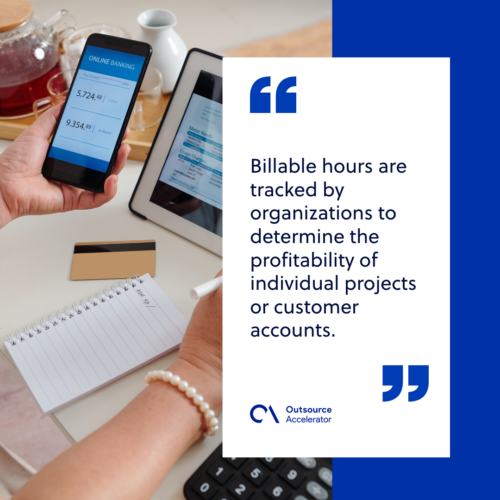
In practice, organizations track billable hours to judge the profit of each project or client account. As a result, tracking keeps billing accurate and makes profit analysis possible. Billable hours are common in fields like law, consulting, and freelancing. In short, they suit any professional who bills on a time-based model.
How to calculate billable hours
Here is a simple, step-by-step guide to calculate billable hours.
Define billable activities
First, identify which tasks count as billable in your context. Usually, these are tasks tied directly to client work or projects.
Track time
Next, have employees record the time they spend on each billable task. You can do this in a few ways:
- Manual entry in a timesheet
- Time-tracking software or apps that record hours for you
- Time clocks or timers if you work in a physical office or site
Some firms also split recorded hours by the type of work. For example, you can divide billable hours by:
- Client meetings
- Research and analysis
- Writing or designing
- Phone calls and correspondence
Calculate the total
Once your time data is ready, add up the hours spent on each billable task. In this way, you get the total for a set period.
Summarize the billable amount
Then multiply your total billable hours by your billing rate. As a result, you get the amount to invoice the client.
Analyze and report
Finally, create an invoice that lists the billable hours, tasks, and total due. Include extra charges, such as expenses, if they apply. After that, review the data. This helps you understand resource use, project profit, task efficiency, and each person’s output.
Increasing your billable hours
Raising billable hours can help anyone who bills on this model. Here are several ways to do it.
Efficient time management
First, sharpen your time-management skills to cut non-billable work. Prioritize tasks, set clear goals and deadlines, and remove distractions. For a deeper look, see this guide to time management training.
Accurate time tracking
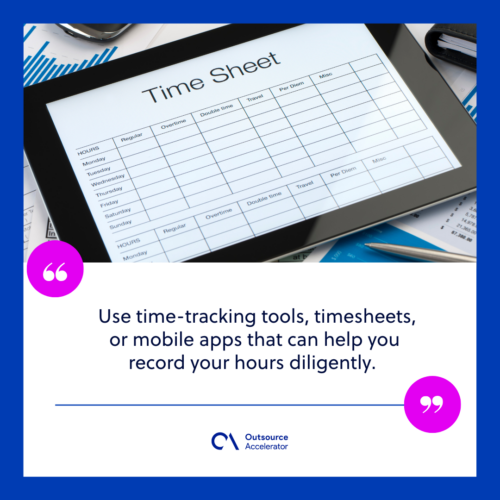
Next, track and report your time with care. Use time-tracking tools, timesheets, or mobile apps to log hours well. Also, avoid rounding down your time, because that can lead to lost revenue.
Streamline administrative tasks
Then find ways to streamline admin that does not add billable hours. For example, set aside specific blocks for it so it does not eat your billable time. In addition, automate repeat tasks and use tools for documents and reports.
Continuous skill improvement
Next, keep improving your skills in work tied to billable output. After all, better skills mean faster task completion. Meanwhile, stay current with industry trends and tools, so you can take on more billable projects. Simple employee productivity apps can help here.
Minimize non-billable activities
Spot non-billable tasks you can delegate, outsource, or drop. By doing this, you free up time for more billable work. Many firms also move routine finance work out, such as billing and collections.
Improve client communication
In addition, keep clear and regular contact with clients about your progress and any issues. As a result, you build trust and may open up more billable work.
Collaborate with colleagues
Work with colleagues and ask for feedback to lift your results. Sharing knowledge often reveals better ways to handle projects. Joint ventures can open new doors too. Still, while more billable hours help, keep a healthy work-life balance. Strive for efficiency, but not at the cost of burnout or weaker work.
Why tracking your billable hours matters
Here is why tracking your billable hours is so important.
Accurate billing
Tracking billable hours lets you bill clients for services with accuracy. As a result, invoicing stays fair and clear. This matters in fields like law firm accounting, where precise records are the norm.
Profitability analysis
When you count your billable hours, you can judge the profitability of each client, project, or task. By comparing billable hours against costs, you can see which work truly pays off.
Resource allocation
For teams with many employees, counting billable hours helps you place resources well. It shows each person’s workload. So managers can share tasks fairly and keep resources in good use.
Legal compliance
For some professions, accurate billable-hour records support legal and ethical standards. For example, clients may ask for detailed records, and regulators may audit billing. Firms that run legal process outsourcing rely on this rigor too.
Performance evaluation
Tracking billable hours also lets you judge your own output and efficiency. In turn, you can spot where you excel and where you need to improve.
Frequently asked questions about billable hours
Here are quick answers to common questions about billable hours.
What is the difference between billable and non-billable hours?
Billable hours are the hours you can charge a client for, such as project work or meetings. Non-billable hours are internal tasks, like admin or training. Both are real work, yet only one earns direct income.
How do you calculate a billable hour rate?
First, start with your target yearly income and add your costs. Then divide that total by the billable hours you expect to work in a year. The result is the rate you need to charge per hour.
What is a good billable hours target?
It varies by field. Many firms aim for 60 to 80 percent of a workday as billable. The rest covers admin, learning, and business tasks that still keep the firm running.
Can billable hours be automated?
Yes. Time-tracking software can log hours as you work and sort them by client or task. As a result, you cut manual entry and reduce the risk of lost time.
Why do law firms rely so heavily on billable hours?
Many law firms charge clients by the hour, so each hour must be logged with care. Accurate records support fair billing, clear audits, and trust between the firm and its clients.






 Independent






