
Exploring the benefits of drone technology to businesses

What is drone technology and why does it matter for businesses?
Drone technology lets businesses fly small, remote-controlled aircraft to collect data, inspect assets, and reach places that are risky or hard for people to enter.
- Drones carry cameras and sensors that capture clear images and useful data from the air.
- They cut risk because they can work in dangerous spots without putting staff in harm’s way.
- They save time and money across farming, construction, logistics, and safety work.
Drones were once seen as outdoor toys for kids and teenagers. However, they now have real power to change many industries. The reason is simple. Drone technology can reach hard or dangerous areas that people or normal machines cannot.
Drones can also cross rough ground, gather key data, and run checks without risking human lives. Because of this, more firms use them every year. Below, you will learn what drone technology is, how it works across industries, and its four main benefits for business.
What is drone technology?
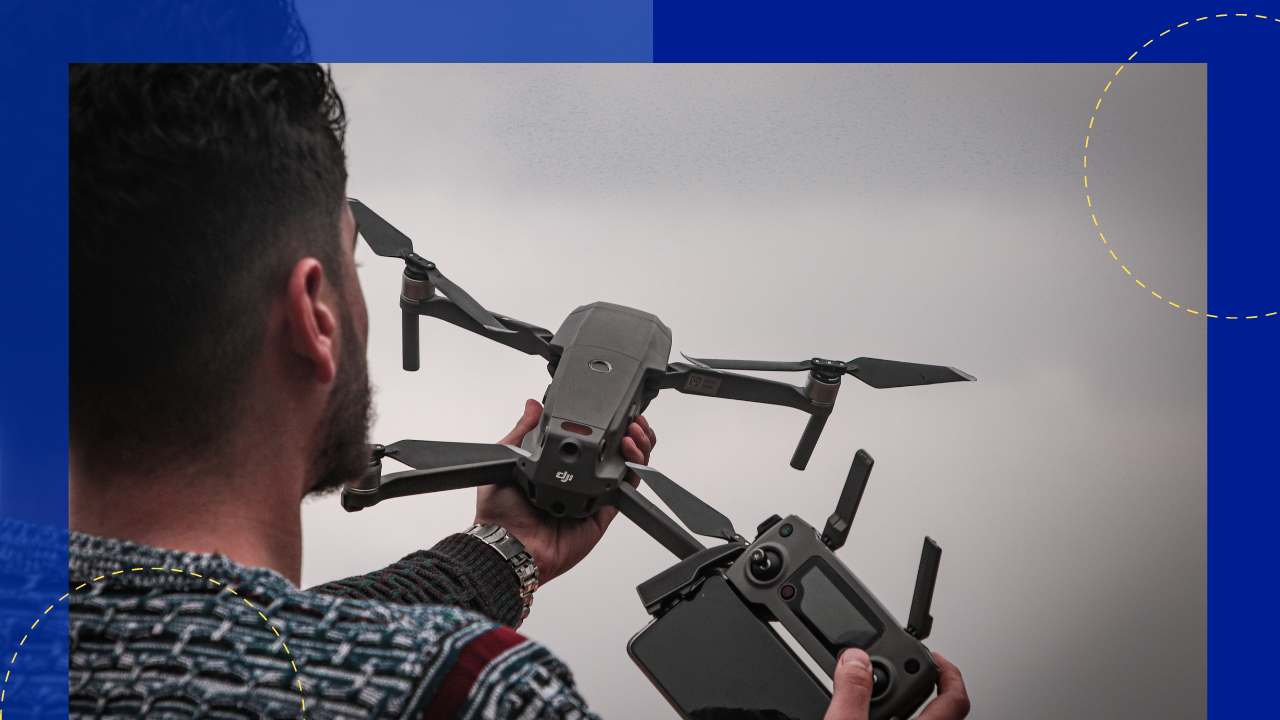
Drone technology, or unmanned aerial vehicle (UAV) technology, is a big step forward in aviation and automation. In short, drones are smart flying machines. They move through the air and finish tasks with great accuracy.
Human operators can control drones from far away. They use special controllers or software to do this. As a result, operators can guide drones through tricky moves that human pilots could not manage. Drones can also follow set flight paths and waypoints. Advanced software runs these paths using GPS, sensors, and simple algorithms.
Today’s drones come in many sizes, shapes, and skill levels. Each one suits a specific job. For example, they range from small quadcopters to larger fixed-wing models. A well-built drone can capture a wealth of visual and sensor data. To do this, it uses the following parts:
- Sensors
- HD cameras
- Lidar systems
- Thermal imaging technology
These parts help drones gather data for aerial photos, mapping, environmental monitoring, and surveillance.
Drone technology in different industries
As drone technology grows, its reach spreads across many fields. It now touches farming, construction, logistics, and nature work. In fact, drones have found a home in very different sectors. Let us look at how drones change each one below.
Agriculture and farming
Farmers can use drones to take sharp images of their fields. Then they can check crop health, spot problem areas, and spread fertilizer and pesticides right where needed. As a result, this level of care cuts waste, lowers harm to the land, and lifts results.
Functionalities
Here are the main uses of drone technology in agriculture:
- Crop monitoring – Drones carry special cameras and sensors. So they can track crop health by spotting stress and changes in plants.
- Precision spraying – Drones apply fertilizer, pesticides, and herbicides to set areas. As a result, they use fewer chemicals and protect the land.
- Yield estimation – By reading aerial images, drones help estimate crop yields. This supports better plans for harvest and delivery. Moreover, they can also support livestock management software development to streamline farm operations.
Many farms now pair these tools with connected IoT sensors to track fields in real time.
Construction and real estate
Drones can quickly capture sharp images of a build site. Then they can build 3D models and track progress over time. Because of this, teams get real-time facts that flag risks early, improve project management, and keep stakeholders in the loop. Property firms also lean on these views to speed up real estate outsourcing tasks.
Functionalities
Here are the main uses of drone technology in construction and real estate:
- Site inspection – Managers can inspect sites up close with drones. So they can spot safety risks, structural issues, and gaps from the plan.
- Progress tracking – Engineers and architects capture images and data often. As a result, they can watch progress and make smart calls.
- Mapping and surveying – Drones build accurate maps and 3D models. This helps with land surveys, site planning, and design.
Logistics and delivery
Logistics companies can use drone technology to move goods fast, even where roads are poor. For example, drones can carry medical supplies or retail goods. As a result, they can reach remote or hard-to-serve spots. This makes drones a strong fit for modern logistics BPO teams.
Functionalities
In logistics and delivery, drones can handle the following:
- Rapid deliveries – Drones move small parcels over short trips. So they cut delivery times and keep customers happy.
- Emergency response – In a crisis, teams can send medical kits and vaccines to remote or hard-hit areas.
- Last-mile delivery – Drones can close the final gap in delivery. This helps most in busy cities where trucks get stuck.
Paired with warehouse automation, drones can speed up the whole supply chain.
Advantages of drone technology for businesses
Now that you know how drones help each field, let us look at the wider gains. Here are four clear advantages that drone technology brings to business.
Access to remote areas
The power to reach remote areas is a big win. For example, power lines, pipelines, and bridges often sit in rough terrain. These spots put human inspectors at risk. However, drones can travel there and gather data with ease. So teams learn what they need without danger.
Rescue and remote inspections
In a crisis, drones are a huge help for search and rescue operations. Teams can send drones fast to a disaster zone. As a result, first responders can do the following from a safe place:
- Assess the situation
- Locate survivors
- Strategize effective rescue missions
Still, this matters most in risky places, like fallen buildings or industrial sites. Drones can move through rough, unstable ground without risking human lives.
Reduced human intervention in hazardous tasks
Drone technology also helps firms that face high-risk work. For instance, mining teams use drones to watch dig sites, check for stability, and meet strict safety rules. As a result, fewer people face danger. So firms boost worker safety, smooth out work, and avoid costly stops. Many pair drones with robotic process automation to handle the routine steps that follow.
HD imagery and accurate data capture
Drones with sharp cameras and smart sensors capture very accurate data. This helps many fields at once. As a result, the images and data give firms clear facts for smart choices. When teams process and study this data well, they smooth out work, use resources better, and lift overall results.
Drone technology brings transformative solutions to industries
Drone technology is no longer just a fun gadget. Instead, it is now a key tool across many fields. As the tech grows and rules ease up, drones will shape the future of work even more. So firms that adopt drone technology early can lead on progress and stay ahead of rivals.
Frequently asked questions about drone technology
What industries use drone technology the most?
Farming, construction, logistics, mining, and safety teams lead the way. Each one uses drones to gather data, cut risk, and save time. Real estate and insurance firms use them too.
Do businesses need a license to fly drones?
In most countries, yes. Rules vary by place and by drone size. So firms should check local aviation rules before they fly. Many hire trained pilots to stay safe and compliant.
How do drones collect accurate data?
Drones carry HD cameras, sensors, lidar, and thermal tools. These parts capture images and readings from the air. Then software turns that raw data into maps, models, and clear reports.
Are drones expensive for small businesses?
Costs have dropped a lot in recent years. Basic models are now cheap and easy to use. As a result, small firms can start small and scale up as their needs grow.
Key takeaways
- Drone technology helps businesses reach risky or remote spots without putting staff at risk.
- Drones add real value in farming, construction, logistics, mining, and rescue work.
- Sharp cameras and smart sensors give firms accurate data for better choices.
- As costs fall and rules ease, more small and large firms can adopt drones.






 Independent





