
Diversity management: Definition, characteristics, types, and best practices


What is diversity management?
Diversity management is a strategy companies use to build a fair, inclusive workplace where employees from all backgrounds feel valued, respected, and empowered.
- It goes beyond representation and shapes a culture where every voice is heard.
- It covers race, ethnicity, gender, age, nationality, sexual orientation, disability, and cultural heritage.
- Done well, it lifts employee engagement, decision-making, productivity, and reputation.
Diversity management has become a key business strategy for firms that want to succeed. As workplaces grow more diverse, success often comes from embracing that diversity and using it well. However, it goes beyond mere representation.
In practice, diversity management means building a fair and inclusive work environment where everyone feels valued and empowered. At its core, it recognizes the unique strengths that diverse people bring to the table. So this article explores what diversity management is, along with its characteristics, types, and best practices.
Successful diversity management creates a workplace where all employees are heard, no matter their background. Still, this concept brings a few challenges, such as:
- Overcoming subconscious biases and stereotypes. These can quietly shape hiring, reviews, and career growth. As a result, they may leave some groups underrepresented.
- Getting rid of workplace discrimination, harassment, and microaggressions to adopt an inclusive culture. This takes a team effort, plus constant education and awareness.
- Gauging the effectiveness of initiatives. Because of this, firms should use the right tools to measure their diversity efforts. In turn, they can spot areas to improve.

Characteristics of diversity management
No matter the company or industry, diversity management has three constant traits. These are covered in detail below.
Voluntary commitment
Diversity management is a voluntary process. Firms take it on because they truly value diversity and inclusion. Unlike legal rules that set minimum standards for diversity representation, these firms go beyond mere compliance.
So they fully commit to a culture that celebrates individual differences. As a result, this commitment builds a more inclusive workplace, where every person feels valued, respected, and free to be themselves at work.
Tangible benefits
Effective diversity management brings clear benefits on several levels.
Employee engagement
The biggest benefit is a rise in employee engagement. When people feel their views are valued, they invest more in their work. As a result, they stay committed to the company’s success.
Improved decision-making
In addition, diversity improves how a company makes decisions. A varied workforce brings many views and approaches together. So teams reach more thorough, creative solutions. This mix of thought and experience also lifts problem-solving and planning.
Enhanced productivity
Diversity management also boosts productivity. Inclusive workplaces give staff a sense of community and good well-being. As a result, they cooperate and communicate better, which lifts overall performance.
Moreover, active diversity management helps a company’s reputation. Firms that value diversity look progressive and socially responsible. So they attract employees, clients, and investors who value an inclusive environment.
Types of diversity management
Diversity management falls into two types: intranational and cross-national. Embracing diversity at home and abroad strengthens a company’s reputation. In addition, it helps staff work together better. As a result, this drives success on a global scale. Take a closer look at the two types below.
Intranational diversity management
Intranational diversity management focuses on diversity and inclusion within one country. So it addresses the varied backgrounds, views, and needs of staff inside national borders. This approach knows that even one country holds a wide range of cultural and social differences. As a result, firms need policies and programs that fit their diverse workforce.
Cross-national diversity management
Cross-national diversity management takes these efforts beyond one country. It matters most for global firms whose teams span many countries and cultures. In this case, managing diversity calls for a deep grasp of regional customs.
So this approach tailors diversity programs to fit different cultures, laws, and social norms. To stay relevant across international teams, it also demands a flexible, adaptive mindset.

Best practices for improving your business’ diversity management
Below are some of the best practices to improve diversity management at your company.
Implement unbiased hiring practices
First, adopt unbiased hiring practices. For example, remove bias from job descriptions and use diverse recruitment sources. Above all, base hiring choices only on skills, qualifications, and experience.
Create Employee Resource Groups (ERGs)
Employee Resource Groups (ERGs) play a big role in diversity management. These groups give staff with shared identities a place to connect and share experiences. As a result, they build a sense of belonging and support.
Offer diversity training and education
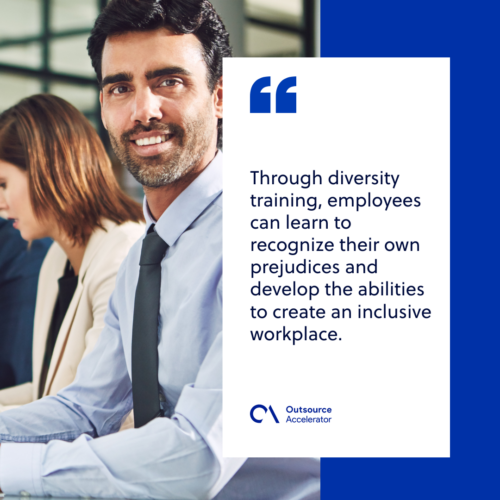
Good diversity management calls for full training and education. These programs fight stereotypes and raise awareness of unconscious bias. So through training, staff learn to spot their own biases and build an inclusive workplace.
Make sure benefits and programs are inclusive
Next, review your benefit plans and programs. For example, make sure they support caregivers and nursing mothers. So put in place flexible schedules and resources, such as nursing areas or eldercare seminars. As a result, these help staff contribute fully while they keep work-life balance.
Conduct regular diversity audits
Periodically run diversity audits to check the representation of different groups. Then analyze metrics, such as the gender and ethnic mix of teams. Finally, use the data to set diversity goals and track progress over time.
Establish clear diversity and inclusion policies
Develop and share clear diversity and inclusion policies. These should outline the firm’s commitment to an inclusive workplace. Also, make sure they reach all staff and stay enforced. In short, firms should take a zero-tolerance stance on discrimination and harassment.
Implement fair pay
Make sure pay never varies by gender, race, or any other trait. Instead, base it only on experience, skills, performance, job post, or seniority.
Celebrate diversity and cultural events
Celebrate diversity and cultural events at your company. For example, recognize different holidays, practices, and heritage months. So organize events that let staff share their traditions. As a result, this promotes understanding and respect among your team.
Collaborate with varied suppliers and business partners
Extend your efforts beyond the company by working with diverse suppliers and partners. For example, back supplier diversity programs that prioritize minority-owned, women-owned, and other diverse businesses. As a result, you build a more inclusive supply chain and support diverse entrepreneurs.
Establish diverse leadership development programs
Finally, invest in diverse leadership development programs. These help you find and grow high-potential staff from diverse backgrounds. So they offer training, networking, and exposure to senior roles. In turn, a diverse leadership team brings many views into decision-making.
Why diversity management is important
Diversity management is a strategic must for modern firms. It promotes employee well-being and drives success. In addition, it enhances the company’s reputation. So by using these best practices, businesses can thrive in today’s global market.
Frequently asked questions
What is diversity management?
It is a strategy that builds a fair, inclusive workplace. As a result, employees from all backgrounds feel valued, respected, and empowered to do their best work.
Why is diversity management important?
It lifts engagement, decision-making, and productivity. In addition, it strengthens a company’s reputation, so it attracts talent, clients, and investors.
What are the main types of diversity management?
There are two. Intranational diversity management focuses on one country, while cross-national diversity management spans many countries and cultures.
How can a business improve diversity management?
Start with unbiased hiring and clear policies. Next, add training, ERGs, and fair pay. Finally, run regular audits to track your progress.
What is the difference between diversity and diversity management?
Diversity is the mix of people in a workplace. Diversity management is the active strategy that makes that mix feel included and valued.
Key takeaways
- Diversity management builds a fair, inclusive workplace where all employees feel valued.
- It is voluntary and goes beyond legal compliance and simple representation.
- It lifts engagement, decision-making, productivity, and company reputation.
- The two types are intranational and cross-national diversity management.
- Best practices include unbiased hiring, training, ERGs, fair pay, and regular audits.






 Independent





