


Software Developer
HR Manager
Team Leader
Accountant
Copy Writer
Customer Service
Virtual Assistance
 Join the upcoming Outsource Insights live session. OA's Zoom room is open! Come chat with our outsourcing expert now.


The most revealing number at Customer Contact Week (CCW) Nashville 2026 was not printed on any vendor’s backdrop. It was 22. Analysts from CMP, the research company behind CCW, said 30% of the average customer contact operation is outsourced today, and that executives expect that share to fall to 22% by the end of 2029. In the same session, renegotiating outsourcing strategy ranked last of 20 executive priorities, for the second or third year running. Buyers expect to need outsourcers less, yet almost nobody is in a hurry to rethink them, and the gap between those two facts is where the future of BPO will be decided over the next three years.
Walk the CCW Nashville expo hall at the Omni and you would struggle to guess that outsourcers handle almost a third of the industry’s customer contacts. Of the 80 or so companies on the sponsor board, fewer than a third were BPOs or workforce providers. The rest sold technology, and most of that technology was AI. Several outsourcers told me Las Vegas is where the BPOs turn up in force.
The stock market has been even less kind. In June, Concentrix cut its revenue guidance and warned that some clients were pulling outsourced work to fund AI projects. Its shares fell more than a fifth in early trading, Teleperformance hit a decade low before recovering, and RBC called the sub-sector increasingly “uninvestable”. In September Concentrix guided to a further 3% to 5% fall in fourth-quarter revenue, citing faster AI automation. By October, TTEC, a company with more than $2 billion of annual revenue, was valued at about $74 million, roughly half of what HappyRobot, one of the AI start-ups in the hall, raised in a single round in August.
On paper, the BPO industry spent 2026 being written out of its own trade show. The sessions told a more complicated story.
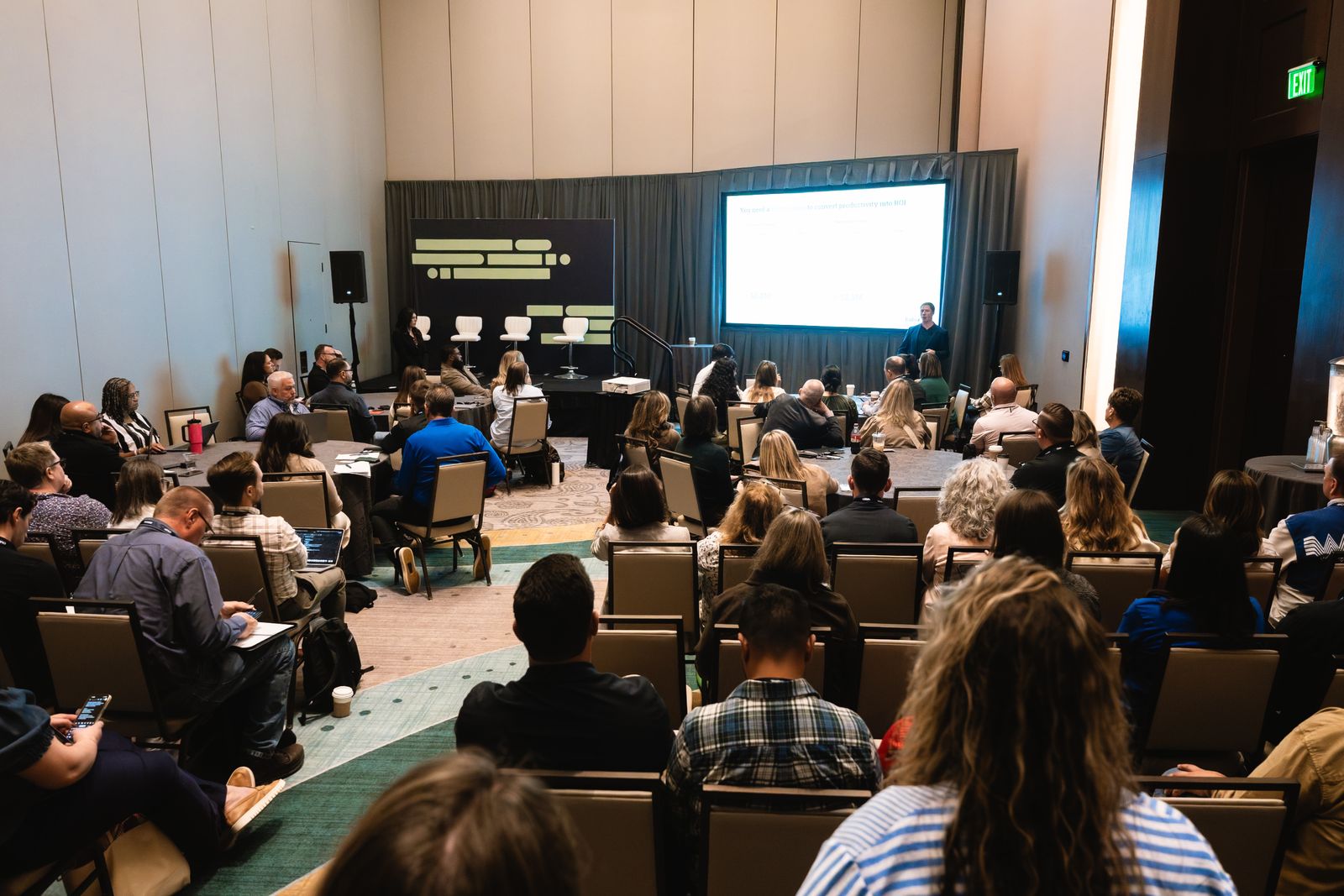
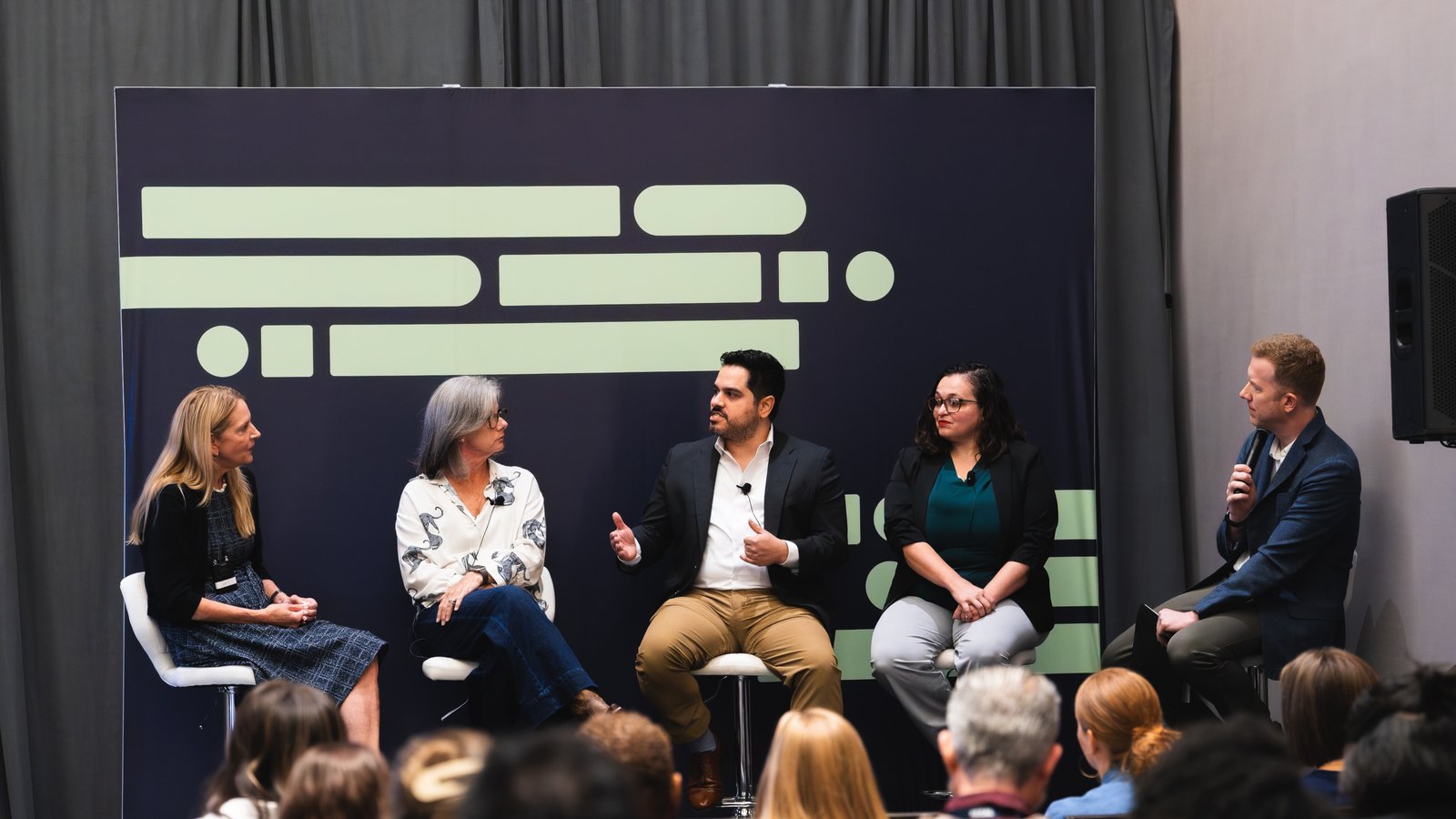
At Wednesday’s Innovation Summit, an executive from a mid-market outsourcer said during audience questions what their clients are now saying after deploying AI. Some come back because “AI did not drive the calls down like they expected, and ’oh my gosh, I need staff now!’” Others find that AI helped, “but now my volume is so unpredictable… I don’t know how to staff this.”
Leehla Huerta, who runs customer care operations at Fidium Fiber, called this one of the biggest holes in AI strategy. “You take the simple calls out, and all of a sudden, your entire capacity planning is foo bar,” she said. Kimberly Sayavongsa of Walmart described the same effect after an AI-powered IVR doubled self-service: “The only calls that we began to receive were more complex problems.”
CMP’s Brian Cantor added a warning that deserves more attention. Simple calls used to be where new agents learned the job. Remove them, and new hires go straight to angry, high-stakes customers, while the knowledge they need sits in software rather than in their heads. He called it the “GPS effect”: you never learn the route, so you are lost the moment there is a detour.
Put those together and the human work that remains is fewer calls, but harder, angrier and less predictable ones. That is not the end of outsourcing. It is a different product: flexible capacity, faster training and people who can handle exceptions.
The economics point the same way. Gartner, which in 2025 predicted AI would resolve 80% of common service issues by 2029, now forecasts that generative AI will cost more than $3 per resolution by 2030, more than many offshore human agents. It also expects half of the companies that cut service staff because of AI to rehire by 2027.
The most useful finding for outsourcers came late on Wednesday afternoon. CMP’s Jordan Zivoder said that clients who are satisfied with their BPO’s technology, enablement and innovation are almost eight times more likely to renew. Nicole Kyle, CMP’s chief product officer, framed it as an open question: BPOs will either acquire or build more technology, or become professional services firms that help clients select and implement it, “and take some of that business away from management consultants.”
The early winners are already visible. Ibex, which partners with Sierra on AI agents rather than fighting it, grew revenue 15% in its last fiscal year while Concentrix, Teleperformance and TTEC went backwards. IntouchCX built an AI company, Laivly, inside its own operations and now sells it to rival outsourcers. Teleperformance took a stake in the voice AI firm Sanas. On Thursday’s main stage, an outsourced healthcare IT service desk described moving from sampling 10% of calls for quality to scoring all of them with AI within minutes, the kind of technology enablement CMP’s renewal data rewards. (CMP sells this research to vendors and BPOs, so read it as a market signal rather than a neutral audit.)
Here is the part the “AI eats BPO” story misses. Many of the AI vendors in that crowded hall need outsourcers to reach customers. I met a training vendor with a dedicated head of BPO sales, a voice AI firm that sells white-label so BPOs can offer it under their own brand, and a platform giant that compared its relationship with outsourcers to a manufacturer and its car dealers. The outsourcer is becoming the integrator.
Offshore markets are already adjusting. The Philippine industry body has cut its 2028 jobs target because of AI, from 2.5 million to about two million “AI-enabled digital workers”, yet still expects revenue to grow 5% this year, about twice as fast as headcount. TTEC’s chief executive says he is not seeing volumes fall because of AI, and its offshore share has risen from 34% to 38%, even as first-quarter revenue fell 7%. Revenue growing faster than jobs is what a maturing industry looks like.
None of this means outsourcers can relax. The 30-to-22 forecast is an executive expectation, not an observed trend, but it points in a clear direction. Basic, high-volume tier-one work will shrink, and BPOs that sell only hours will be squeezed hardest. Concentrix now says about $1.3 billion of its revenue is exposed to the “compression of traditional services”. And when AI vendors price a resolved conversation at around a dollar, an hourly invoice looks expensive, even when the human does work the software cannot.
There is also a measurement problem. CMP showed that the US frontline customer contact workforce fell about 5% in a single year, against an official projection of 5% over a decade. When an audience member asked whether that reflected offshoring, the analysts confirmed the data covers only US workers. Part of the “AI is killing jobs” story may simply be work moving to where the data cannot see it.
Outsourcing ranks last on executive agendas out of inertia, and inertia has a renewal date. The shift CMP predicts will not arrive through dramatic re-tenders. It will arrive quietly, at renewal, between 2027 and 2029, as each contract is weighed against the AI budget sitting next to it.
That gives outsourcers a short window to change what their invoices describe. Hours and seats are the easiest line to cut. Outcomes, flexible capacity, AI integration and a reliable supply of trained people who can handle the hard calls are much harder to replace. Nashville did not show an industry on its way out. It showed an industry whose pricing model is running out of time.
More from CCW Nashville 2026: Vegas Sold Autonomy. CCW Nashville Bought Oversight., We Counted the AI at CCW Nashville.
When your outsourcing contract comes up for renewal, will you be buying hours or outcomes?
 IndependentSecureTransparent
Scale your business fast while reducing costs —
the average all-in employment costs
in the
Philippines are typically 70% less than its
Western counterparts
You can save 70% on staff costs, whilst driving quality & growth. Connect with an outsourcing expert to see how outsourcing can transform your business.







How many staff to outsource?



Outsource Accelerator is the trusted source of independent information, advisory and expert implementation of Business Process Outsourcing (BPO).
Outsource Accelerator offers the world’s leading aggregator marketplace for outsourcing. It specifically provides the conduit between world-leading outsourcing suppliers and the businesses – clients – across the globe.
The Outsource Accelerator website has over 5,000 articles, 450+ podcast episodes, and a comprehensive directory with 4,700+ BPO companies… all designed to make it easier for clients to learn about – and engage with – outsourcing.
Derek Gallimore has been in business for 20 years, outsourcing for over eight years, and has been living in Manila (the heart of global outsourcing) since 2014. Derek is the founder and CEO of Outsource Accelerator, and is regarded as a leading expert on all things outsourcing.
Outsource Accelerator in the media
See all media mentions