


Software Developer
HR Manager
Team Leader
Accountant
Copy Writer
Customer Service
Virtual Assistance
 Join the upcoming Outsource Insights live session. OA's Zoom room is open! Come chat with our outsourcing expert now.
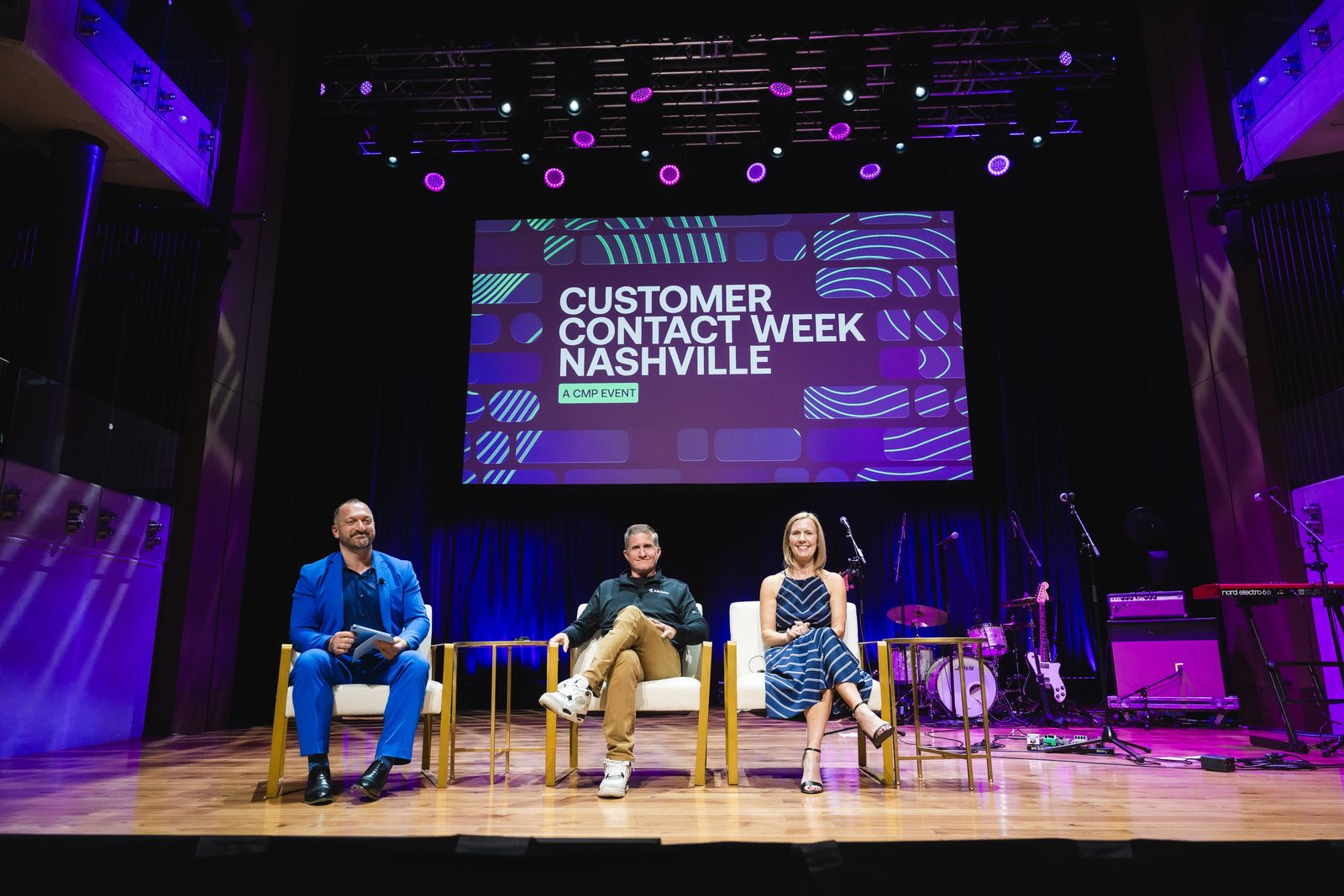


Consumers now use generative AI for almost everything: holiday plans, cover letters, settling arguments at dinner. Yet when they need help from a company, only 18% trust a chatbot to solve their problem, against 75% for a live phone agent. That figure, from CMP’s study of more than 1,000 consumers presented at Customer Contact Week (CCW) Nashville 2026, has barely moved since 2020. Meanwhile, contact centre leaders surveyed by CMP expect 77% of customer contacts to start in self-service by 2030, and 60% of executives plan to spend more on chatbots by the end of 2027. Customers and companies are heading in opposite directions, and the biggest takeaway from Nashville in October 2026 was that, for the first time in a while, the industry seemed to notice.
CCW’s flagship show in Las Vegas in June marked the peak of autonomy talk. CX Today counted a 38-fold rise in “autonomous agent” messaging in the months before it, even as its own recap declared the AI honeymoon over. Nashville finished the job. Nashville, the last stop of the CCW season, had a different vocabulary: oversight, observability, escalation and humans “in command”.
The clearest signal came from the vendors themselves. Sanas used the main stage to launch “Supervised AI”, in which one human monitors up to four AI-led calls at once and can step in mid-conversation. Five9’s Tony Sorensen opened the next session by noting that the industry had spent two years reading headlines about “the total replacement of contact center agents by autonomous AI”, but that leaders running high-stakes operations see something “completely different on the ground.” When the company sponsoring the session opens by debunking the hype, the mood has changed.
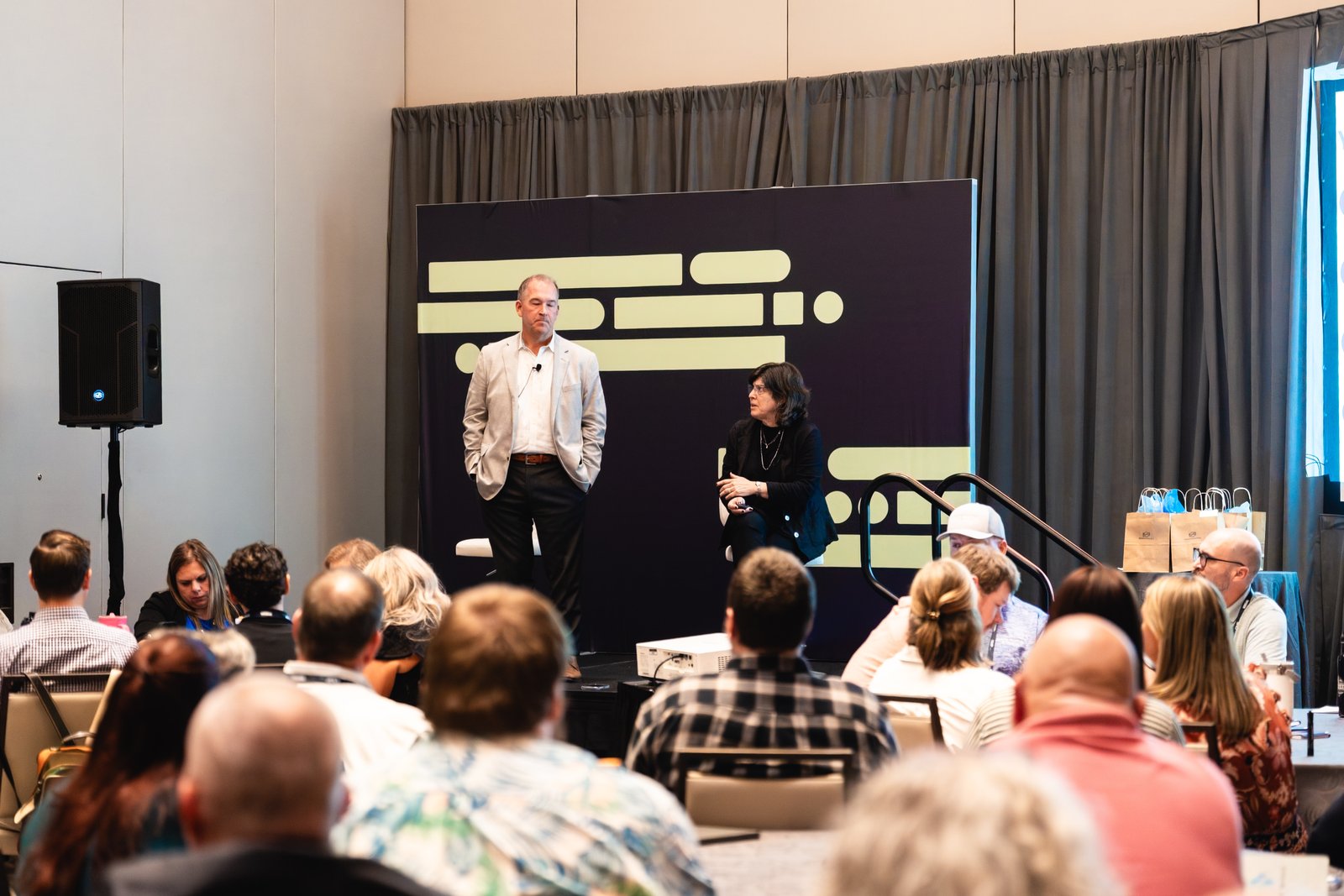
Why hasn’t trust moved? CMP’s Brian Cantor offered the most interesting answer of the week. When customers do serve themselves, they prefer static tools like account portals and apps to conversational AI. A portal means the company has done the work. A human agent’s job is to do the work. Conversational AI sits in an awkward middle, where the customer has to work out how to talk to it, what it can do and whether they asked the right way.
“They’re seeing it as: you do the work. We don’t care about solving the problem for you. It’s on you now,” Cantor said. If the company cuts costs while the customer does the extra work, “that doesn’t seem fair.”
Two other findings from the same study undermine common assumptions. The move away from the phone is strongest among older consumers, not younger ones, so the industry cannot wait for a generation to age out of wanting a human. And the number one thing that makes customers willing to try self-service is a visible, easy route to a person. Gartner research backs this up: 87% of customers say companies using generative AI must offer access to a human agent. Customers are also three times more likely to use ChatGPT-style tools for service than a company’s own bot. They are not against AI. They are against your AI.
Practitioners on stage were blunter. “Technology readiness does not constitute customer readiness,” said Leehla Huerta of Fidium Fiber. She argued that long wait times are often not a failure of AI but a decision made in advance: “The business has already decided not to staff that channel,” on the assumption AI would cut headcount. Her proposal for AI contracts was simple: “As soon as that customer says ’agent’ the first time, don’t charge me for that conversation.”
For years the industry measured AI by containment, the share of contacts that never reach a human. Nashville was unusually hostile to that number. “Hundred percent containment is super easy,” one AI vendor executive joked to an Innovation Summit audience. “Amazon did it. They shut off their number for customer service.” (Amazon does still have a phone number. It is simply very good at hiding it.)
The best results described at the show came from AI that customers barely noticed. Dan O’Connor of HCTec, which runs IT service desks for hospitals, said his company tried putting voice bots at the front of its call flow and pulled them out, because stressed healthcare callers did not want to talk to a machine. “We never want our customers or our callers to know we’re using AI,” he said. Instead, AI writes call summaries, searches knowledge bases and checks the quality of every call, and he said staff attrition fell after it arrived. That preference for invisible AI sits awkwardly with proposed US rules that would require AI use to be disclosed, but it reflects what stressed callers want. Millie McIntyre of IAA described agent assist removing four to five minutes of after-call work and helping cut the average speed of answer from 18 minutes to four. Both spoke on a Five9-sponsored panel, and IAA credits Five9 as its partner, so treat the numbers as company-reported. But the pattern is consistent: AI that helps the agent is winning faster than AI that replaces the agent.
It would be easy to read all this as a victory for humans over machines. That would be wrong too. CMP’s benchmarking shows the median self-service resolution rate rising from 25% in 2023 to 40% in 2026, which is real progress. And for the first time in its research, more consumers say service is getting better (45%) than worse (37%). AI is working, at least for simple tasks, and Gartner found that only 20% of service leaders have actually cut agents because of it.
The problem is the money. Gartner found that service leaders’ AI spending rose 38% this year while their total budgets grew only 2%, so the money for bots is coming from people. Klarna, the early poster child for replacing agents, started hiring humans again after its chief executive admitted that cost had been “a too predominant evaluation factor”, though its AI still does the work of hundreds of agents. Nashville’s message was not “stop investing in AI.” It was “stop pretending the human channel is optional while you do.”
If the future is hybrid, the human role changes shape. Gary David of Bentley University, who gave the closing keynote, summed up a theme of the week: contact centre work is skilled knowledge work. The people answering the escalated calls need more judgement, more authority and better training than before, because the customer on the line has usually already failed with the bot once.
That has implications well beyond the US. Much of this work is done by distributed and offshore teams in Manila, Bogotá and Cairo, and those teams are moving from answering simple questions to resolving exceptions and, increasingly, supervising machines. Sanas’s one-person-to-four-AI-calls model is an early sketch of that job. It still means fewer people per call, something only Sanas’s own launch video came close to admitting: “AI agents are taking a lot of calls in our industry, a lot of jobs.” But it is a skilled role, not a script-reader’s job, and it is one that global talent markets are well placed to fill.
The companies that close the 18% gap will not be the ones with the cleverest bots. They will be the ones that treat the bot like any other part of the contact centre, with its own resolution and satisfaction targets, and that make the route to a human obvious rather than hidden.
More from CCW Nashville 2026: Outsourced Customer Service to Drop From 30% to 22%, We Counted the AI at CCW Nashville.
If your customers could see your containment rate, would they call it service or avoidance?
 IndependentSecureTransparent
Scale your business fast while reducing costs —
the average all-in employment costs
in the
Philippines are typically 70% less than its
Western counterparts
You can save 70% on staff costs, whilst driving quality & growth. Connect with an outsourcing expert to see how outsourcing can transform your business.







How many staff to outsource?



Outsource Accelerator is the trusted source of independent information, advisory and expert implementation of Business Process Outsourcing (BPO).
Outsource Accelerator offers the world’s leading aggregator marketplace for outsourcing. It specifically provides the conduit between world-leading outsourcing suppliers and the businesses – clients – across the globe.
The Outsource Accelerator website has over 5,000 articles, 450+ podcast episodes, and a comprehensive directory with 4,700+ BPO companies… all designed to make it easier for clients to learn about – and engage with – outsourcing.
Derek Gallimore has been in business for 20 years, outsourcing for over eight years, and has been living in Manila (the heart of global outsourcing) since 2014. Derek is the founder and CEO of Outsource Accelerator, and is regarded as a leading expert on all things outsourcing.
Outsource Accelerator in the media
See all media mentions