
How to start offshoring your back-office tasks

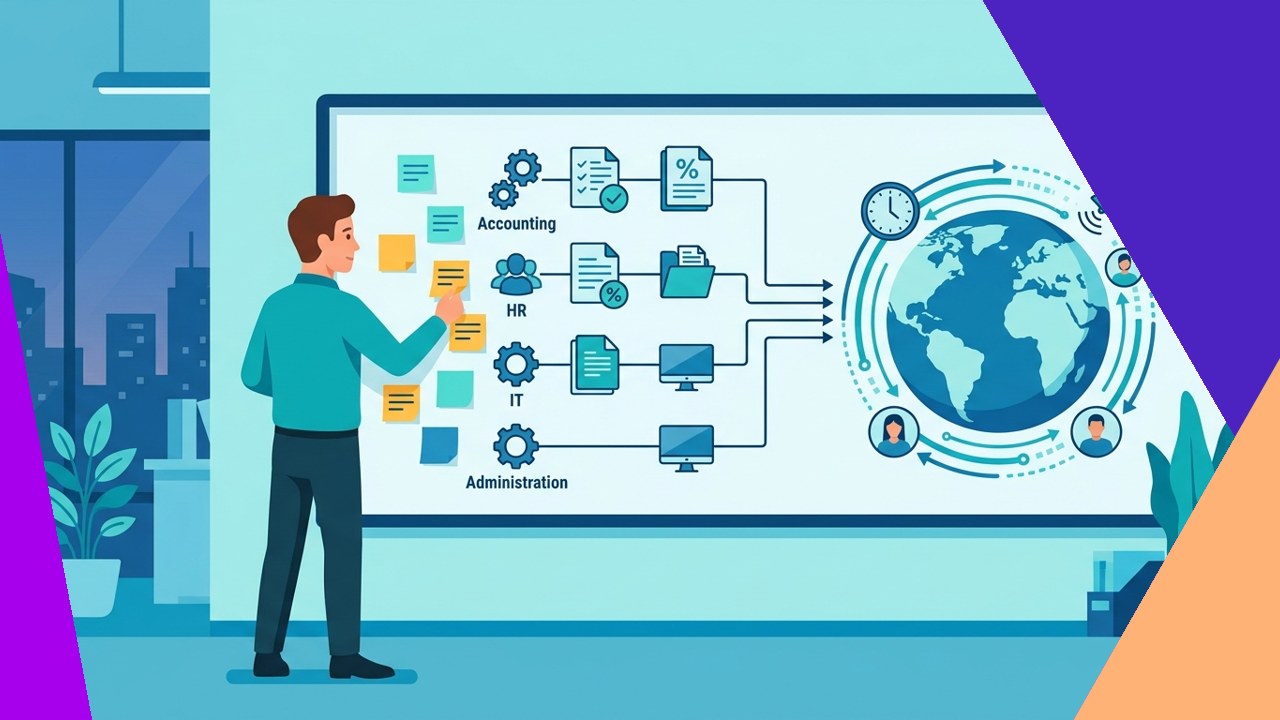
- Offshoring back-office work starts with picking repeatable, rules-based tasks like data entry, bookkeeping, HR admin, and IT support.
- Document each process, choose a location and engagement model, then run a small pilot before you scale.
- Clear KPIs, a communication rhythm, and a named point of contact separate offshoring wins from expensive stalls.
If you are wondering how to start offshoring your back-office tasks, the honest answer is that it is less about finding a magic vendor and more about preparation. Back-office work covers the internal, non-customer-facing functions that keep a business running: data entry, bookkeeping, payroll, HR administration, and IT support.
These tasks are ideal candidates for offshoring because they are repeatable, measurable, and rarely need to sit in the same building as your leadership team. The trick is to move deliberately, one process at a time, so quality holds while your costs come down.
This guide walks through the practical steps, from choosing what to hand off to setting the metrics that tell you it is working.
What back-office tasks should you offshore first?
Not every task is equally suited to an offshore team. The best first candidates are high-volume, low-judgment activities that follow clear rules and produce output you can check. Start there, prove the model, then extend to more complex work.
| Back-office task | Offshoring suitability | Why |
|---|---|---|
| Data entry and document processing | High | Rules-based, high volume, easy to measure for accuracy and turnaround. |
| Bookkeeping and accounts payable | High | Standardized workflows and software; needs process controls, not proximity. |
| HR administration and payroll support | Medium to high | Transactional tasks delegate well; keep policy and compliance decisions in-house. |
| IT helpdesk and technical support | Medium to high | Ticket-based work suits offshore teams; align coverage to your time zones. |
| Strategy, legal sign-off, exec decisions | Low | Judgment-heavy and context-dependent; better kept internal. |
How to start offshoring your back-office tasks, step by step
1. Identify the tasks to offshore
List every recurring back-office activity, then score each on volume, complexity, and how measurable the output is. Favor tasks that are frequent, rules-based, and easy to check. This is where most first-time offshoring programs succeed or stall.
2. Document your processes
Write down how each task is actually done today, step by step, including the tools, logins, and quality checks involved. A clear standard operating procedure is what lets someone new produce your result without guessing. Undocumented tribal knowledge is the biggest hidden cost of any handover.
3. Choose a location and engagement model
Popular destinations such as the Philippines and India offer large, English-capable talent pools and meaningful cost savings. You also pick a model: build and manage your own offshore team, or work through a provider that supplies staff and infrastructure.
The comparison below frames that decision.
| Factor | Build your own offshore team | Work with a BPO partner |
|---|---|---|
| Control | Full control over hiring and workflows | Shared control; provider handles day-to-day management |
| Setup speed | Slower; you handle entity, office, compliance | Faster; infrastructure and staff already in place |
| Admin burden | High: payroll, HR, local law all on you | Low: provider carries local employment and facilities |
| Best for | Larger teams and long-term, core-adjacent work | Getting started, pilots, and variable volumes |
4. Select a partner or hiring path
Shortlist providers on relevant experience, data security, references, and cultural fit, not price alone. Deloitte’s 2024 Global Outsourcing Survey notes that “skilled talent and agility join cost reduction as key drivers for outsourcing,” so weigh capability, not just the hourly rate. Ask to speak with clients running similar work.
5. Run a pilot
Start with one process and a small team for 30 to 90 days. A pilot exposes gaps in your documentation, tests the partner’s real quality, and lets both sides build a working rhythm before money and scope grow. Treat problems here as information, not deal-breakers.
6. Set KPIs and a communication rhythm
Define what good looks like: accuracy rates, turnaround time, tickets closed, or invoices processed per day. Pair the metrics with a fixed cadence of check-ins and a single named point of contact on each side. Silence is where offshoring quietly fails.
7. Scale what works
Once the pilot hits target for a few consecutive cycles, add volume, then add adjacent tasks. Reuse the same documentation-and-pilot pattern for each new process so growth stays controlled rather than chaotic.
Common mistakes to avoid
The frequent failure points are predictable: offshoring a broken process instead of fixing it first, skipping documentation, and chasing the lowest rate. As SHRM’s guide to HR outsourcing points out, tasks like payroll and shifting compliance rules “can be a drain on your time and resources,” which is exactly why they suit a specialist partner.
Also avoid handing over sensitive work without security controls, and never treat the offshore team as disposable. Retention and knowledge both compound over time.
For a deeper look at which functions travel well, see this overview of back-office outsourcing and its common services, and this primer on the benefits of offshoring for growing businesses.
Frequently asked questions
How much can offshoring back-office tasks save?
Savings vary by role and location, but labor and overhead costs in offshore destinations are typically a fraction of onshore rates. Cost is only part of the picture, since access to skilled talent and added capacity often matter as much as the direct saving.
Which back-office task is easiest to offshore first?
Data entry and document processing are usually the simplest starting point. They are high-volume and rules-based, so quality is easy to measure and a pilot can prove the model quickly before you move to bookkeeping or HR admin.
Should I build my own team or use a provider?
For a first move, working through a provider is usually faster and lower-risk because the infrastructure and local compliance are already handled. Building your own team makes more sense once volumes are large and the work is core-adjacent and long-term.
How long before offshoring pays off?
Expect a pilot of 30 to 90 days to validate quality, then a few more months to reach steady state. Rushing to full scale before the process is stable is the most common reason offshoring underdelivers.
Key takeaways
- Begin with high-volume, rules-based tasks like data entry, bookkeeping, HR admin, and IT support.
- Document every process and run a small pilot before committing to full scale.
- Choose between building your own team and a BPO partner based on control, speed, and admin burden.
- Lock in KPIs, a communication rhythm, and a single point of contact, then scale only what proves out.






 Independent





