
Uncovering the art of skip tracing


What is skip tracing and how does it work?
Skip tracing is the process of finding a person who has become hard to reach, often someone avoiding a debt, a legal duty, or contact.
- It pulls together clues from public records, phone data, and online sources.
- It supports debt collection, asset recovery, law enforcement, and family tracing.
- It works best when done responsibly and within legal limits.
Skip tracing is a term that has been around for a long time, but you may not have heard it before. Still, it is a simple and useful way to find a person of interest. This is true when someone is trying to dodge legal or money duties.
As a result, it plays a key role across many industries. For example, the method helps with debt collection, asset recovery, law enforcement work, and even family tracing. In this post, we will look at skip tracing, how it works, where it is used, its pros and cons, and the best ways to use it.
Defining skip tracing
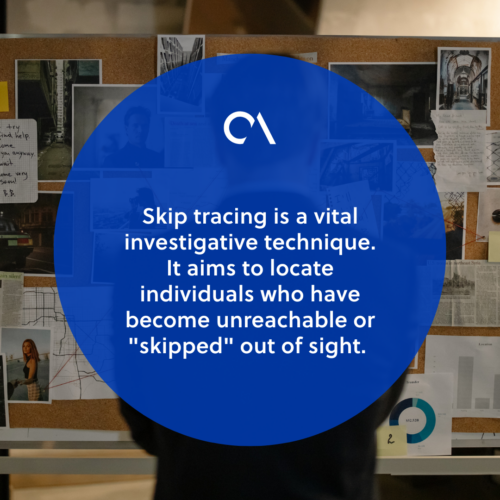
Skip tracing is a core investigative method. In short, it aims to locate people who have become unreachable or “skipped” out of sight.
These people may have vanished on purpose or by accident. Either way, they are often avoiding duties they need to meet. Because of this, skip tracing is needed and used.
The term “skip” refers to the person who has left. Meanwhile, “tracing” refers to the work of finding them. So the method uses many tools and techniques to gather facts and track the subject.
Skip tracing vs. batch skip tracing
Skip tracing focuses on finding one person. Batch skip tracing, however, is for finding many people at once. As a result, it speeds up the work of locating several people at the same time.
The process uses advanced tech and databases to search for useful facts fast. For example, it involves adding data, such as names, addresses, or phone numbers, into a collection. In turn, batch skip tracing gives investigators full reports that help find the right people quickly.
Difference between a skip tracer and a bounty hunter
Skip tracers and bounty hunters may seem alike in their hunt for people. However, there are clear differences between the two roles.
Skip tracers mainly gather facts and track people down. For instance, they do it for legal work or debt collection. Bounty hunters, on the other hand, are licensed pros who locate and catch people who have skipped bail or missed a court date. So the methods may overlap, but the goals and legal rules differ a lot.
How does skip tracing work?
Skip tracing blends old and new methods to find a person’s current location. First, skip tracers use many data sources, follow leads, and lean on tech to track the subject.
Next, they piece the puzzle together bit by bit. As a result, it is careful work that needs attention to detail, patience, and a wide grasp of the tools on hand. Because the data often sits in scattered systems, some teams use back office support to organize and process records at scale.
Skip tracing services methods
Skip tracers use many methods to gather facts and locate people. Here are some of the key ones used in skip tracing.
Public records searches
One of the base methods in skip tracing is searching public records. These records can hold useful facts, such as:
- Addresses
- Phone numbers
- Property ownership
- Marriage and divorce records
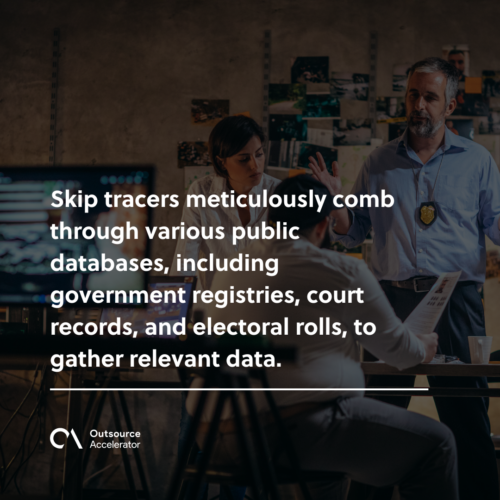
Skip tracers comb through many public databases to gather the data they need. For example, they check government registries, court records, and voter rolls.
Social media and online searches
Today, social media platforms have become rich sources of personal facts. So skip tracers can use social sites, online forums, and search engines to gather data. In addition, they can spot useful clues and leads by looking at public posts, links, and activity.
Phone and email searches
Contact details are key in skip tracing. As a result, skip tracers run phone and email searches to find people. For instance, they use reverse phone lookup services, email tracing tools, and databases to find active numbers and email addresses. In turn, these methods can lead to direct contact or more facts.
Surveillance and field visits
In some cases, skip tracers may turn to surveillance and field visits. This hands-on step involves visiting places, talking to people who know the subject, or running stakeouts. As a result, field visits give real-time insight that helps locate the person of interest.
Searches using skip tracing software
Skip tracers also use advanced databases built just for skip tracing. These tools collect facts from many sources, such as public records, social media, and online directories. So skip tracers can run full searches, cross-check data, and find hidden links.
Skip trace applications
Skip tracing is used across many industries and sectors. Here are some of the key areas where skip tracing plays a vital role.
Debt collection
In the field of debt collection, skip tracing helps find people who owe money. As a result, agencies can track down debtors and start the steps to recover the funds. In addition, many collection teams sit within financial services outsourcing setups that handle this work at scale. So skip tracing helps them make contact, set up payment plans, and settle debts.
Asset recovery
Skip tracing is also used widely in asset recovery work. For example, skip tracers step in to find and recover hidden assets. This matters most when someone tries to hide or move assets to dodge a rightful claim. Because the trail often runs through financial data, accounting outsourcing teams can help trace the money.
Legal and law enforcement investigations
Skip tracing plays a key role in legal and law enforcement work. For instance, law firms, attorneys, and agencies use it to find witnesses, defendants, or people of interest. As a result, skip tracers help gather evidence, serve legal papers, and keep cases moving.
Missing persons and family tracing
Skip tracing is also used in missing person and family tracing cases. When people are missing or split from their families, skip tracers can help find and reunite them. So, by using investigative methods and databases, they bring closure to families and reconnect loved ones.
Background checks and employment screening
Employers and HR teams often rely on skip tracing for thorough background checks and screening. For example, it helps confirm that the facts a candidate gives are correct. In addition, hiring teams that run talent acquisition use it to check a person’s suitability. As a result, it supports workplace safety and guards company interests.
Insurance and claims
Insurers also use skip tracing to find policyholders, claimants, or witnesses. So many carriers fold this step into their insurance outsourcing work. As a result, they can check claims, spot fraud, and settle cases with more confidence.
Pros of skip tracing service
Skip tracing offers clear gains across many industries, such as:
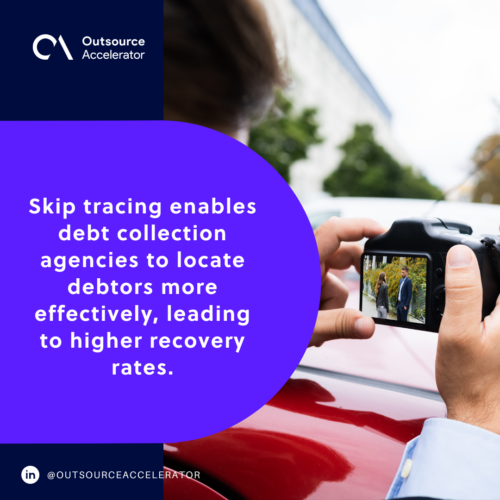
- Better debt recovery rates: Skip tracing helps agencies find debtors, which leads to higher recovery rates.
- Faster investigations: In legal and law enforcement work, it speeds up the hunt for key people and evidence.
- Asset protection and recovery: The method helps guard assets and recover hidden or misused funds.
- Reuniting families: Skip tracing gives hope to families looking for missing loved ones.
- Lower risk: Thorough background checks help cut risk in hiring, deals, and other work.
Cons of skip tracing service
Skip tracing brings real value. Still, it is important to weigh some of the downsides.
- Privacy concerns: Skip tracing involves personal data. As a result, it raises privacy concerns if not done with care and within the law.
- False or old data: Records may hold errors or old details. So they may lead to wasted effort and wrong conclusions.
- Ethical concerns: The fair use of skip tracing needs pros to handle sensitive cases with respect for people’s rights.
- Legal limits: Skip tracers must follow the law to keep their work within legal bounds.
Key takeaways
- Skip tracing is a proven way to find people who have skipped out on debts, legal duties, or contact.
- It draws on public records, phone and email data, social media, field visits, and dedicated software.
- Common uses include debt collection, asset recovery, legal work, family tracing, and background checks.
- The main risks are privacy, old data, and legal limits, so responsible use matters most.
Frequently asked questions about skip tracing
What is skip tracing used for?
Skip tracing is used to find people who are hard to reach. For example, it supports debt collection, asset recovery, legal cases, missing person searches, and background checks.
Is skip tracing legal?
Yes, skip tracing is legal when done within the rules. However, skip tracers must follow privacy and data laws. As a result, responsible use is a must.
What is batch skip tracing?
Batch skip tracing finds many people at once. In short, it feeds large lists of names or numbers into databases. So it saves time when teams need to trace many subjects.
What is the difference between a skip tracer and a bounty hunter?
A skip tracer gathers facts and locates people. A bounty hunter, however, is licensed to catch people who skipped bail. So their goals and legal rules are different.
How accurate is skip tracing?
Accuracy depends on the data. Fresh, cross-checked records give the best results. Still, old or wrong data can slow the work down.






 Independent





