
How retrieval-augmented generation improves outsourced support

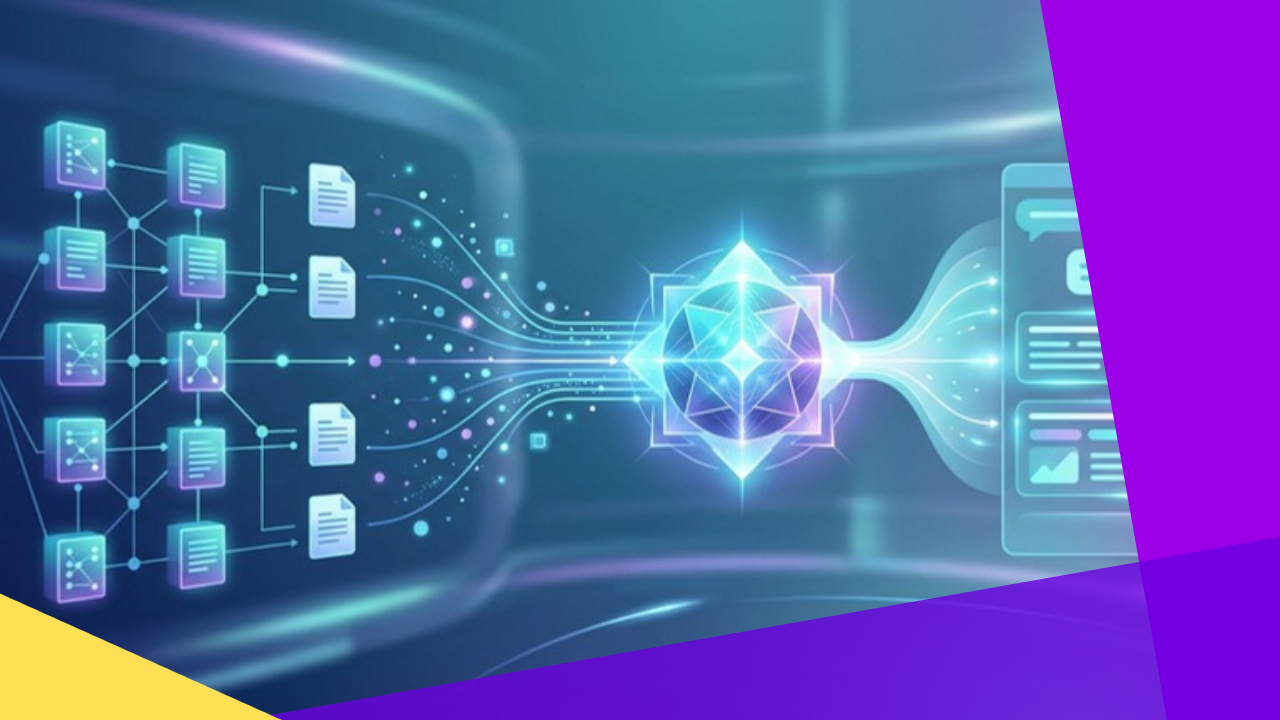
- What it is: Retrieval-augmented generation (RAG) pairs an AI model with a live search of a company’s own knowledge base, so replies draw on current, approved information.
- Why it helps support: Grounded answers mean fewer wrong replies, faster agent onboarding, and responses that follow each client’s policies.
- What stays human: Agents still verify sensitive answers, handle edge cases, and keep the source content clean and current.
- What it needs: Well-organized documentation, tuned retrieval, and regular review to stay accurate.
Retrieval-augmented generation (RAG) is changing how outsourced support teams answer customer questions. Instead of leaning only on what an AI model memorized during training, RAG has the model look up a company’s own documents first, then write a grounded reply.
For business process outsourcing (BPO) providers and the clients who hire them, that shift is practical. This guide explains what RAG is in plain terms, how it grounds answers in a knowledge base, and why RAG outsourced support is usually more accurate than a standard chatbot.
The short version: better sources in, better answers out.
What is retrieval-augmented generation?
Start with the plain-language definition before the mechanics.
A large language model on its own answers from a fixed snapshot of training data, which can be stale or generic. RAG adds a retrieval step: before the model responds, it searches a chosen set of documents and feeds the most relevant passages into the prompt.
Think of it as an open-book exam rather than a closed-book one, since the model answers with the reference material in front of it. IBM Research describes it as a framework for retrieving facts from an external knowledge base to keep model answers accurate and current.
In support work, that knowledge base is the client’s help center, policies, and product notes.
How RAG grounds answers in a knowledge base
The process runs in three quick steps that happen behind a single reply.
1. Retrieve
When a customer asks a question, the system turns it into a search and pulls the passages that best match from the connected knowledge base.
2. Augment
Those passages are attached to the model’s prompt as context, so the model reads the relevant policy or article before writing anything.
3. Generate
The model then drafts an answer based on the retrieved text, often with a citation or link back to the source so a person can check it.
Because the answer is tied to real documents, it reflects the client’s current rules rather than a guess. The researchers who introduced the method found that grounding output in retrieved passages produces more specific, diverse and factual language than a model working from memory alone.
Why RAG matters for outsourced and BPO support
Outsourced teams support many clients and products at once, so accuracy and speed carry real weight.
The first gain is fewer wrong answers. Grounding replies in approved content reduces the invented, confident-sounding mistakes often called hallucinations.
The second is freshness. When a client updates a refund policy, the retrieval layer reads the new document on the next query, so answers change without retraining the model.
The third is faster onboarding. New agents lean on grounded suggestions while they learn an account, which shortens ramp-up on complex programs. It is one reason delegating AI-heavy work to specialist providers has gained traction.
A fourth is consistency. Across a distributed workforce spread over several sites, the same source content keeps replies aligned. Used well, RAG supports the blend of automation and human agents that quality programs depend on.
| Factor | Standard chatbot | RAG-powered support |
|---|---|---|
| Source of answers | Fixed training data or scripted rules | Live search of the client’s knowledge base |
| Staying current | Needs rebuilding or reprogramming | Reads updated documents on the next query |
| Risk of made-up answers | Higher, with little traceability | Lower, with links back to sources |
| Client-specific policy | Generic responses | Answers tied to that account’s rules |
| Agent support | Limited | Draft replies agents can verify and send |
Limits and the human role
RAG improves grounding, yet it does not remove the need for judgment.
If the knowledge base is messy, outdated, or missing a topic, retrieval can surface the wrong passage and the answer will follow it. Clean, well-tagged content is the real foundation.
Sensitive cases such as billing disputes, cancellations, or safety issues still need a person to confirm and decide. The strongest setup has agents reviewing grounded drafts, not automation left to run alone. That mirrors the wider human-plus-AI approach reshaping support desks.
Frequently asked questions
Here are common questions about RAG in an outsourced support setting.
Does RAG replace support agents?
No. It drafts grounded answers and speeds up research, while agents verify replies, handle exceptions, and own the customer relationship.
What does RAG need to work well?
A clean, current knowledge base, a tuned retrieval layer, and regular review. Poor source content leads to poor answers, even with a strong model.
How is RAG different from a normal chatbot?
A normal chatbot answers from fixed rules or training data. RAG searches live documents first, then writes a reply tied to those sources.
Is RAG safe for client-specific policies?
It can be, because answers reference each account’s own documents. Access controls and human review keep sensitive replies accurate and compliant.
Key takeaways
RAG makes outsourced support more accurate by grounding AI answers in a company’s own knowledge base.
- RAG retrieves approved documents, then generates a reply based on them, which cuts hallucinations.
- Answers stay current because the model reads updated content instead of relying on old training data.
- BPO teams gain faster onboarding and consistent, policy-aligned replies across accounts.
- Results depend on clean source content and human review, so people stay central.






 Independent





