
Quiet cracking at work: 6 subtle habits that harm teams


The rise of quiet quitting marked a shift in how employees respond to burnout, lack of recognition, and unclear expectations. Instead of resigning, many chose to mentally check out, doing only what their job required and nothing more. That trend has now evolved into a deeper, more complex behavior: quiet cracking.
According to Gallup’s 2024 workplace report, global employee engagement dropped to 21%, and the cost of disengagement reached a staggering $438 billion. These numbers reflect more than just dissatisfaction; they point to a workplace culture under pressure and in need of attention.
In this article, we’ll explore quiet cracking at work, specifically, six subtle habits that may seem harmless but quietly weaken team performance, collaboration, and morale. Recognizing these signs early gives leaders a better chance to create healthier, more productive environments.
What is quiet cracking?
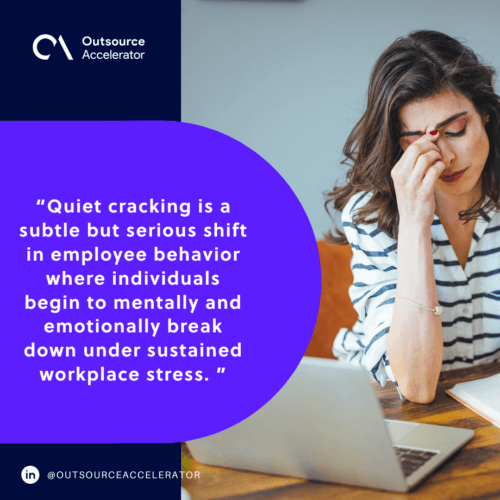
Quiet cracking is a subtle but serious shift in employee behavior where individuals begin to mentally and emotionally break down under sustained workplace stress.
Unlike quiet quitting, which involves disengaging without leaving the job, quiet cracking is often involuntary and driven by pressure, burnout, or a feeling of being unsupported.
Employees may still try to perform but gradually lose motivation, energy, and clarity. This hidden strain affects not only individual well-being but also team dynamics and productivity.
If left unaddressed, quiet cracking can lead to higher turnover, increased mistakes, and long-term damage to workplace culture and employee morale.
Common causes of quiet cracking
Quiet cracking doesn’t happen overnight; it builds up over time as pressure, uncertainty, and disconnection accumulate. Employees may look fine on the surface, but internally, they’re struggling to keep up.
Here are some of the most common causes that push individuals toward quiet cracking at work:
Poor leadership
Managers set the tone for how supported and valued employees feel. A lack of clear communication, feedback, or recognition can make even high-performing team members feel invisible or overlooked. Over time, this weakens motivation and trust.
Economic uncertainty
When job markets feel unstable, employees may feel trapped in roles they no longer enjoy. The fear of losing income outweighs the desire for change, creating a sense of helplessness that chips away at engagement.
Lack of career growth
Without chances to learn, grow, or move forward, employees lose their sense of purpose. Stagnation leads to frustration, which can silently drain motivation and drive.
Uncertain company direction
Confusion about where the company is headed, or how an individual fits into that vision, can create anxiety. A lack of transparency fuels doubt, making employees feel disconnected from broader goals.
Increased workload and expectations
When demands rise without added support, stress builds quickly. Constant pressure to perform at high levels leads to burnout, especially when boundaries between work and life are ignored.
Quiet cracking often stems from these avoidable conditions, and recognizing the root causes is the first step toward change.
Spotting 6 quiet cracking habits and how to address them
Yes, quiet cracking often goes unnoticed because it doesn’t look like traditional burnout. Employees show up, attend meetings, and meet deadlines, but beneath the surface, they’re not okay.
For businesses and management, spotting these subtle signs early is critical to maintaining morale, performance, and team health.
Take note of these six quiet cracking habits and how leaders can address them effectively:
1. Declining initiative
When once-proactive employees stop offering ideas or volunteering for tasks, it may signal emotional fatigue.
What to do: Managers should check in personally, not just about work, but about how the employee is feeling. A supportive one-on-one conversation can open the door for honest dialogue and early intervention.
2. Withdrawal from team interactions
Employees pulling back from conversations, skipping optional meetings, or staying silent in group settings could be emotionally checked out.
What to do: Create a psychologically safe space. Invite input in smaller settings or private chats to re-engage them without pressure.
3. Sudden drop in work quality
A sharp decline in attention to detail or effort is often a quiet cry for help. This can lead to costly mistakes, missed deadlines, and a ripple effect that puts extra pressure on the rest of the team.
What to do: Avoid immediate criticism. Instead, ask what’s changed and how the workload or environment might be affecting their output.
4. Avoiding new challenges
Employees who are experiencing quiet cracking may shy away from learning opportunities or leadership roles.
What to do: Offer smaller, low-risk projects to rebuild confidence and interest. Pair them with a mentor to spark growth without overwhelming them.
5. Increased cynicism or detachment
Sarcastic remarks, passive-aggressive comments, or an “I don’t care” attitude are subtle signs of disengagement.
What to do: Address the tone calmly, then dig deeper. Honest feedback sessions and transparent communication help restore trust.
6. Frequent absences or late logins
A pattern of logging in late, calling out often, or missing meetings could reflect emotional exhaustion.
What to do: Review workload, talk about stress levels, and offer flexibility where possible. Small adjustments can make a big difference.
Quiet cracking often hides behind professionalism and routine, making it easy to overlook until the damage is done. Leaders who remain observant and open to feedback create a work environment where issues surface sooner and solutions follow more quickly.
Addressing these habits that support individuals also protects the long-term stability and resilience of the entire organization.

Quiet cracking FAQs
Quiet cracking is gaining attention as more employees silently struggle under workplace pressure. Let’s answer some of the frequently asked questions to help clarify what it means and why knowing the following matters to businesses:
What’s the difference between quiet cracking and quiet quitting?
Quiet quitting is the act of consciously choosing to meet only the minimum expectations of a role. Quiet cracking, on the other hand, is a gradual breakdown caused by stress, burnout, or emotional strain, even when the employee wants to do more.
Who is most at risk of quiet cracking?
High performers and loyal employees often experience quiet cracking because they push through stress until it becomes overwhelming.
Can quiet cracking be reversed?
Yes. Early support, open communication, and manageable workloads help employees regain stability and engagement.
Is it always visible to managers?
No. Quiet cracking is subtle and often masked by surface-level productivity.
Understanding quiet cracking enables leaders to respond effectively before it develops into burnout or turnover. Small shifts in culture can make a big impact.






 Independent





