
Performance management workflows: the pros and cons

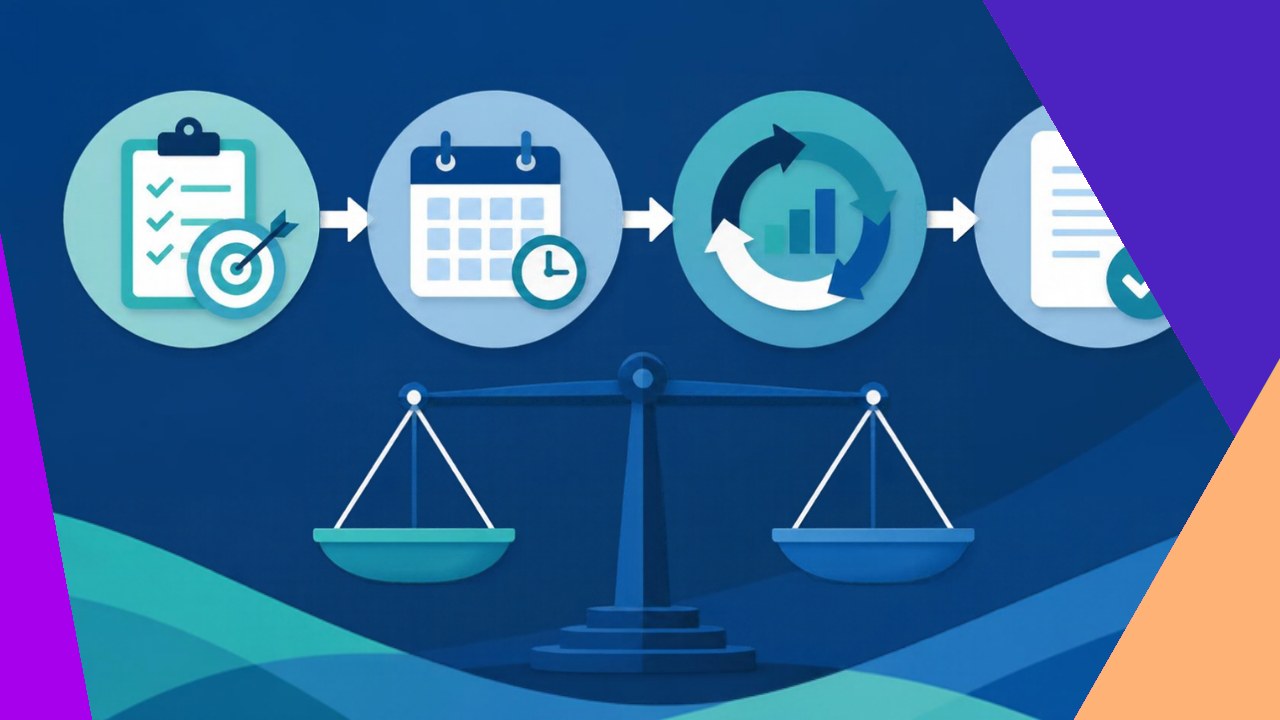
- Performance management workflows turn reviews into fixed steps: goal-setting, scheduled check-ins, review cycles, calibration, and sign-off.
- The structure brings consistency, fairness, and a clear record, but it can also feel rigid and add admin load.
- The approach works best when you keep the steps light, automate reminders, and let managers coach between the formal gates.
Performance management workflows take something messy and make it repeatable. Instead of leaving reviews to each manager’s instinct, you define the steps everyone follows: set goals, hold check-ins on a schedule, run a review cycle, calibrate ratings across teams, and sign off. Every employee moves through the same gates in the same order.
That structure solves real problems, but it also creates new ones. Before you roll a rigid process out across a growing company, it helps to weigh both sides honestly.
Below, we break down what a workflow-driven approach involves, then weigh the pros and cons so you can decide how much structure your team needs.
What a performance management workflow looks like
A workflow is just the review process written down as ordered steps. Each step has an owner, a due date, and a clear output. Most companies use a version of these five.
1. Goal-setting
At the start of a cycle, managers and employees agree on a short list of goals. These feed everything that follows, so they need to be specific and measurable.
2. Scheduled check-ins
Instead of one yearly conversation, the workflow books regular touchpoints. Monthly or quarterly check-ins track progress and surface blockers early.
3. Review cycle
At set points, employees and managers complete a formal review. Self-assessments, peer input, and manager ratings all come due on the same timeline.
4. Calibration
Managers meet to compare ratings across teams. This step checks that a “strong” rating means the same thing in sales as it does in support.
5. Sign-off
The final step locks the review. The employee acknowledges it, the manager approves it, and HR files it as the record for pay and promotion decisions.
The pros of running performance by workflow
The biggest win is consistency. When every team follows the same steps, you cut the odds that a good employee gets overlooked because their manager forgot to schedule a review. Nothing falls through the cracks.
Fairness improves too. Calibration is the clearest example. By comparing ratings side by side, you catch the manager who scores everyone high and the one who scores everyone low. That makes pay and promotion decisions easier to defend.
A documented workflow also creates a paper trail. If you ever need to support a termination or a raise, you have dated goals, check-in notes, and signed reviews that HR and legal teams can rely on.
Finally, a workflow scales. A founder can manage ten people from memory. At 100 people, memory fails. Defined steps let new managers run a credible review without inventing the process themselves.
The frequent check-ins built into most workflows also reflect where the field is heading. Gallup research found that “only 14% of employees strongly agree their performance reviews inspire them to improve,” and regular conversations are one way to fix that disconnect.
The cons you should plan for
Structure has a cost. The most common complaint is that workflows feel like box-ticking. When managers rush through a check-in just to close the task, the conversation loses its value. The step happens, but the coaching does not.
Rigidity is the second problem. A fixed annual or quarterly cycle can lag behind the work. If a project ships in March and the review lands in November, the feedback arrives too late to matter.
Admin load is a real drawback. Self-assessments, peer reviews, calibration meetings, and sign-offs all take time. For a lean HR team, chasing late submissions can swallow whole weeks.
There is also a culture risk. A heavy process can signal that the company trusts forms more than it trusts managers. Harvard Business Review captured the backlash in noting that when one firm dropped annual reviews, a room of HR leaders “were appalled,” yet many companies have since done the same. Over-engineering the workflow can push good managers to disengage from it.
| Factor | Workflow helps | Workflow hurts |
|---|---|---|
| Consistency | Every team follows the same steps | One size may not fit every role |
| Fairness | Calibration levels out rating bias | Calibration meetings take time |
| Speed | Scheduled check-ins catch issues early | Fixed cycles can lag the real work |
| Record | Clear trail for pay and legal needs | More forms and admin to maintain |
How to keep the pros and limit the cons
The trade-off is not all or nothing. A few choices tilt the balance toward the benefits.
Keep the forms short. A check-in that asks three questions gets honest answers. A ten-page template gets copy-paste, so cut every field that no one reads.
Automate the reminders, not the thinking. Let software handle due dates, nudges, and routing so managers spend their time on the conversation, not on chasing paperwork. Many teams map this onto their existing performance management systems rather than building a separate tool.
Separate the gates from the coaching. Treat the formal steps as a minimum, then encourage managers to talk with their people between them. The workflow sets the floor, not the ceiling. Teams buried in the admin can also hand the chasing and scheduling to an outsourcing provider so HR keeps the judgment calls.
Frequently asked questions
How often should performance management workflow steps run?
Match the cadence to how fast roles change. Fast-moving teams such as engineering often favor monthly check-ins with a light quarterly review, while stable roles can run a longer cycle. Avoid copying a competitor’s calendar without checking whether your own work moves at the same speed.
Does a workflow mean we still need an annual review?
Not necessarily. Many companies now use frequent check-ins and a rolling summary instead of one big yearly event. The workflow can still produce a formal record for pay decisions without forcing every conversation into a single annual window.
What is the first step to build one?
Start by writing down the process you already run informally, gaps included. Mapping the current reality before you add tools stops you from automating a broken process, and it shows which single step causes the most friction for managers today.
Can a small team skip calibration?
A team under about 20 people can often calibrate in a single short meeting rather than a formal round. The value of calibration grows with headcount and the number of managers, so add the step once ratings start to feel inconsistent across groups.






 Independent





