
5 reasons to invest in outsourced finance teams for US companies

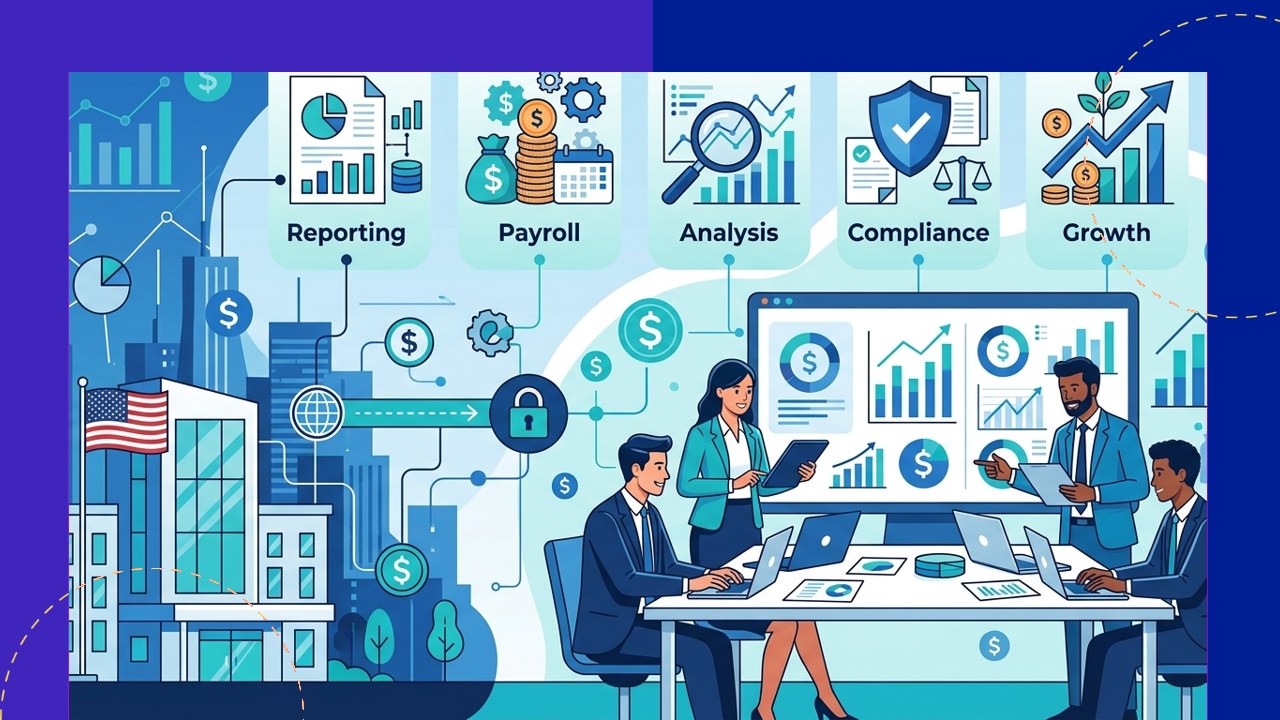
- Outsourced finance teams give US companies access to trained accountants at a lower and more predictable cost than local hiring.
- A shrinking domestic accounting pipeline makes offshore and nearshore finance talent a practical answer to unfilled roles.
- The model also brings modern reporting tools, easier scaling, and more time for leadership to focus on the core business.
Building a finance function in the United States has grown harder and more expensive. Salaries are climbing, qualified candidates are scarce, and roles sit open for months. That pressure is why outsourced finance teams for US companies have moved from a cost play into a mainstream staffing strategy for founders, controllers, and CFOs.
An outsourced finance team is a group of accountants, bookkeepers, and analysts employed by a third-party provider, usually offshore or nearshore, who work as an extension of your business. They handle everything from daily transactions to management reporting under your direction.
Below are five concrete reasons the model keeps gaining ground, backed by labor data and industry research rather than sales pitches.
1. Lower and more predictable costs
Labor is the largest line item in any finance function, and US rates are high. The Bureau of Labor Statistics reports a median annual wage of $81,680 for accountants and auditors in 2024, before benefits, payroll taxes, software, and office overhead are added.
Outsourced teams in regions such as the Philippines or Latin America deliver comparable work at a fraction of that fully loaded cost. Just as important, a fixed monthly provider fee turns unpredictable hiring, turnover, and overtime expenses into a stable number you can plan around.
2. Access to specialized talent during an accountant shortage
The domestic talent pool is thinning. AICPA data show accounting graduates fell to 55,152 in the 2023 to 2024 academic year, a drop of 6.6 percent, even as demand stays strong. The BLS projects about 124,200 openings for accountants and auditors each year through 2034, many to replace workers who retire or leave the field.
Outsourcing widens the search beyond a strained local market. Providers maintain benches of accountants trained in US GAAP, tax preparation, and popular platforms, so you can fill a controller-level gap or a seasonal spike without competing head to head for the same short supply of local hires.
3. Scalability that flexes with the business
In-house teams are slow to resize. Hiring takes months, and layoffs during a slow quarter are costly and damaging. An outsourced finance team lets you add or reduce headcount in weeks as workload changes.
That flexibility matters at year-end close, during audits, tax season, or a funding round, when transaction volume jumps. It also suits fast-growing companies that need a full finance department before they can justify hiring one full time in their home market.
4. Better technology and reporting
Serious finance providers invest in cloud accounting systems, automation, and dashboards because those tools are central to their service. Clients inherit that stack without paying to build it. Deloitte’s research notes that companies increasingly use outsourcing to adopt cloud tools and automation, and its 2024 Global Outsourcing Survey found “skilled talent and agility join cost reduction as key drivers for outsourcing.”
The practical payoff is faster monthly closes, cleaner books, and management reports that arrive on time rather than weeks late. For leaders who currently wait on spreadsheets, that visibility alone can justify the switch.
5. More focus on the core business
Every hour spent chasing invoices or reconciling accounts is an hour not spent on customers, product, or strategy. Handing routine finance work to a dedicated team frees owners and executives to concentrate on what actually grows the company.
This does not mean losing control. You still set priorities, approve numbers, and own the strategy, while the provider runs the day-to-day execution and staffing.
In-house versus outsourced finance team
| Factor | In-house team | Outsourced team |
|---|---|---|
| Cost structure | Salaries plus benefits, taxes, overhead | Fixed provider fee, lower fully loaded cost |
| Time to hire | Weeks to months per role | Days to weeks, from an existing bench |
| Scaling | Slow and costly up or down | Flexes with workload |
| Technology | You buy and maintain the stack | Included in the service |
| Control | Full, direct management | You direct, provider staffs and runs |
Frequently asked questions
What finance tasks can US companies outsource?
Common functions include bookkeeping, accounts payable and receivable, payroll, tax preparation, reconciliations, budgeting, and management reporting. Many companies start with transactional work and expand into analysis and controller-level support once trust is established. See this overview of the types of outsourced finance and accounting services.
Is my financial data safe with an outsourced team?
Reputable providers use access controls, encryption, and compliance certifications, and they sign confidentiality and data-protection agreements. Vet a provider’s security policies and audit history before sharing sensitive records, and keep approval rights in-house.
Will an outsourced team understand US accounting rules?
Established providers hire accountants trained in US GAAP and IRS requirements and often assign staff with US client experience. Confirm certifications and ask for references from other American businesses during your evaluation.
How much can a company actually save?
Savings vary by role and location, but lower offshore labor rates combined with reduced overhead often cut fully loaded finance costs meaningfully. Compare total employment cost, not just salary, when you model the difference. This introduction to finance and accounting outsourcing covers the basics.
Key takeaways
- Outsourced finance teams cut fully loaded costs and replace variable hiring expenses with a predictable monthly fee.
- They offer a direct answer to the US accountant shortage, tapping trained talent beyond a strained local market.
- The model scales quickly, includes modern reporting technology, and frees leaders to focus on the core business.
- You keep control and oversight while the provider handles staffing and daily execution.






 Independent





