
How to optimize HR operations

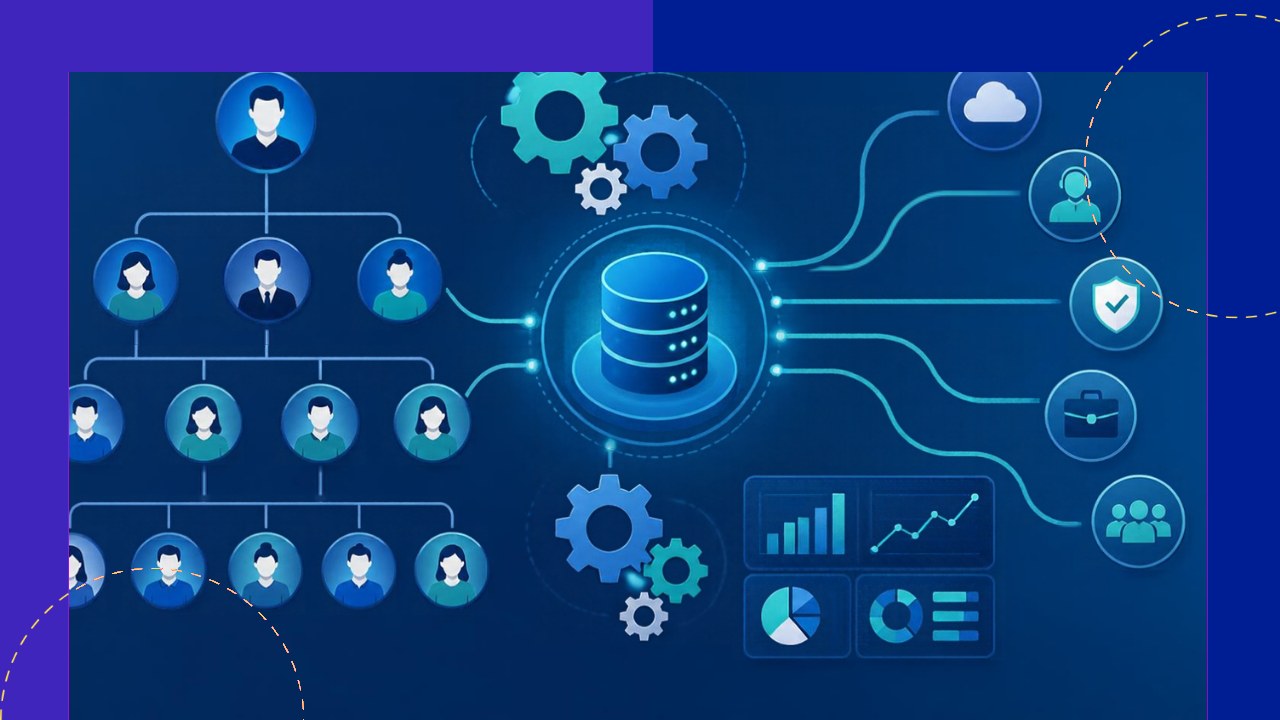
- Optimizing HR operations is a function-level redesign of team structure, systems, service model, vendors, and governance, not a single workflow fix.
- Start by mapping your current operating model, then align roles, consolidate the HRIS, and choose how HR delivers service to employees.
- A deliberate outsourcing mix and clean data governance keep the whole function efficient as headcount grows.
Most HR teams do not fall behind because their people work slowly. They fall behind because the operating function around them was never designed on purpose. Optimizing HR operations means improving that whole system, not just speeding up one task.
Think of HR operations as the machine that runs your people programs: hiring, payroll, benefits, records, and compliance. When the structure, systems, and service model fit together, work flows. When they do not, your team patches gaps by hand. This guide takes a macro view and walks through the pieces that matter most.
The stakes are real. Gallup reports that “Eighty percent of employees worldwide are still not engaged or are actively disengaged at work”. A well-run HR function shapes much of that daily experience, so the design of your operations affects the entire company.
What optimizing HR operations means at the function level
It helps to separate two ideas. Fixing an HR process means redesigning one workflow, like onboarding or leave requests. Optimizing HR operations sits one level above that. It asks how the entire function is structured, staffed, and supported.
At this altitude, you make choices about team design, the systems backbone, and where work should live. Many of these questions overlap with the shift from traditional HR toward a people operations mindset, which treats employee experience as something to improve rather than a pile of tasks to clear.
A step-by-step approach to optimizing HR operations
1. Map your current operating model
Start with an honest picture. List every HR activity, who owns it, which system holds the data, and how long it takes. You will quickly spot duplicated effort, manual handoffs, and tasks that no clear owner handles. This map becomes your baseline for every later decision.
2. Clarify team structure and roles
Structure drives speed. Decide which roles are generalists, which are specialists, and who handles day-to-day queries versus strategic work. Demand makes this urgent, too. The BLS projects that “Employment of human resources managers is projected to grow 6 percent from 2025 to 2035”, faster than average. Clear roles help you add the right people in the right order.
3. Consolidate the systems backbone
Your HRIS is the spine of the function. When records, payroll, and benefits sit in one trusted system, data stays clean and reports stay honest. So audit your tools, retire overlapping ones, and make sure the core platform connects to the rest. A fragmented stack forces staff to rekey data and erodes trust in every number.
4. Choose a service delivery model
Next, decide how employees actually reach HR. Options range from a single shared-services desk to tiered support with self-service at the front. A clear model sets expectations and routes questions to the right place. It also frees senior staff from answering the same simple requests over and over.
5. Set your vendor and outsourcing mix
Few teams should run everything in-house. Transactional, high-volume work like payroll processing or benefits administration often suits an outsourcing provider or offshore partner. Meanwhile, you keep strategy, culture, and sensitive decisions close. The goal is a deliberate split, not an accident of history.
6. Build data and governance
Operations only improve when you can measure them. Track a small set of metrics, agree on shared definitions, and set rules for access, privacy, and retention. Strong habits around people data turn gut feel into evidence and keep you compliant as you scale.
Deciding where each layer of work belongs
Once the model is clear, the in-house versus outsourced question gets easier. The table below shows a common starting split. Treat it as a prompt, not a rule, because context matters.
| Operational layer | Usually keep in-house | Often suits a partner |
|---|---|---|
| Strategy and culture | Yes | Rarely |
| Employee relations | Yes | Sometimes |
| Payroll and benefits admin | Optional | Often |
| Records and data entry | Optional | Often |
Avoid optimizing the wrong layer
A common mistake is to automate a broken process instead of asking whether the function should run it at all. Another is buying tools before the structure is sound. As Deloitte notes, “Competitive advantage is now primarily less driven by technology differentiation and more by cultivating the human edge”. Technology supports a well-designed function. It cannot replace one.
Frequently asked questions
How is optimizing HR operations different from fixing HR processes?
Process work fixes one workflow at a time, such as cutting steps from onboarding. Operations work changes the system that produces every workflow: the team, the systems, and the service model. You usually redesign operations first, then tune individual processes inside the new structure.
How often should we review our HR operating model?
A full review fits well at each growth stage, roughly every time headcount jumps by half or you cross 50, 100, and 250 employees. Between those points, a light quarterly check on metrics and vendor performance is enough. Reviewing too often creates churn without much payoff.
Which signals show that HR operations need work?
Watch the time to resolve employee queries, error rates in payroll, and the share of HR hours spent on manual admin. A rising backlog or repeated data corrections point to a structural problem, not simply a staffing shortage. These signals tell you where to focus before you add headcount.
Can a small company optimize HR operations without a big budget?
Yes. Begin with the free moves: a clean operating-model map, agreed role boundaries, and one source of truth for data. Self-service and a modest HRIS handle much of the load early on. Outsourcing a few selected tasks then stretches a lean team further without full-time hires.






 Independent





