
What is omnichannel call center support?

At a glance
- Omnichannel call center support connects every channel into one continuous, context-aware conversation.
- It differs from multichannel support, which runs each channel as a separate silo.
- Outsourced call centers deliver it with a unified agent desktop, shared customer context, and consistent routing.
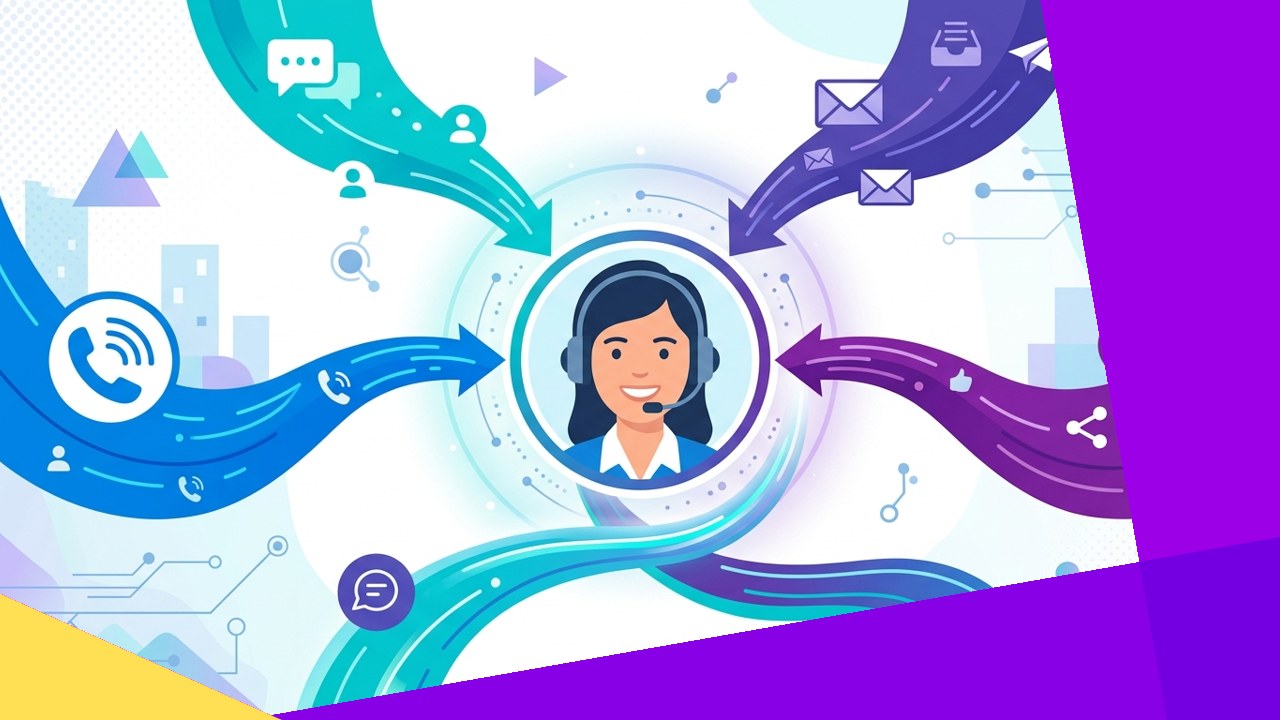
Omnichannel call center support is a service model that unifies phone, email, chat, social media, and messaging into one connected experience. The customer moves between channels, yet the conversation never restarts. Agents see the full history, so context follows the person rather than the channel.
This approach has become a baseline expectation for modern customer service. Buyers now switch devices and platforms during a single issue. They expect the company to keep up. As a result, the way a call center ties its channels together often decides whether support feels smooth or frustrating.
Below, we define the term clearly, contrast it with multichannel support, and explain the technology and benefits. We also cover how outsourced providers deliver it.
What is omnichannel call center support?
Omnichannel call center support means every channel shares the same customer record and conversation history. A shopper might start on live chat, call the next day, and send an email later. The agent sees all three interactions in one view. Nobody asks the customer to repeat the account number or the problem.
The word “omnichannel” points to the goal: one channel-agnostic experience. The channel is just the entry point. Behind it sits a single source of truth about the customer. Because of that shared context, support feels like one ongoing dialogue instead of a set of disconnected tickets.
This is different from simply offering many channels. Offering many channels is easy. Connecting them is the hard part, and it is what makes support truly omnichannel.
Omnichannel vs multichannel: what is the difference?
Multichannel support offers several ways to reach a company. However, each channel works on its own. The phone team cannot see the chat transcript, and the email queue does not know a call happened. So the customer repeats context every time they switch.
Omnichannel support removes those walls. Every channel reads and writes to the same profile. As a result, an agent picks up exactly where the last interaction ended. The table below shows the core contrasts.
| Aspect | Multichannel | Omnichannel |
|---|---|---|
| Channel setup | Separate silos | Connected and unified |
| Customer context | Stays inside each channel | Follows the customer everywhere |
| Agent view | One channel at a time | Full cross-channel history |
| Repeat questions | Frequent | Rare |
| Customer effort | Higher | Lower |
In short, multichannel is about presence. Omnichannel is about continuity. That difference in continuity is what customers actually feel.
Key components of omnichannel call center support
Unified agent desktop
Agents work from one screen that pulls in every channel. They answer a call, reply to a chat, and check an email thread without switching tools. This cuts handle time and reduces mistakes. It also lowers the training load for new hires.
Shared customer context
A single customer profile stores every past interaction, order, and note. When a contact arrives, that history loads automatically. Because agents can see intent and prior steps, they resolve issues faster and personalize the reply.
Consistent routing
Smart routing sends each contact to the right agent or team, regardless of channel. It can also keep a customer with the same agent across sessions. So a chat and a follow-up call reach one person who already knows the case.
The technology behind it
An omnichannel setup relies on a few connected systems. A contact center platform ingests calls, chats, and messages. A CRM stores the unified profile. Integrations tie them together so data flows both ways in real time.
Many providers add AI and automation on top. Chatbots handle simple questions and pass context to a human when needed. Analytics track performance across channels. To see the moving parts in action, review how an omnichannel contact center works end to end.
Benefits of omnichannel call center support
The main benefit is a smooth, connected experience for the customer. People reach out on their preferred channel and never repeat themselves. That reduces effort, which is a proven driver of loyalty. Research from Harvard Business Review on customer effort found that lowering the work required to solve a problem builds loyalty more than trying to exceed expectations.
Efficiency improves too. A unified desktop shortens handle time and cuts transfers. Agents solve more cases per shift. The wider case for this model appears in the business benefits of omnichannel service, which many teams cite when they build the plan.
Customer satisfaction usually rises as well. Continuity feels respectful, and fast resolution builds trust. A Harvard Business Review study of 46,000 shoppers concluded that omnichannel strategies work, because customers increasingly move across channels and reward brands that keep up.
How outsourced call centers deliver it
Outsourced providers often run omnichannel support at scale. They already own the platforms, integrations, and analytics, so clients skip a long build. That speeds up launch and spreads the cost across many accounts.
A good offshore partner also brings trained agents who work across channels every day. They staff for volume swings and cover more time zones. For a brand, the result is round-the-clock coverage without hiring an in-house team. The provider maintains the shared context, so the customer still feels one continuous conversation.
Acquire Intelligence operates this model across 15 global delivery locations, pairing AI automation with human agents under SOC, HIPAA, PCI-DSS, and GDPR certifications.
Frequently asked questions
Is omnichannel the same as multichannel?
No. Both offer several channels. However, only omnichannel connects them so context follows the customer. Multichannel keeps each channel separate, which forces people to repeat themselves.
Which channels does omnichannel support include?
It usually covers voice, email, live chat, SMS, social media, and messaging apps. The exact mix depends on where customers already reach out. The key point is that all of them share one profile.
Does omnichannel support require AI?
No, but AI helps. Chatbots and automation handle routine questions and hand off context to agents. The core requirement is integration, not any single tool.
Can a small business use omnichannel support?
Yes. Cloud platforms and outsourced partners make it affordable at a smaller scale. A business can start with a few core channels and add more later.
Key takeaways
- Omnichannel call center support unifies every channel into one context-aware conversation.
- It differs from multichannel support, which treats each channel as a separate silo.
- Core components include a unified agent desktop, shared customer context, and consistent routing.
- Outsourced providers deliver it quickly, at scale, and around the clock.






 Independent





