
Offshoring data entry services for US businesses

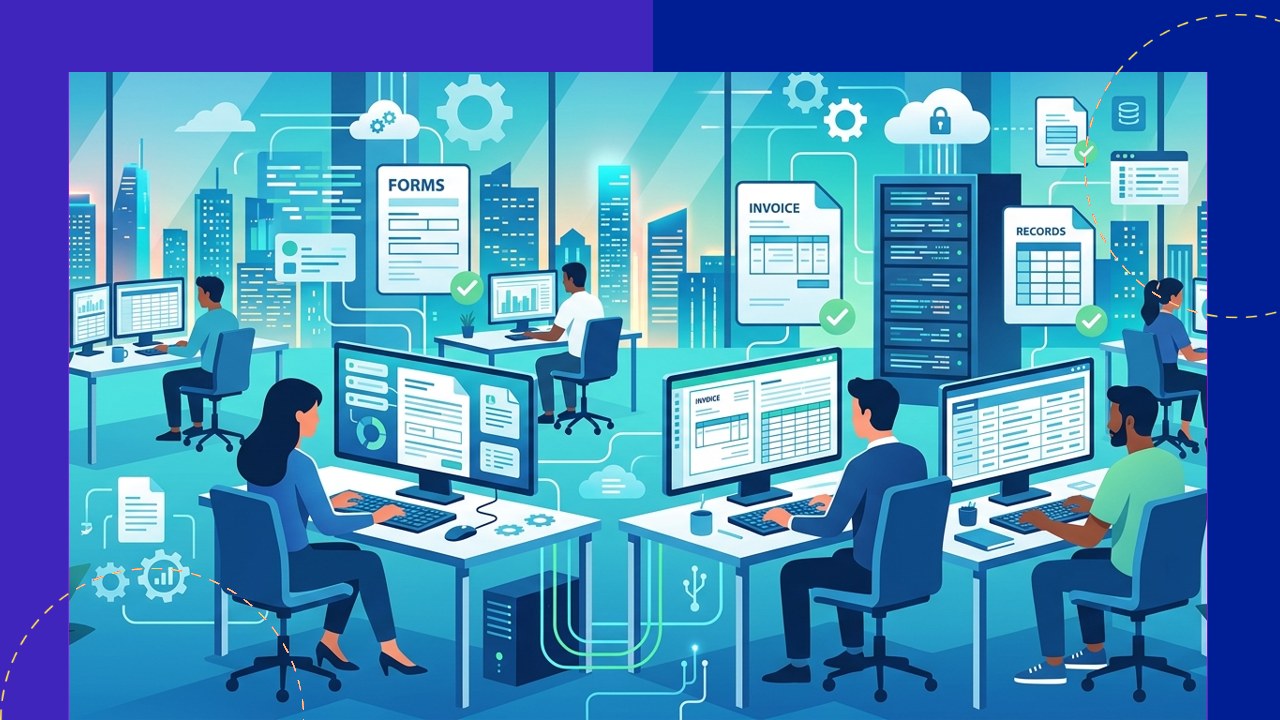
- US businesses offshore data entry to cut labor costs, speed up turnaround, and free internal staff for higher-value work.
- Common offshored tasks include form processing, invoice capture, CRM updates, and product catalog data, all governed by accuracy targets and security controls.
- Getting started means scoping the work, testing a provider on a small batch, and locking down data protection before scaling.
Offshoring data entry services for US businesses means hiring a team in a lower-cost country to handle the repetitive keying, sorting, and validation work that keeps records current. Instead of paying domestic clerical wages, companies tap skilled staff in the Philippines, India, and similar hubs at a fraction of the in-house cost.
The appeal is simple. Data entry is high volume, rules-based, and easy to standardize, which makes it one of the most straightforward functions to move offshore. Done well, it improves data quality while lowering overhead. This guide covers why US firms offshore the work, what tasks they hand off, how accuracy and security are managed, and how to start.
Why US businesses offshore data entry
Cost is the first driver. Domestic clerical roles carry US wages, benefits, and office overhead, while an offshore team delivers the same output at a lower hourly rate. The US Bureau of Labor Statistics tracks data entry keyers as a distinct occupation and projects domestic employment in the role to keep declining.
Speed is the second. Providers in Asia work while US offices sleep, so batches submitted at close of business can be finished by morning, turning overnight turnaround into a routine deliverable.
Scalability is the third. An offshore partner can add keyers for a seasonal spike or a backlog, then scale back down without the cost of hiring and firing domestic staff. Offloading routine keying also frees your own employees for analysis, customer service, and decisions clerks cannot make.
What data entry work gets offshored
Almost any structured, repeatable record task can move offshore. The most common categories are below.
Forms and document processing
Paper and PDF forms, surveys, applications, and handwritten records are typed into databases or spreadsheets. Teams also handle scanned documents through manual keying or by verifying the output of optical character recognition.
Invoice and accounts payable capture
Supplier invoices, receipts, and purchase orders are entered into accounting or ERP systems, with line items matched against records. This keeps payables current without tying up your finance staff.
CRM and database updates
Contact records, lead lists, and sales pipelines are cleaned, deduplicated, and updated. Accurate CRM data directly supports marketing and revenue, so this is a frequent starting point for offshoring.
Catalog and product data
E-commerce sellers offshore product uploads, descriptions, pricing, SKUs, and image tagging across marketplaces. For a fuller breakdown of task types, see this overview of data entry outsourcing services.
In-house vs offshored data entry
The trade-off is rarely about quality alone. It is about cost, capacity, and how much management attention the work deserves. The table compares the two on the factors that matter most.
| Factor | In-house data entry | Offshored data entry |
|---|---|---|
| Cost per hour | Full US wages, benefits, and office overhead | Typically 40 to 70 percent lower all-in |
| Turnaround | Limited to local business hours | Overnight and near round-the-clock via time zones |
| Accuracy | Depends on individual staff and workload | Enforced by service level agreements and QC checks |
| Scalability | Slow; requires hiring and training | Fast; team size flexes with volume |
| Management effort | Direct daily supervision | Handled by the provider’s team leads |
Accuracy and quality control
Offshoring only pays off if the data is right. Reputable providers commit to an accuracy target, often 98 to 99.5 percent, written into a service level agreement with penalties for missing it.
Common controls include double keying, where two operators enter the same record and mismatches are flagged, plus automated validation rules that reject impossible values. Sample audits by a team lead catch drift before it spreads across a batch.
To keep quality high, give the provider a clear style guide, examples of correct output, and a fast feedback loop for corrections. Accuracy is a shared responsibility.
Data security and privacy compliance
Data entry often touches sensitive records, so security is not optional. Personal data includes items such as “name, address, email, demographic info, social security number, IP address, and financial information,” as the Cornell Legal Information Institute notes in its overview of personal information. Mishandling it creates legal and reputational risk.
US businesses also remain accountable for the vendors they use. The Federal Trade Commission’s guidance on data security stresses that companies must protect the consumer information in their care, including data handled by third parties.
Before sharing records, require a signed non-disclosure agreement, role-based access, encrypted transfer, and support for standards relevant to your sector, such as HIPAA for healthcare or PCI DSS for card data. Confirm where data is stored and who can view it.
How to get started
1. Scope the work
List the exact tasks, volumes, formats, and tools involved. A clear scope lets providers quote accurately and sets the baseline for measuring their performance.
2. Shortlist and test providers
Evaluate a few offshore partners on relevant experience, security posture, and pricing. Run a small paid pilot batch to check accuracy and turnaround before you commit. This overview of offshoring benefits can help frame your evaluation.
3. Set the agreement and controls
Put accuracy targets, turnaround times, security terms, and reporting into a written agreement. Define how corrections and escalations are handled.
4. Start small and scale
Begin with one workflow, refine the process and instructions, then expand as trust builds. A phased rollout limits risk and gives both sides time to align.
Frequently asked questions
How much can US businesses save by offshoring data entry?
Savings vary by task and location, but all-in costs are commonly 40 to 70 percent lower than domestic staffing once wages, benefits, and overhead are counted.
Is offshored data entry accurate?
It can match or beat in-house work when the provider commits to an accuracy target in a service level agreement and uses controls like double keying, validation rules, and sample audits.
Is it safe to share sensitive data with an offshore provider?
Yes, with the right safeguards: non-disclosure agreements, encrypted transfer, restricted access, and compliance with standards relevant to your industry. You remain accountable for how vendors handle the data.
What types of data entry are easiest to offshore first?
Structured, rules-based tasks such as CRM updates, invoice capture, and product catalog entry, because they are easy to define, measure, and check.
Key takeaways
- US firms offshore data entry mainly for lower cost, faster turnaround, easy scaling, and to free internal staff for higher-value work.
- Forms, invoices, CRM records, and product catalogs are the most commonly offshored tasks.
- Accuracy comes from service level agreements plus quality controls like double keying and audits, backed by clear instructions.
- Protect sensitive data with NDAs, encryption, access limits, and industry compliance, since you stay accountable for vendor handling.






 Independent





