
7 Top skills to look for in an offshore staff

What top skills should you look for in offshore staff?
The best offshore staff combine strong communication, technical skill, problem-solving, time management, cultural awareness, initiative, and teamwork.
- Clear communication keeps remote work on track.
- Technical and problem-solving skills drive project results.
- Self-management and teamwork hold a distributed team together.
Building a strong offshore team starts with the right skills. It is not just about hiring someone who can do the job. Instead, you need people who work well together, communicate clearly, and push a project forward.
More firms now turn to offshoring for cost-effective help. As a result, skilled offshore staff matter more than ever.
This article covers the top skills to look for when hiring offshore staff. With this quick guide, your team can handle the demands of remote work and deliver strong results.
7 Top skills of an offshore staff
So when you hire offshore staff, look for people who add real value. First, here are the top skills to seek.
1. Communication skills
Clear communication is vital in a remote setup. So effective communication should top your list.
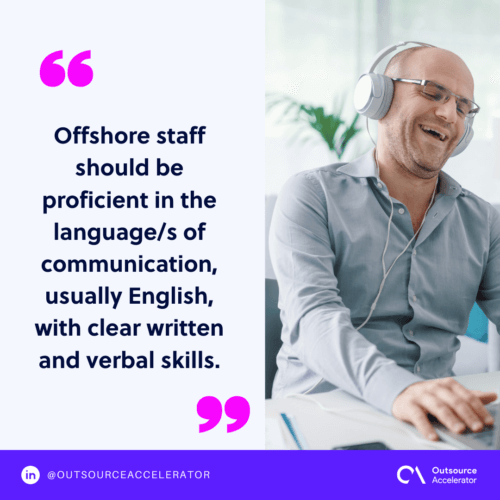
Offshore staff should be fluent in your working language, usually English. In addition, they need clear writing and speaking skills. They must share ideas well and listen closely to feedback.
Async communication also matters across time zones. So clear written updates keep everyone aligned. For example, a short daily note can prevent hours of confusion.
2. Technical expertise
The right technical skills depend on the role and industry. For many teams, these include:
- Skill in key programming languages
- Knowledge of industry-specific tools
- Experience with software development frameworks
Whether you hire developers, IT staff, or engineers, their skills shape results. As a result, technical depth drives productivity. To scope roles well, review the main offshore outsourcing models first.
3. Problem-solving and critical thinking
Also, strong problem-solving helps offshore staff handle surprises. This matters most in roles that fix technical issues or manage complex tasks. So test for it during hiring.
For example, a developer may hit a bug with no clear cause. A strong thinker breaks the problem into parts and tests each one. As a result, they find the root cause faster.
4. Time management and organization
Remote work needs solid time management. Offshore staff should set priorities and meet deadlines. In addition, they must stay productive without close oversight. Good offshore team training reinforces these habits.
Simple tools help here too. For instance, shared calendars and task boards keep work visible. So managers can track progress without micromanaging.
5. Cultural competence
Global teams work best with cultural awareness. Your offshore staff should respect cultural differences and diverse views.
They should also adapt their style to fit the team. As a result, collaboration improves across cultures.
6. Proactivity and independence
Similarly, great offshore staff show initiative. They take ownership and keep output high. In addition, they make sound decisions on their own. This independence is key to remote success.
7. Teamwork and collaboration
Finally, teamwork ties everything together. This holds true within the offshore team and with onshore peers. Offshore staff should boost team dynamics by sharing knowledge and joining in. As a result, the whole team performs better.
To compare setups before you hire, see our guide on offshore vs. onshore staffing.
Benefits of hiring skilled offshore staff
Skilled offshore staff bring many benefits, as our overview of offshore staffing benefits shows. These include the following.
- Cost savings: Skilled offshore staff often cost less, in line with local wages abroad.
- Specialized expertise: Offshore hiring opens up wide, diverse talent pools.
- Time zone coverage: offshore teams in other time zones extend your hours for round-the-clock support.
- Fresh perspectives: Offshore staff bring new ideas that spark innovation.
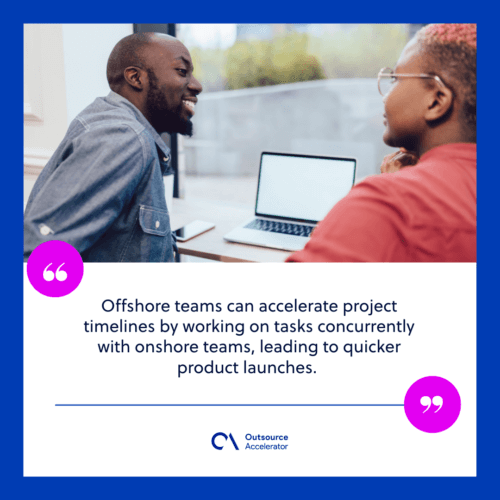
- Faster turnaround: Offshore teams work in parallel with onshore staff, so launches speed up.
- Risk mitigation: Spreading talent across regions supports business continuity.
- Focus on core work: Delegating tasks frees local teams for core goals.
Getting the most from a remote team also takes structure. So it helps to follow proven best practices for offshore teams.
Resource offshore staff with ConnectOS
Offshore staffing can be complex, and finding the right talent is hard. However, with ConnectOS, the process becomes smooth and efficient.
In addition, ConnectOS provides customized offshore staffing solutions. As a result, you reach a global pool of skilled professionals.
The ConnectOS Integrated Resourcing model learns your goals and connects you with top offshore talent. So you gain a strategic partner, not just a staffing service.
Reach out to ConnectOS today to learn how to build a world-class offshore team.
FAQs about offshore staff skills
What is the most important skill in offshore staff?
Communication tops the list. Clear writing and speaking keep remote work on track. Without it, even skilled staff can struggle to deliver.
How do you test skills before hiring offshore staff?
Use short work samples and skills tests for the role. In addition, ask about past problem-solving. Structured hiring assessment tools also help compare candidates fairly.
Why do businesses hire offshore staff?
Firms hire offshore staff to cut costs and reach wider talent. In addition, offshore teams add time zone coverage and fresh ideas. So they help firms scale faster.
Which roles work well for offshore teams?
Overall, many roles work well offshore. Common ones include developers, IT support, accounting, and customer service. The key is a clear scope and good communication.






 Independent






