
A simple guide to finding and hiring exceptional non-voice talent


Non-voice roles may be underrated, but they play a critical part in supporting daily business operations across industries. They keep workflows efficient and projects on track.
Companies often face the challenge of sorting through large volumes of candidates to find individuals who meet their skill and performance expectations. The ability to identify talent that aligns with company goals can directly impact productivity and growth.
Hiring the right professionals requires a clear strategy, structured evaluation, and a focus on long-term contribution rather than short-term fit.
This article provides a simple guide to finding and hiring exceptional non-voice talent. Attract high-quality professionals who contribute meaningfully to operations, all while optimizing resources and reducing the time spent on hiring processes.
Top 5 non-voice roles to add to your team
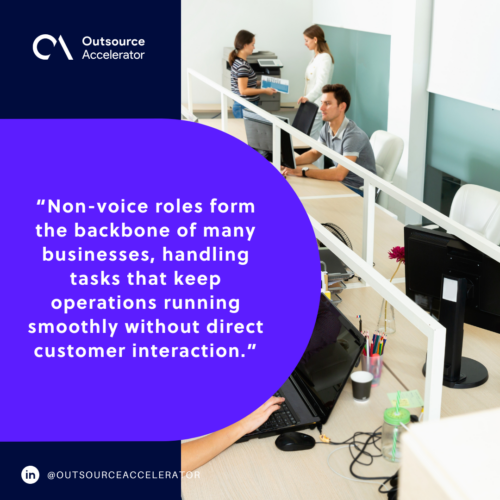
Non-voice roles form the backbone of many businesses, handling tasks that keep operations running smoothly without direct customer interaction.
These positions allow teams to focus on core objectives while specialists manage data, processes, and internal support functions:
1. Data analyst
Data analysts collect, interpret, and organize information to help businesses make informed decisions. They identify trends, create reports, and provide insights that guide strategy.
Their work enables teams to spot opportunities, optimize operations, and measure performance without interacting with clients directly.
2. Content writer
Content writers develop written materials for websites, blogs, social media, and internal documentation. They translate complex ideas into clear, engaging language that resonates with target audiences.
This role supports marketing and communication efforts while operating entirely behind the scenes.
3. Graphic designer
Graphic designers create visual content for digital and print media. They design layouts, illustrations, and graphics that support branding, marketing campaigns, and internal presentations.
Their work enhances user experience and strengthens visual communication across channels.
4. Back-office administrator
Back-office administrators handle critical internal processes, including record-keeping, reporting, and workflow management. These specialists maintain operational efficiency, track performance metrics, and coordinate team tasks to keep projects moving smoothly.
5. IT support specialist
IT support specialists manage systems, troubleshoot issues, and maintain digital infrastructure.
They resolve technical problems, monitor networks, and implement solutions that keep employees productive without requiring customer-facing interactions.
Adding these non-voice roles allows companies to build high-performing teams that support growth, streamline operations, and free front-line staff to focus on strategic priorities.
What skills to look for in a non-voice role candidate
Hiring the right candidate for a non-voice role requires a focus on abilities that drive efficiency, accuracy, and team performance. Non-voice professionals handle tasks that often go unnoticed but have a direct impact on operations.
Identify candidates with the right mix of the following:
- Attention to detail. Candidates must accurately process information, maintain records, and spot errors. Precision is critical to avoid costly mistakes and keep workflows smooth.
- Strong communication skills. Even without direct client interaction, clear written communication is vital. Candidates should convey ideas, updates, and instructions effectively within teams.
- Technical proficiency. Familiarity with relevant software, tools, and systems allows candidates to complete tasks efficiently and adapt to evolving technology needs.
- Problem-solving ability. Non-voice roles often involve identifying and resolving issues independently. Candidates should demonstrate critical thinking and resourcefulness.
- Time management. Handling multiple responsibilities requires discipline. Candidates should prioritize tasks, meet deadlines, and maintain productivity under pressure.
Common interview questions for non-voice roles
Hiring for non-voice roles requires a different approach than traditional client-facing positions. Companies need to evaluate candidates’ technical skills, attention to detail, and ability to work independently.
Asking these questions helps reveal a candidate’s strengths, work habits, and problem-solving capabilities, providing a clear picture of how they will contribute to daily operations:
1. Can you describe a time you handled multiple tasks under a tight deadline?
This question assesses time management and prioritization skills. Non-voice roles often involve juggling several responsibilities at once, and understanding how a candidate organizes their workload helps predict their ability to stay productive under pressure.
2. How do you approach problem-solving when you encounter an unexpected issue?
Problem-solving is critical in non-voice positions where employees must act independently.
This question reveals a candidate’s resourcefulness, creativity, and capacity to troubleshoot effectively without constant guidance.
3. What tools or software have you used to manage tasks or data?
Technical proficiency is essential for efficiency. Asking about specific tools or systems demonstrates the candidate’s experience, adaptability, and ability to integrate quickly into the company’s workflow.
4. How do you maintain accuracy while completing repetitive or detailed work?
Attention to detail is crucial for roles that handle data, reporting, or internal processes. Candidates’ responses indicate their strategies for staying precise and reducing errors over long periods.
5. Can you give an example of how you communicated important information to a team?
Even non-voice employees need strong communication skills. This question highlights how candidates share updates, provide instructions, or collaborate effectively without direct customer interaction.

Answering FAQs for non-voice hiring
Addressing these frequently asked questions helps guide the selection of the right professionals and manage the hiring journey effectively:1
1. How long does it take to hire a non-voice candidate?
Hiring typically takes 2–3 weeks when sourcing from pre-vetted talent pools ready to start quickly. This timeline helps companies to fill critical roles without slowing operations.
2. What skills matter most in non-voice roles?
Attention to detail, technical proficiency, time management, problem-solving, and strong written communication are key. These skills enable candidates to handle tasks accurately and contribute effectively to team goals.
3. Can non-voice employees work remotely effectively?
Yes, structured workflows, clear communication, and task management tools help remote employees stay productive. Remote setups also let companies access a wider talent pool without geographic limits.
4. How do companies evaluate candidates’ experience?
Employers review resumes, conduct interviews, and test skills to confirm candidates match role requirements. This process helps identify professionals who can perform reliably and integrate smoothly into the team.
5. What if a hire doesn’t perform as expected?
Companies can request replacements or provide additional support to align the employee with expectations. Regular feedback and coaching also help improve performance and long-term success.






 Independent





