
What is a multigenerational workforce?

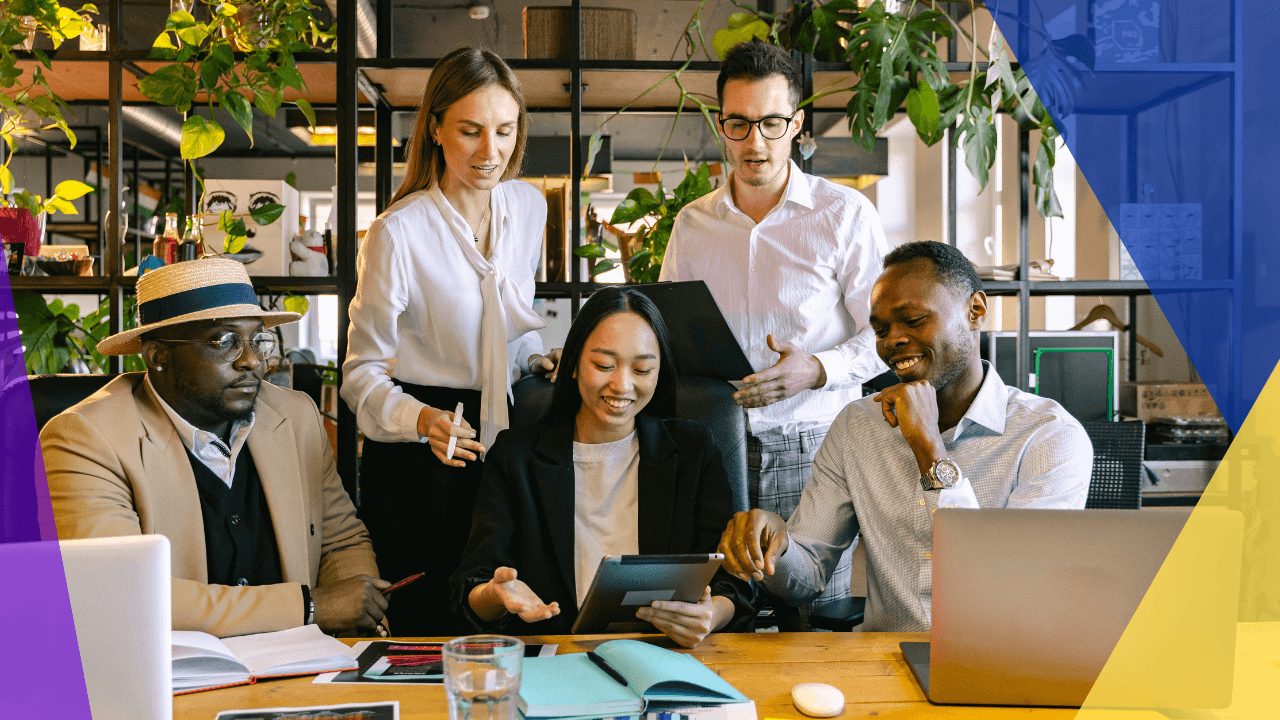
Have you noticed that workplaces now mix more age groups than before? It is exciting to see Baby Boomers work next to Millennials and Gen Z. Each group brings its own strengths, views, and quirks.
What is a multigenerational workforce?
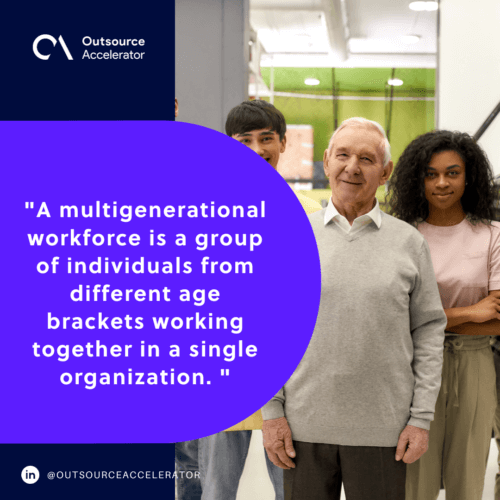
A multigenerational workforce is a team where people from different age groups work together in the same organization.
- It brings Baby Boomers, Gen X, Millennials, and Gen Z under one roof.
- Each generation adds different skills, values, and ways of working.
- Managed well, this mix boosts ideas, teamwork, and results.
In short, a multigenerational workforce blends several age brackets in one workplace. It means Baby Boomers, Gen Xers, Millennials, and Gen Zers collaborating in the same workplace. As a result, you get a wide range of experiences, views, and habits. Society and technology from each era shape those habits. To dig deeper, see this guide to generational diversity in the workplace.
Benefits of a multigenerational workforce
A multigenerational workforce brings clear upsides. Here are the main ones.
Diverse perspectives
Think of the workplace as a canvas. Each generation adds its own colors. As a result, a mix of ages sparks more ideas and approaches:
- Baby Boomers bring years of experience
- Generation X adds stability
- Millennials bring tech-savvy creativity
- Gen Z brings fresh views
This blend improves problem-solving and decisions. In turn, it leads to fuller and smarter solutions. To see how age groups differ, read about the baby boomer work ethic.
Knowledge sharing
In this mix, knowledge is currency. Seasoned staff bring hard-won wisdom. Meanwhile, younger workers bring fresh tech skills and new thinking. So the exchange goes beyond passing on facts. It becomes a two-way flow of insights, lessons, and best practices for the whole team.
Mentorship opportunities
In a multigenerational workforce, mentorship is not one-way. Instead, it is a shared trade of skills and wisdom. Older workers can guide younger ones with their experience. At the same time, younger staff can share the latest tools and trends. To set this up well, explore mentorship in the workplace.
Increased adaptability
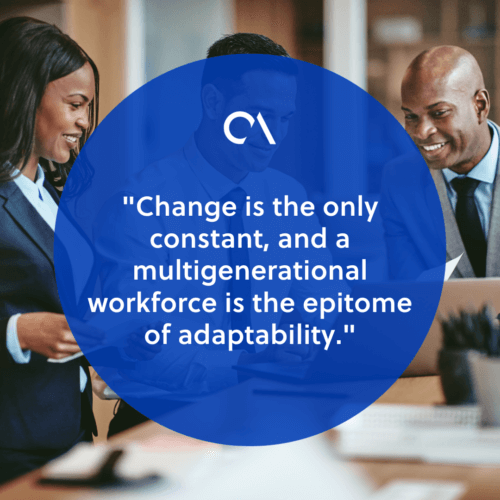
Change is the only constant. A multigenerational workforce handles it well. Younger workers pick up new tools and trends fast. Meanwhile, older workers add stability and steady judgment. As a result, the team can flex with shifts in the market.
Enhanced communication skills
Communication here works like a blend of languages. Each generation has its own communication style. Some prefer face-to-face talks. Others lean on emojis and chat apps. Learning to move between these channels lifts everyone’s skills.
Challenges of a multigenerational workforce
Despite the perks, a multigenerational workforce has some drawbacks. Here are the main ones.
Communication barriers
Communication is like a dance. In a mixed-age team, each generation keeps its own rhythm. Some want face-to-face talks. Others prefer email or instant messaging. As a result, mixed styles can cause confusion.
Conflicting work styles
Just as people dress differently, generations work differently. For example, Millennials may favor flexibility and tech. Baby Boomers may prefer set structures and in-person talks. For more on this group, see Millennials in the workplace.
Different values and expectations
Each generation carries values shaped by its era. Views on work-life balance can differ a lot. So can ideas about career growth. As a result, these gaps can create tension at work.
Resistance to change
Change can feel hard, especially with fixed routines. Some staff, often from older groups, may resist new tools. Still, clear support can ease the shift.
Management and leadership challenges
Leading a mixed-age team is like conducting an orchestra. Each section plays a different instrument. So each generation needs a slightly different approach to leadership and management.
Tips to manage a multigenerational workforce
To manage a multigenerational workforce well, use clear, proactive steps. Here are five that work.
Encourage open communication
Open talk is the base of a happy workplace. So encourage an open-door policy. People should feel safe sharing ideas. Offer several channels too: face-to-face chats, email, instant messaging, and team meetings. When every voice is heard, respect grows across generations.
Provide diverse learning opportunities
Learning never stops. A multigenerational workforce thrives on steady growth. So offer varied formats. These can include classroom training, online modules, and mentorship. As a result, every generation can:
- Gain new skills
- Keep up with the latest trends
- Grow at work and in life
According to research led by Harvard Business Review, 68% of surveyed companies now run training that mixes generations. These programs aim to close gaps and boost teamwork. For fresh talent from the newest group, see this take on Gen Z work ethic.
Emphasize shared goals and values
Alignment brings unity. So stress the goals and values that everyone shares. When people feel tied to a common purpose, they feel they belong. As a result, shared goals bridge different views and build one team.
Flexible work arrangements
Flexibility is the new norm. Offer options like remote work, flexible hours, or shorter workweeks. This helps people balance work and life. In turn, it lifts both morale and output.
Promote collaboration and team building
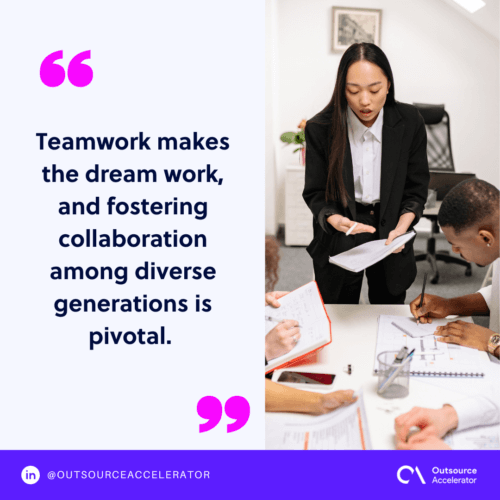
Teamwork drives results. So build links across generations. Run team activities that suit different tastes. These can include volunteer days, sports events, or cross-age mentorship. As a result, trust and teamwork grow beyond daily tasks.
The impact of a multigenerational workforce
The impact goes beyond simply working side by side. In fact, it is a real edge. When you manage this mix well, you build a place where:
- Innovation thrives
- Adaptability becomes a strength
- Employee engagement climbs
- Markets are better understood
- Decisions become stronger
So it is not just about different ages sharing an office. It is about using each generation’s strengths to push the whole organization forward.
Frequently asked questions about a multigenerational workforce
What are the four generations in the workplace today?
They are Baby Boomers, Gen X, Millennials, and Gen Z. Each brings its own skills, values, and work habits.
Why is a multigenerational workforce important?
It blends experience with fresh thinking. As a result, teams solve problems better and adapt faster.
What is the biggest challenge of managing different generations?
Communication gaps top the list. Each group prefers a different style, so mixed signals can cause confusion.
How can managers bridge generational gaps?
Encourage open talk and shared goals. Offer flexible work and cross-age mentorship. These steps build trust across the team.
Does mentorship only flow from older to younger workers?
No. Mentorship goes both ways. Older staff share experience, while younger staff share new tools and trends.
Key takeaways
- A multigenerational workforce blends Baby Boomers, Gen X, Millennials, and Gen Z in one team.
- The mix boosts ideas, knowledge sharing, mentorship, and adaptability.
- Common challenges include communication gaps, clashing work styles, and resistance to change.
- Open talk, shared goals, flexible work, and team building help you manage the mix.
- Used well, generational diversity becomes a real business advantage.






 Independent





