
How machine learning in healthcare is reshaping diagnosis and care

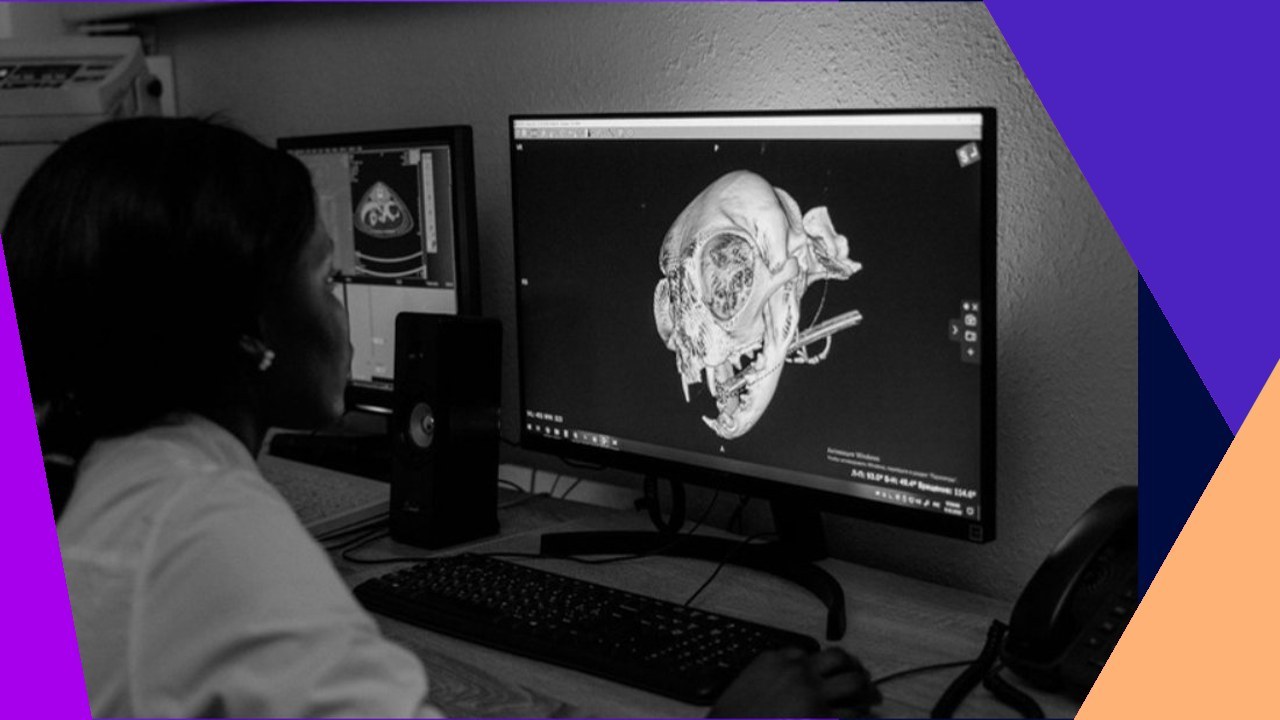
- Machine learning in healthcare reads patterns across images, records, and sensor data to support faster diagnosis, risk prediction, and lighter administrative loads.
- Regulators have already cleared more than 1,350 AI-enabled medical devices, with 2025 setting a record for annual authorizations.
- The biggest payoffs so far sit in imaging, predictive analytics, and back-office automation rather than autonomous clinical decisions.
- Adoption stalls on messy data, integration with electronic health records, model bias, and a shortage of people who can build and maintain the systems.
Machine learning in healthcare uses algorithms that learn from historical data to flag disease, forecast patient risk, and cut the manual work that drains clinical staff.
Instead of following fixed rules, these models improve as they ingest more labeled examples, from radiology scans to claims files.
Providers see it as a way to extend a stretched workforce, and many turn to specialized partners to handle the data engineering and model upkeep that hospitals were never built to do.
The technology is moving from pilot projects into daily use, but the path runs through hard problems in data quality, regulation, and trust.
What machine learning in healthcare actually does
Machine learning sits underneath a wide range of clinical and operational tools, and the term covers several distinct techniques.
Supervised models learn from labeled outcomes, unsupervised models surface hidden clusters in patient populations, and deep learning drives most modern image analysis.
The practical work falls into a few buckets:
- Diagnostic support — reading X-rays, MRIs, retinal scans, and pathology slides to mark suspected anomalies.
- Predictive analytics — scoring which patients are likely to be readmitted, deteriorate, or miss appointments.
- Operational automation — coding claims, routing documents, and triaging messages so staff spend less time on paperwork.
- Drug and treatment research — narrowing candidate compounds and matching patients to trials.
For a broader primer on the underlying methods, OA’s overview of everything you need to know about machine learning walks through the core model types in plain terms.
4 high-value applications of machine learning in healthcare
The strongest results show up where data is plentiful and the question is well defined. These four areas account for most of the value clinics report today.
1. Medical imaging and diagnostics
Imaging is the most mature use, and it is where most regulatory clearances cluster. Models trained on millions of scans can flag tumors, fractures, and bleeds, giving radiologists a prioritized worklist rather than a flat queue.
2. Predictive risk modeling
Risk models pull from vital signs, lab results, and history to forecast events before they happen. A sepsis early-warning score, for instance, can alert a care team hours before symptoms become obvious.
3. Administrative and revenue-cycle automation
Roughly 60% of recent healthcare AI investment has gone to administrative work, and the reason is simple. Claims coding, prior authorization, and records management are repetitive, costly, and ripe for pattern-based automation.
4. Drug discovery and clinical research
Pharmaceutical teams use machine learning to screen molecules and predict how they behave, trimming years off early-stage research. The same models help recruit and stratify trial participants.
Why machine learning in healthcare is hard to deploy
Building a model is the easy part; running it safely inside a hospital is not. Three obstacles come up in nearly every rollout, and none of them is purely technical.
Data quality tops the list. Records are scattered across systems, coded inconsistently, and often missing the labels a model needs to learn from. A model that performed well in a vendor demo can degrade fast against a single hospital’s messier data.
Bias is the second concern. When training data underrepresents certain groups, predictions skew, and the harm lands on real patients. OA’s piece on machine learning bias covers how these distortions creep in and what audits help catch them.
Talent is the third bottleneck. Health systems compete with every other industry for engineers who understand both modeling and clinical context, and few can staff that work in-house at scale.
Build, buy, or outsource machine learning in healthcare
Most providers choose among three delivery models, and the right call depends on data sensitivity, budget, and how much control the organization wants over the models. The comparison below lays out the trade-offs.
| Approach | Best for | Main drawback |
|---|---|---|
| In-house team | Large systems with proprietary data and steady budgets | Slow to hire; high fixed cost |
| Off-the-shelf vendor tools | Standard tasks like imaging triage or coding | Limited customization; data leaves your control |
| Outsourced ML partner | Organizations needing flexible capacity and specialist skills | Requires tight governance and clear data agreements |
Many healthcare firms blend these, buying validated tools for routine tasks while outsourcing the data preparation and ongoing tuning. The wider shift toward technology-led service delivery is visible across the sector, as OA’s look at healthcare BPO innovation makes clear.
What the regulatory and market data shows
Independent research helps separate hype from traction. The numbers point to genuine momentum alongside real limits.
The U.S. AI in healthcare market was valued near USD 18 billion in 2025 and is forecast to expand at well above 30% a year through the early 2030s, according to Grand View Research. Machine learning holds the largest slice of that spend.
On the clinical side, a peer-reviewed taxonomy of more than 1,000 cleared devices published in npj Digital Medicine found that imaging dominates authorizations, while fully autonomous diagnostic tools remain rare.
The gap between what models can do in studies and what regulators will clear for unsupervised use stays wide.
Frequently asked questions about machine learning in healthcare
Quick answers to the questions providers and vendors ask most when scoping a project.
Is machine learning in healthcare the same as AI?
No. Machine learning is a subset of artificial intelligence focused on systems that learn from data. AI is the broader umbrella that also includes rule-based and other techniques.
Does machine learning replace doctors?
Not in practice. Cleared tools assist clinicians by flagging findings or scoring risk, and a qualified professional still makes the call.
What data does a healthcare machine learning model need?
Large, well-labeled, representative datasets, often a mix of imaging, electronic health records, lab values, and outcomes. Data governance and de-identification are prerequisites.
How does HIPAA affect machine learning projects?
HIPAA governs how protected health information is stored, shared, and used. Any model or partner touching that data must meet its safeguards, which shapes vendor and outsourcing choices.
Key takeaways
Machine learning in healthcare has moved past proof-of-concept, but its value is concentrated and conditional.
- The clearest wins are in imaging, predictive risk, and administrative automation, not autonomous diagnosis.
- Regulatory clearances and market spend are both climbing fast, with machine learning leading the category.
- Data quality, bias, and integration determine success more than model sophistication.
- A blend of bought tools and outsourced specialist support is the common route for providers short on in-house talent.






 Independent





