
Low morale meaning: Signs, causes, and impact on the workplace


Poorly performing employees significantly disrupt daily workflows. Their mistakes increase the workload for colleagues, slow down project completion, and strain team resources.
In fact, a Gallup poll indicated that actively disengaged employees cost the U.S. economy an estimated $450-$550 billion annually in lost productivity. This drag on efficiency can foster a negative atmosphere, impacting team spirit and individual motivation.
Have you ever noticed how the energy shifts when some team members seem less invested? This can sometimes contribute to a decline in overall team sentiment, hinting at a deeper issue.
Let’s explore what low morale meaning entails. Learn about its signs, causes, and how it affects the workplace.
Low morale meaning
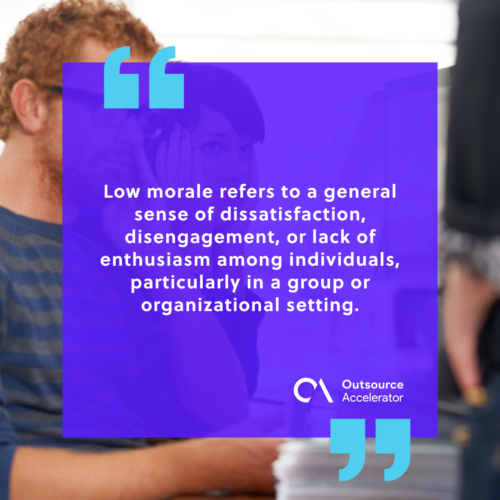
Low morale refers to a general sense of dissatisfaction, disengagement, or lack of enthusiasm among individuals, particularly in a group or organizational setting. It often reflects a decline in motivation, confidence, or emotional well-being.
When morale drops, people may lose interest in their tasks, feel undervalued, or question their purpose within a team. This emotional state can influence how people interact with one another, shaping the overall atmosphere.
A low-morale environment typically lacks energy and collaboration, making it difficult to maintain a positive outlook. Although morale can fluctuate naturally, prolonged low morale signals deeper issues.
Understanding what low morale means helps leaders and team members recognize emotional undercurrents before they grow.
Causes of low morale in the workplace
Several factors can erode positive feelings and generate low morale within a workplace. Understanding these triggers helps organizations address the root of the issue.
Lack of recognition
Organizations diminish employee motivation when they fail to acknowledge hard work and contributions.
People need to feel valued. Ignoring employees’ efforts breeds resentment and a sense that their work doesn’t matter. Companies cultivate apathy when they overlook achievements.
Poor leadership
Ineffective leaders damage team spirit. They create uncertainty and frustration through poor communication, unfair practices, and a lack of vision.
Leaders who micromanage or fail to support their teams directly contribute to negative feelings and disengagement among employees.
Unfair compensation and benefits
Businesses devalue their workforce when they offer inadequate pay or substandard benefits.
Employees compare their compensation to market rates; feeling underpaid or having poor benefits packages generates dissatisfaction and the perception of being unappreciated.
Limited growth opportunities
Organizations stifle ambition by not providing avenues for professional development and advancement.
Employees often seek opportunities to learn and progress. A lack of these pathways leads to stagnation and a feeling of being stuck, which negatively impacts morale.
Toxic work environment
Negative workplace cultures quickly deplete morale. Bullying, gossip, and a lack of respect among colleagues create a tense and unpleasant atmosphere.
Such environments make employees feel unsafe and unwelcome, directly contributing to low spirits and disengagement.
Glaring signs of low morale in employees
Declining enthusiasm and engagement manifest in various observable ways. Thus, recognizing these indicators allows businesses to identify and address underlying issues affecting their workforce:
1. Increased absenteeism
When morale dips, employees often take more time off. They might call in sick more frequently or take more personal days.
This avoidance of work signals a lack of motivation and a desire to disengage from the workplace. Consequently, teams face staffing shortages and increased strain on remaining members.
2. Decreased productivity
Low spirits directly impact output. Employees experiencing low morale tend to underperform, miss deadlines, and produce lower-quality work.
Their lack of interest and engagement translates into reduced efficiency and overall team productivity, ultimately affecting business goals.
3. Negative communication
Watch out for pessimistic language and increased complaints. Staff with low morale often express dissatisfaction openly.
They might engage in more gossip or display a generally cynical attitude, which can spread negativity and harm team cohesion.
4. Withdrawal and isolation
Disengaged individuals may become less social. They’ll likely avoid team activities, eat lunch alone, or communicate less with colleagues.
Detachment indicates a reduced sense of belonging and connection to the team, weakening collaborative efforts.

5. Lack of initiative
Employees with low morale rarely go above and beyond. They perform their basic duties but show little interest in taking on new challenges or contributing innovative ideas.
Passivity reflects a lack of investment in the company’s success and hinders organizational growth.
How low morale impacts the working environment
Widespread dissatisfaction significantly alters the dynamics of a workplace. When spirits decline, the effects ripple through various aspects of the daily operations and the overall atmosphere.
Here’s how low morale impacts the working environment:
- Hinders collaboration. Unhappy employees communicate less effectively and hesitate to support one another. A breakdown in teamwork obstructs project completion and innovation.
- Elevates conflict. Frustration and negativity breed tension among colleagues. Minor disagreements can escalate more easily, creating a hostile atmosphere.
- Diminishes creativity. When individuals feel undervalued, they are less likely to contribute new ideas or take risks. This stifles innovation and problem-solving.
- Increases turnover. Dissatisfied employees often seek employment elsewhere. High attrition rates disrupt team stability and increase recruitment costs. Understanding “low morale meaning” helps businesses recognize this potential outcome.
- Damages customer relations. Unhappy employees can often project their dissatisfaction onto customers, resulting in poor service and a negative brand image.
Ultimately, low morale cultivates a less productive, more stressful, and generally unpleasant place to work, affecting everyone involved.
Low morale meaning in Tagalog
In Tagalog, low morale is often described as “mababang morale” or “kawalan ng sigla.” Both point to a lack of energy, drive, or spirit at work.
Filipino workplaces use the idea in the same way as English. So it still means a team that feels flat, tired, or unmotivated.
Frequently asked questions about low morale
What is a synonym for low morale?
Common synonyms include low spirits, poor morale, and disengagement. Each points to a drop in motivation or enthusiasm.
What are the effects of low morale in the workplace?
Low morale often leads to more absences, lower productivity, and weaker teamwork. Over time, it can also raise staff turnover.
What causes low morale at work?
Common causes include lack of recognition, poor leadership, unfair pay, and few growth opportunities. A toxic setting can make it worse.
Key takeaways
- Low morale means a lasting drop in motivation, energy, and satisfaction at work.
- Common causes include weak recognition, poor leadership, and unfair pay.
- Signs include more absences, lower output, and withdrawal.
- Left unchecked, low morale raises turnover and hurts results.






 Independent





