
What is intelligent process automation in outsourcing?

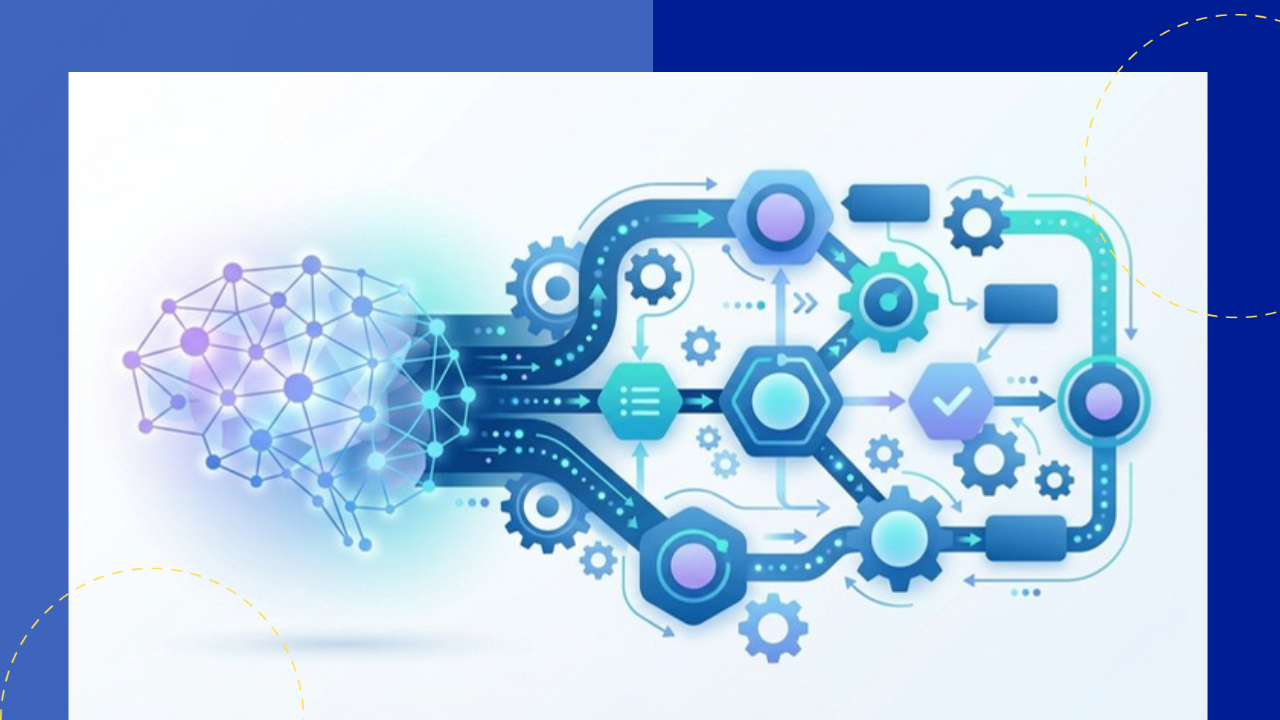
- Intelligent process automation (IPA) combines robotic process automation with artificial intelligence so workflows can handle judgment, not just repetition.
- It builds on RPA by adding machine learning, natural language processing, and analytics to read unstructured data and adapt to exceptions.
- In outsourced and BPO settings, IPA speeds up high-volume work such as claims, invoices, onboarding, and support while improving consistency.
- Human oversight stays essential for exceptions, governance, and quality, so IPA augments teams rather than replacing them outright.
Intelligent process automation is the practice of combining rule-based software robots with artificial intelligence so a business process can run with far less manual effort.
For outsourcing buyers and providers alike, it marks a move from simple task automation toward workflows that can read, interpret, and adjust.
The idea matters because outsourced operations run on repeatable processes: claims, invoices, employee onboarding, and support tickets. When those processes gain a layer of judgment, a provider can deliver faster and steadier results without adding staff for every rise in volume.
This explainer covers what IPA is, how it grows out of robotic process automation, where it fits in BPO, and why people still anchor the model.
What is intelligent process automation?
At its core, IPA is a stack of technologies that work together rather than a single tool.
Consultancy Deloitte describes it as the application of artificial intelligence and related technologies, combined with RPA. In plain terms, the robots do the clicking and typing while the AI supplies the reasoning.
A typical setup blends four capabilities. RPA carries out the steps, machine learning spots patterns, natural language processing reads free-form text such as emails, and analytics reveal where a process stalls.
Optical character recognition rounds out the group by turning scanned documents into data the system can use.
How IPA builds on and differs from RPA
RPA is the foundation, but the two are not interchangeable.
Traditional robotic process automation follows fixed rules: if a form arrives in the same shape every time, a bot can process it flawlessly. The moment the input changes, a rules-only bot stops or errors out.
IPA closes that gap. By adding models that learn from data, it can interpret messy inputs, make probabilistic decisions, and route genuine exceptions to a person.
Think of RPA as the hands and IPA as the hands plus a measure of judgment.
| Dimension | RPA | Intelligent process automation |
|---|---|---|
| What it automates | Repetitive, rule-based steps | End-to-end processes that need interpretation |
| Core technology | Software bots and scripts | Bots plus AI, machine learning, and NLP |
| Data it handles | Structured, predictable | Structured and unstructured |
| Response to exceptions | Stops or fails | Adapts or escalates to a human |
| Improvement over time | Static until reprogrammed | Learns from new data |
Where IPA fits in outsourced and BPO operations
Outsourcing is a natural home for IPA because providers concentrate large volumes of similar work.
In finance and accounting, IPA can match invoices, flag anomalies, and prepare reconciliations. In customer support, it can classify tickets, draft replies for agent review, and pull account history before a call.
Human resources teams use it to screen applications and complete onboarding paperwork, while healthcare units apply it to claims and records. Academic researchers note that IPA is well suited to automating long-tail processes that require coordinating tasks across different systems, which is exactly the fragmented reality of many back offices.
Providers often introduce it alongside broader BPO automation programs so that bots, AI, and staff share the same workflow.
Benefits of intelligent process automation
The appeal comes down to speed, accuracy, and scale.
Because software handles the repetitive middle of a process, cycle times shrink and error rates fall. Teams redirect their hours toward exceptions, judgment calls, and client relationships that machines cannot manage well.
Scale is the quieter benefit. When demand doubles, a well-built IPA workflow absorbs much of the surge without a matching jump in hiring, which suits the variable volumes common in outsourcing.
Many providers pair it with business process management automation to keep the wider workflow organized.
Limits and the role of human oversight
IPA is powerful, yet it is not a set-and-forget solution.
Models are only as good as the data behind them, so poor or biased inputs produce poor decisions. Unusual cases, sensitive judgments, and regulated steps still need a person to review and sign off.
Governance matters as much as the technology. Clear ownership, audit trails, and regular checks keep automated decisions explainable and compliant.
The strongest programs treat IPA as a partner to skilled staff, not a replacement for them.
Frequently asked questions
Common questions from buyers and providers weighing intelligent process automation.
Is intelligent process automation the same as RPA?
No. RPA runs fixed, rule-based tasks, while IPA wraps AI around those bots so the workflow can interpret data and adapt. RPA is one ingredient within a broader IPA stack.
Does IPA replace outsourcing jobs?
It shifts them more than it removes them. Routine keystrokes move to software, and people focus on exceptions, quality checks, and client work that needs human judgment.
Which processes are best suited to IPA?
High-volume, repeatable processes with some variation are ideal, such as invoice processing, claims handling, and onboarding. Very rare or highly subjective tasks are weaker fits.
How do BPO providers keep IPA accurate?
They monitor model performance, retrain on fresh data, keep humans in the loop for exceptions, and maintain audit trails so every automated decision can be traced.
Key takeaways
Intelligent process automation gives outsourced operations a way to work faster and more consistently while keeping people in charge of judgment.
- IPA combines RPA with AI, machine learning, and NLP to automate processes that need interpretation, not just repetition.
- It extends RPA rather than replacing it, handling unstructured data and escalating true exceptions.
- BPO providers apply it to finance, support, HR, and healthcare workflows where volume is high.
- Data quality, governance, and human oversight determine whether the results hold up.






 Independent





