
In-house vs outsourced bookkeeping: Which should you pick?

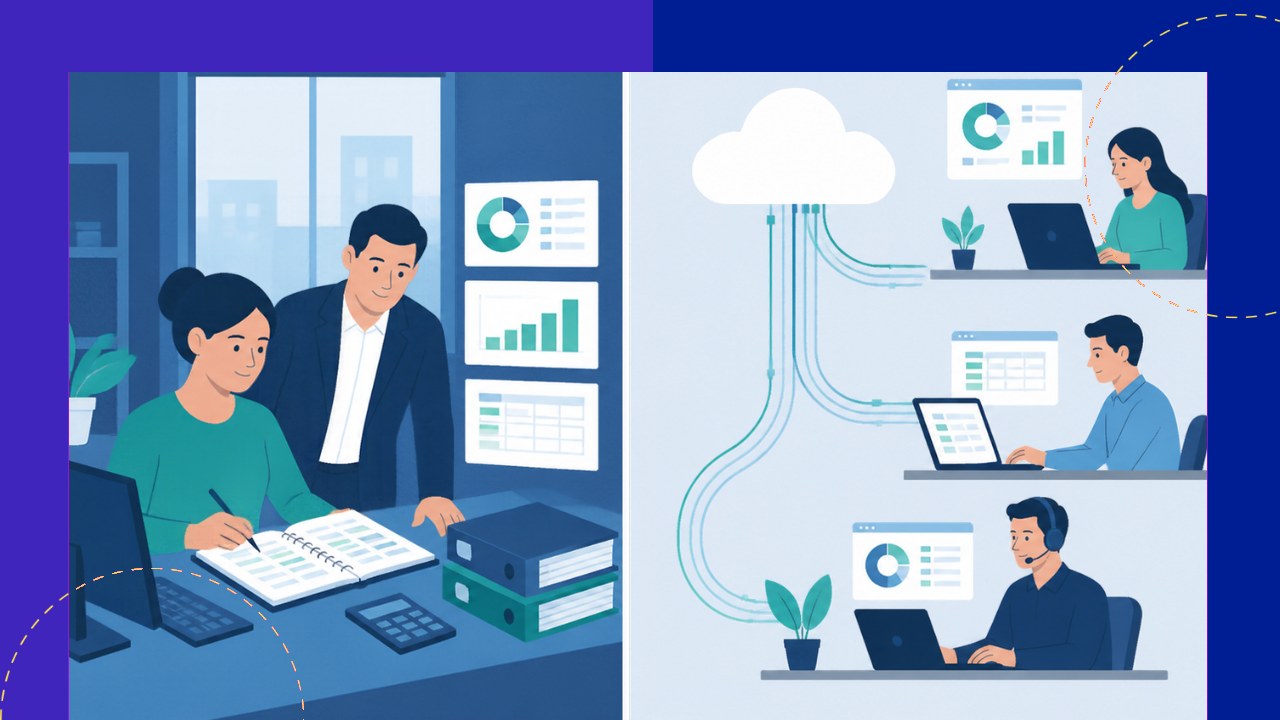
At a glance
- In-house bookkeeping means hiring your own staff for full control; outsourced bookkeeping means paying a firm or offshore team to handle the books.
- In-house suits complex, high-volume finances that need daily control; outsourcing suits smaller businesses that want expertise and lower cost.
- The trade-off is direct control and immediacy versus cost savings, scalability, and access to specialists.
Every growing business has to decide who keeps its books. The in-house vs outsourced bookkeeping choice comes down to how much control you need versus how much you want to spend and manage. Accurate books are not optional either way. As the IRS notes, good records help you monitor the progress of your business and prepare your financial statements. The question is simply who does the work.
In-house bookkeeping means employing your own bookkeeper or finance staff. Outsourced bookkeeping means hiring an outside firm or an offshore team to keep your records for you, as a service.
Here is how the two compare.
What is in-house bookkeeping?
With in-house bookkeeping, a member of your own team handles the books. They sit in your business, know it well, and are available on demand.
This gives you direct control and quick answers. The downside is cost and overhead. A full-time bookkeeper means a salary, benefits, software, and training, even in quiet months. For a small business, that can be a lot to carry for one role.
What is outsourced bookkeeping?
Outsourced bookkeeping hands the work to a specialist firm or an offshore team. They keep your records, reconcile accounts, and deliver reports, often using their own tools.
This brings expertise and flexibility at a lower cost than a full-time hire. The field is also changing fast. The U.S. Bureau of Labor Statistics notes that bookkeeping roles are set to decline 6 percent from 2025 to 2035 as software automates routine tasks. Handing the books to a specialist provider lets you tap that efficiency. The trade-off is slightly less direct, on-demand control.
Head-to-head comparison
| Factor | In-house | Outsourced |
|---|---|---|
| Cost | Higher, full salary and overhead | Lower, pay for what you need |
| Control and immediacy | High, on demand | Good, but not instant |
| Expertise | Limited to one hire | Access to a specialist team |
| Scalability | Hire or cut staff | Flexes with your needs |
| Coverage if someone is away | Risky with one person | Backup built in |
In short, in-house wins on control and immediacy, while outsourcing wins on cost, expertise, and flexibility.
When in-house bookkeeping makes sense
In-house bookkeeping suits businesses with complex, high-volume finances. If money moves constantly, or you need a finance person involved in daily decisions, having them on staff pays off.
It also fits companies that handle sensitive data they prefer to keep fully internal. When the volume justifies a full-time role and you value instant access, an in-house bookkeeper is a sound choice.
When outsourcing makes sense
Outsourcing suits most small and growing businesses. If you do not have enough work for a full-time bookkeeper, or you want expert help without the overhead, a provider is usually the better value.
It also helps when you would rather focus on running the business than managing the books. The provider brings tools, cover, and know-how, so your records stay accurate while you spend your time elsewhere.
Can you mix the two?
Yes, and many businesses do. A blended setup can give you the best of both.
Some keep a part-time or junior in-house person for daily entries, then outsource the specialist work like reconciliations, reporting, or year-end close. Others start fully outsourced and bring bookkeeping in-house only once their volume grows large enough to justify a dedicated hire.
Automation changes the math
Bookkeeping is not what it was. Software now handles much of the routine data entry and reconciliation that once filled a bookkeeper’s day.
This shifts the decision. A full-time in-house clerk doing manual work is harder to justify when tools do so much automatically. Outsourced providers often fold this automation into their service, giving you modern, efficient books without buying and running the software yourself.
Still, someone must oversee the software and read the numbers. Automation handles the busywork, not the judgment. So the real choice is who owns that oversight: your own staff or a provider.
Frequently asked questions
Is outsourced bookkeeping cheaper than in-house?
Usually yes, for small and midsize businesses, because you avoid a full salary, benefits, and software costs and pay only for the work you need. For very high-volume finances, an in-house team can become cost-effective, but most smaller firms save money by outsourcing.
Is it safe to outsource my bookkeeping?
It can be, with a reputable provider and clear data-security practices. Established bookkeeping firms handle sensitive records every day and use secure systems, so the main task is choosing a trustworthy partner and agreeing on how your data is protected.
Will I lose control of my finances if I outsource?
No, you keep ownership and oversight, you just delegate the day-to-day work. Good providers give you regular reports and access to your numbers, so you stay informed and in charge while someone else handles the entries and reconciliations.
How do I decide which is right for my business?
Weigh your transaction volume, budget, and need for daily access. High volume and a need for instant control point to in-house, while limited volume and a tight budget point to outsourcing. Many businesses start outsourced and revisit the question as they grow.






 Independent






